Trying to increase website traffic when you are just starting out often feels like hitting a wall: you published, you waited, and nothing came. The good news is that web traffic is not magic, it runs on a handful of simple levers that anyone can pull, with no budget and no technical skill. After ten years doing search engine optimization day in and day out, I am going to give you the order I would follow today if I started again from an empty site, separating what actually moves the needle from what just wastes your time.
TL;DR
The most profitable traffic source over time is SEO, organic search, because a well-ranked article brings you visitors every day without you paying for them.
Content that pulls traffic answers a real question with the right search intent, rather than chasing a keyword for the keyword’s sake.
In 2026 a new channel matters: traffic from generative AI like ChatGPT and Perplexity, what we call GEO. Getting cited by them is becoming a visibility source in its own right.
Distribution (social media, communities, backlinks) amplifies what you already have, and Search Console tells you what works so you stop flying blind.
Summarize This Article with AI
ChatGPTContents
SEO, the traffic that keeps working for you
Write for a real question, not just for a keyword
Make your site readable for Google and pleasant to visit
The channel rising in 2026: traffic from generative AI
Go find your first visitors where they already are
SEO, the traffic that keeps working for you
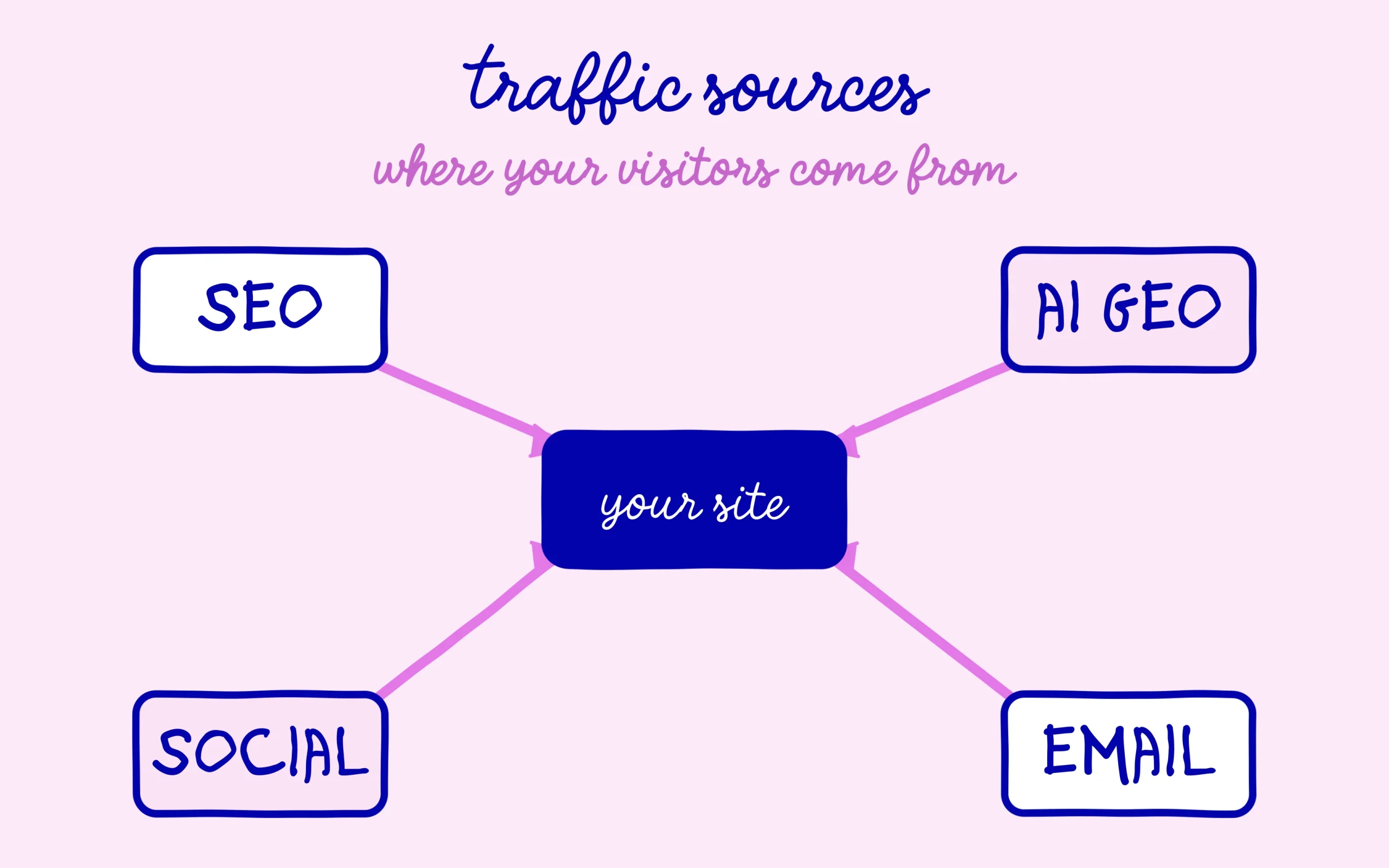
If there is only one lever you keep to increase website traffic, make it search engine optimization. A well-ranked article keeps bringing you organic traffic months, sometimes years after you published it, with no ad budget. That is what sets it apart from social media or paid ads, where traffic stops the second you stop posting or paying. SEO is slow to start, but it is an asset that compounds, and for a beginner it is the best effort-to-result ratio out there.
Before you jump on tactics, you need to understand how the engine decides who to show, something we laid out in the first chapter of our course to learn SEO in 2026. In short, Google crawls your site, decides whether to keep your pages in its index, then ranks them by relevance and quality. The rules are actually public: Google documents them in its Search Essentials, and they boil down to one simple idea, give the best possible answer to the person searching.
Write for a real question, not just for a keyword
The biggest beginner mistake is picking a keyword and writing around it, when Google does not rank keywords, it ranks answers to search intent. Someone typing “increase website traffic” does not want a definition, they want a concrete method. That is search intent, and it is the heart of content that pulls traffic. Before you write, ask what the person really wants to get, then answer it plainly, better than the pages already ranking.
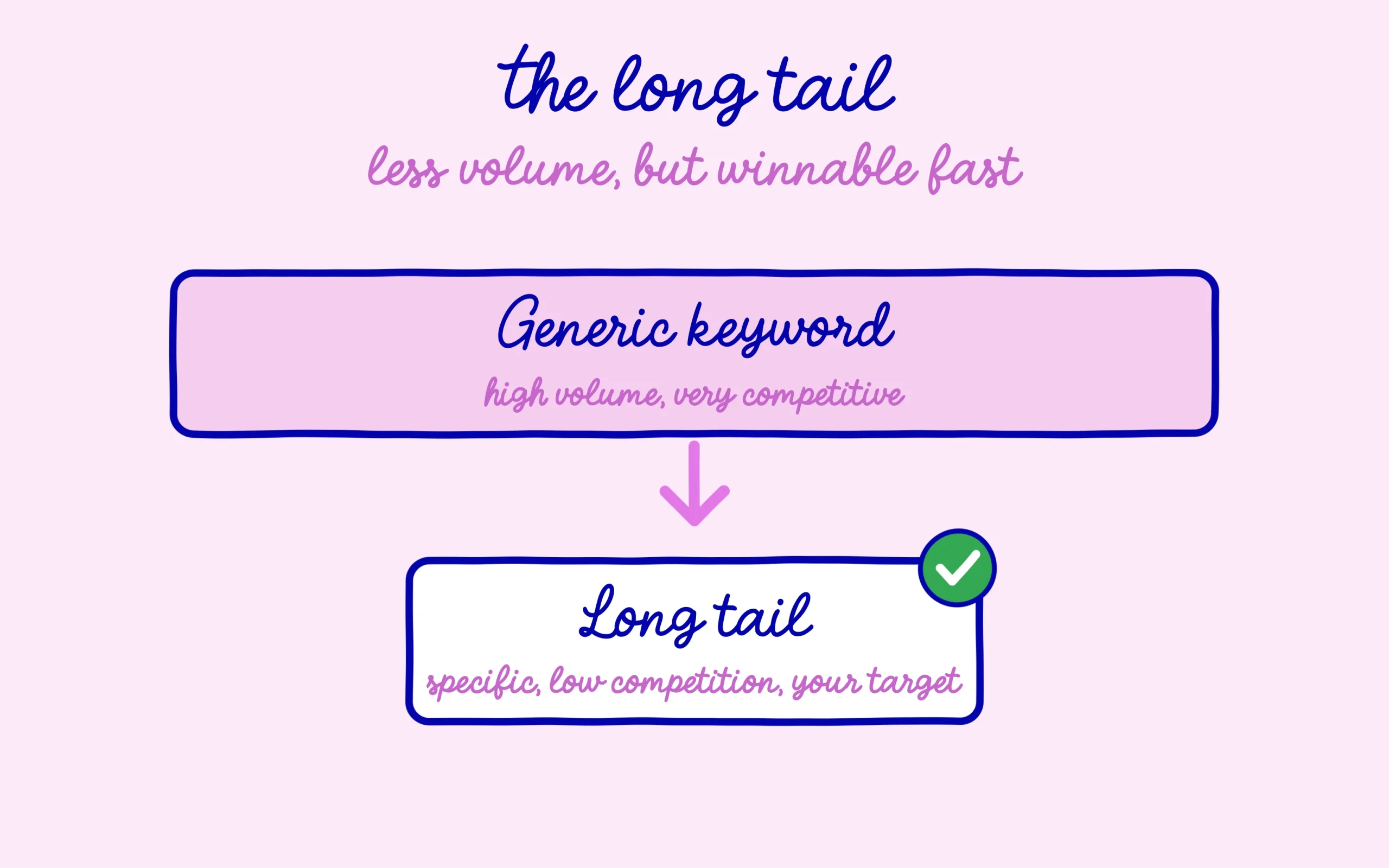
For a young site, aim at long-tail keywords, those specific three or four word queries, less searched but far less competitive. “Gluten-free bread recipe bread machine” will rank much faster than “bread recipe”. You capture qualified traffic that way, visitors looking for exactly what you offer, which converts better than a big generic volume.
Finally, bet on real quality over volume. Content that is too short, seen everywhere already or churned out in bulk brings nothing, because what Google actually penalizes about generated content is publishing something that adds nothing beyond what already exists. One genuinely useful, complete article does more for your traffic than ten thin pages.
Make your site readable for Google and pleasant to visit
Great content is useless if Google cannot read it or the visitor leaves before seeing it. First brick, indexing: make sure your pages are actually counted, which you can check for free in Search Console in a few minutes. A non-indexed page is invisible, no matter how good it is, and it is often the first traffic leak on a beginner’s site.
Next comes user experience, which Google watches closely through Core Web Vitals. A slow site that jumps around while loading or is unreadable on mobile scares visitors off and drags down your ranking. The basics are enough at the start: compressed images, a fast theme, and a clean display on phones, since most of your traffic will come from mobile. You do not need to be a developer, just to not neglect these fundamentals.
Last point, and the most underrated, internal linking. By connecting your articles with relevant links, you help Google understand your site structure and you keep the visitor longer, page after page. It is free, entirely under your control, and one of the rare SEO levers you can pull today across all your existing content.
The channel rising in 2026: traffic from generative AI
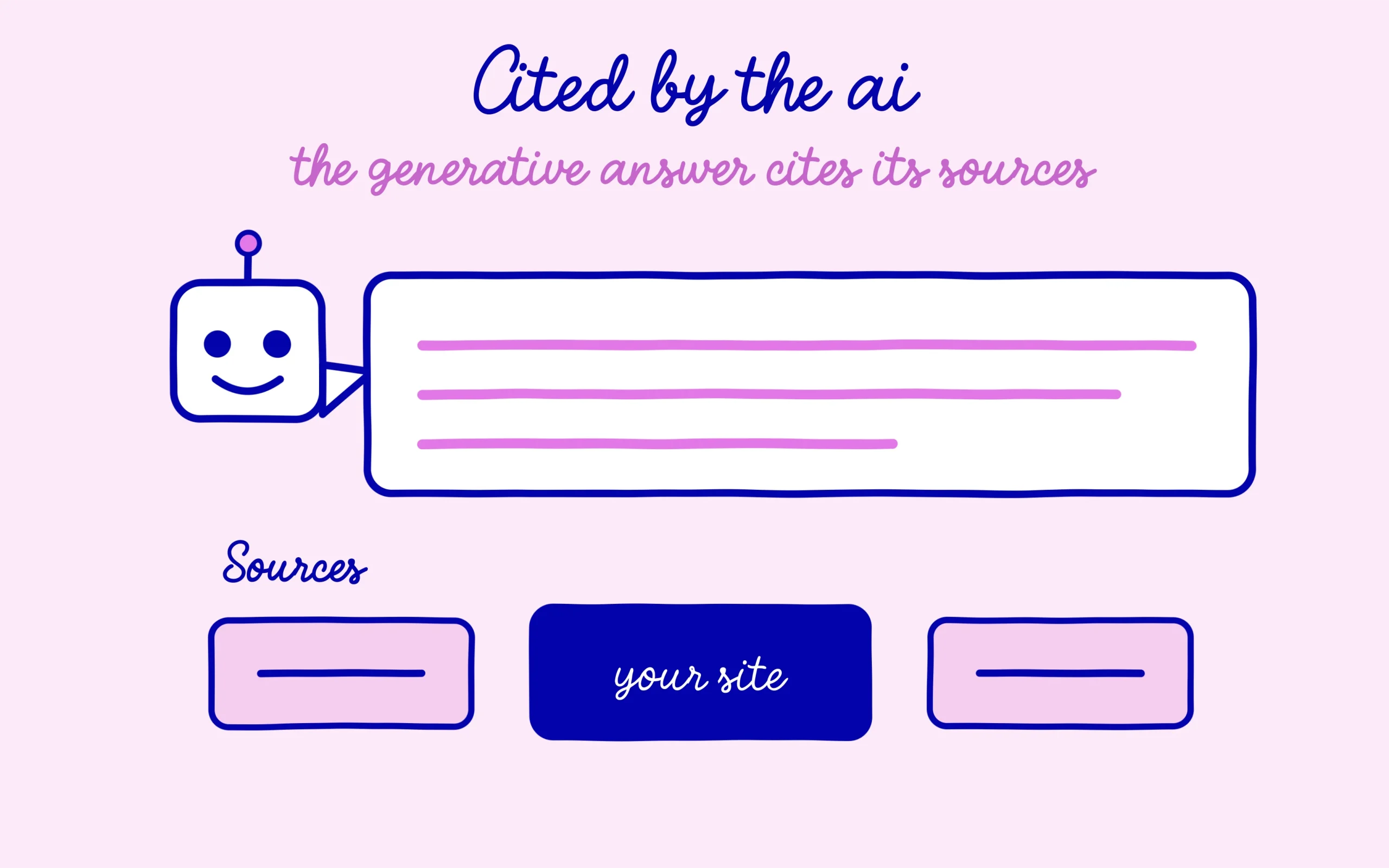
Here is the angle most traffic guides still forget. More and more people no longer search on Google but ask their question to ChatGPT, Perplexity or Google’s AI Overviews, which answer directly while citing a few sources. This optimization is called GEO, for Generative Engine Optimization, and it has become a visibility source worth watching. The shift goes hand in hand with the rise of zero-click searches, where the user gets their answer without visiting a single site.
The good news is that there is no secret recipe and the work overlaps with clean SEO. Generative engines pull first from clear, structured content that answers a question plainly, and from sources they judge trustworthy on a topic. A well-built text, with extractable answers and real authority on your subject, has every chance of being cited, even if the direct traffic those citations send back stays hard to measure. Working on your SEO is already working on your GEO.
Go find your first visitors where they already are
SEO takes time to take off, so in the meantime, go get your first visitors directly. Social media is the fastest channel, as long as you do not spread yourself thin: pick the one platform where your audience actually is, rather than being mediocre on five. For a B2B site, LinkedIn; for visual content, Pinterest or Instagram, which can even send lasting traffic back to your articles.
A free and underrated method is to answer real questions where people ask them, in groups, forums or spaces like Quora. You genuinely help, you drop a link to your article when it truly answers, and you capture very qualified referral traffic. Guest blogging, writing a guest article on a more established site in your niche, plays in the same league and earns you a backlink on top, those inbound links that boost your domain’s authority in Google’s eyes.
Email, finally, stays the channel you truly own. Unlike a follower on a social network, an address in your list belongs to you and depends on no algorithm. Offer visitors early to sign up to a newsletter, even a simple one, to bring people back to your new content instead of hoping they return on their own.
Measure so you are not working blind
You only steer well what you measure. Two free tools are enough at the start: Google Search Console, which shows you which queries you appear on, your position and your clicks, and an audience analytics tool like Google Analytics to know where your traffic comes from and what visitors do on the site. Without this data, you move on gut feeling, and gut feeling is often wrong.
The most useful habit is to spot in Search Console the pages that get impressions but few clicks, often sitting at the bottom of page one or the top of page two. Those are your closest opportunities: a better title, richer content, a few internal links, and they can climb the few spots that make all the difference in traffic. Improving what exists almost always pays off faster than starting from scratch on a new article.
Where to actually start
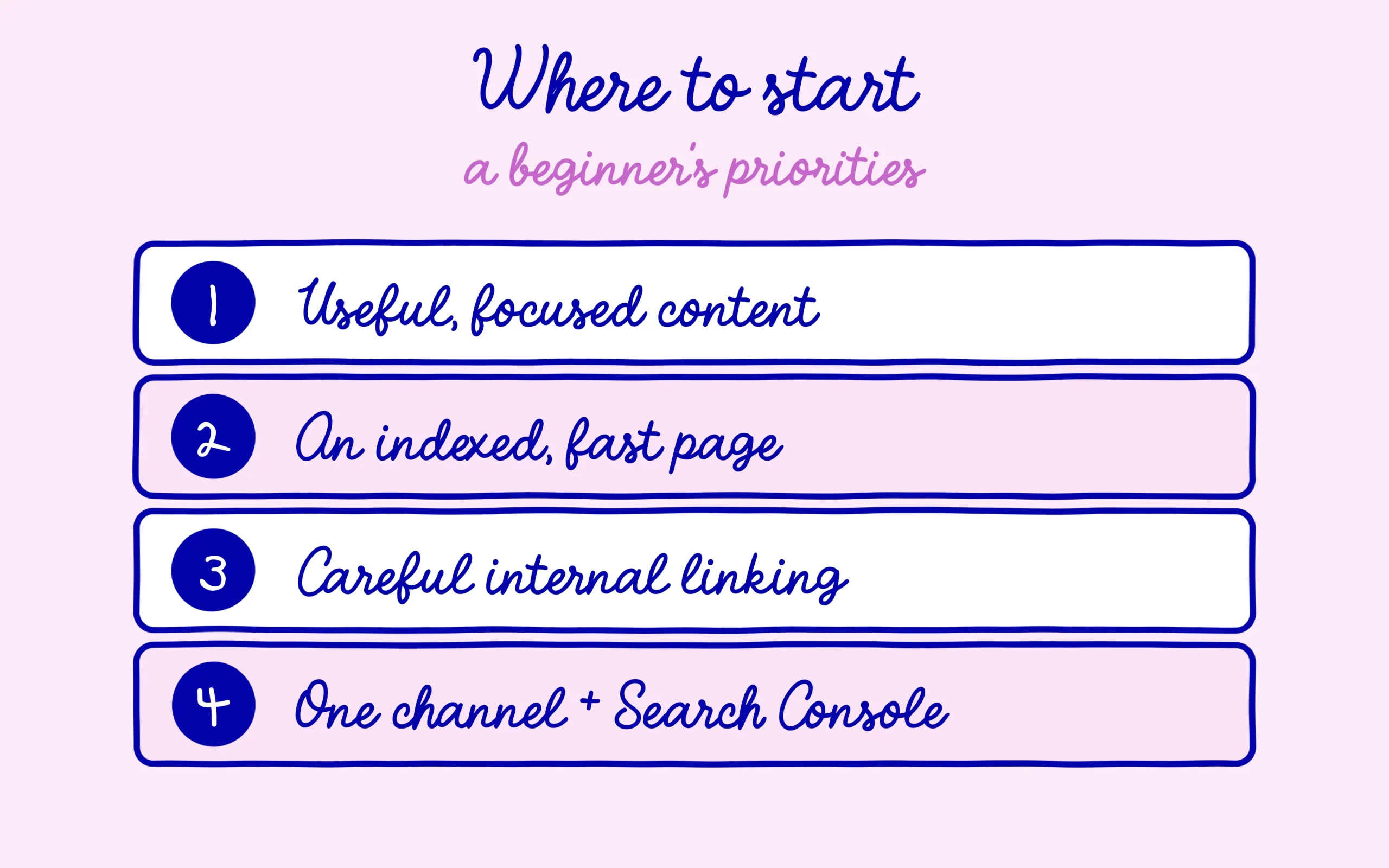
If this whole list makes your head spin, do not try to do it all at once, that is the surest way to finish nothing. Start with the base: content that truly answers a specific long-tail question, a page that is well indexed and fast, and careful internal linking. Then add a single distribution channel you will keep up over time, and set up Search Console to track your progress. The rest will graft on once these foundations are in place.
Increasing your site’s traffic is not a sprint, it is a stack of good moves repeated. Every useful article, every internal link, every page that ranks a little better adds to the last one, and it is that compounding that eventually makes the curve take off. Take the levers one by one, in order, and let time do its work. Keep learning on SEO Noobies.