
Google just put a number on a worry that has nagged SEO beginners for two years. Nick Fox, the executive who runs Search at Google, said AI Search, the AI features built into Search, now sends billions of clicks to websites every single week. The statement answers the fear most people say out loud, that AI would keep users trapped inside its answers and never let them click through to a site. It reads as reassuring, and yet it deserves a second look, because the figures Google shares are kept deliberately vague. Here is what Google actually said, and how a beginner can read it without panicking or getting carried away.
TL;DR
Nick Fox, Google’s head of Search, says AI features in Search now send billions of clicks to websites every week.
The post answers the fear that AI keeps users on its own answers and never sends them out to a website.
Google shares no underlying data: both figures are given in billions, so the real weight of AI Search cannot be compared to the total.
For a beginner, the smart move is to track your own traffic in Search Console instead of trusting a broad promise.
Summarize This Article with AI
ChatGPTGoogle Puts a First Number on AI Search Clicks
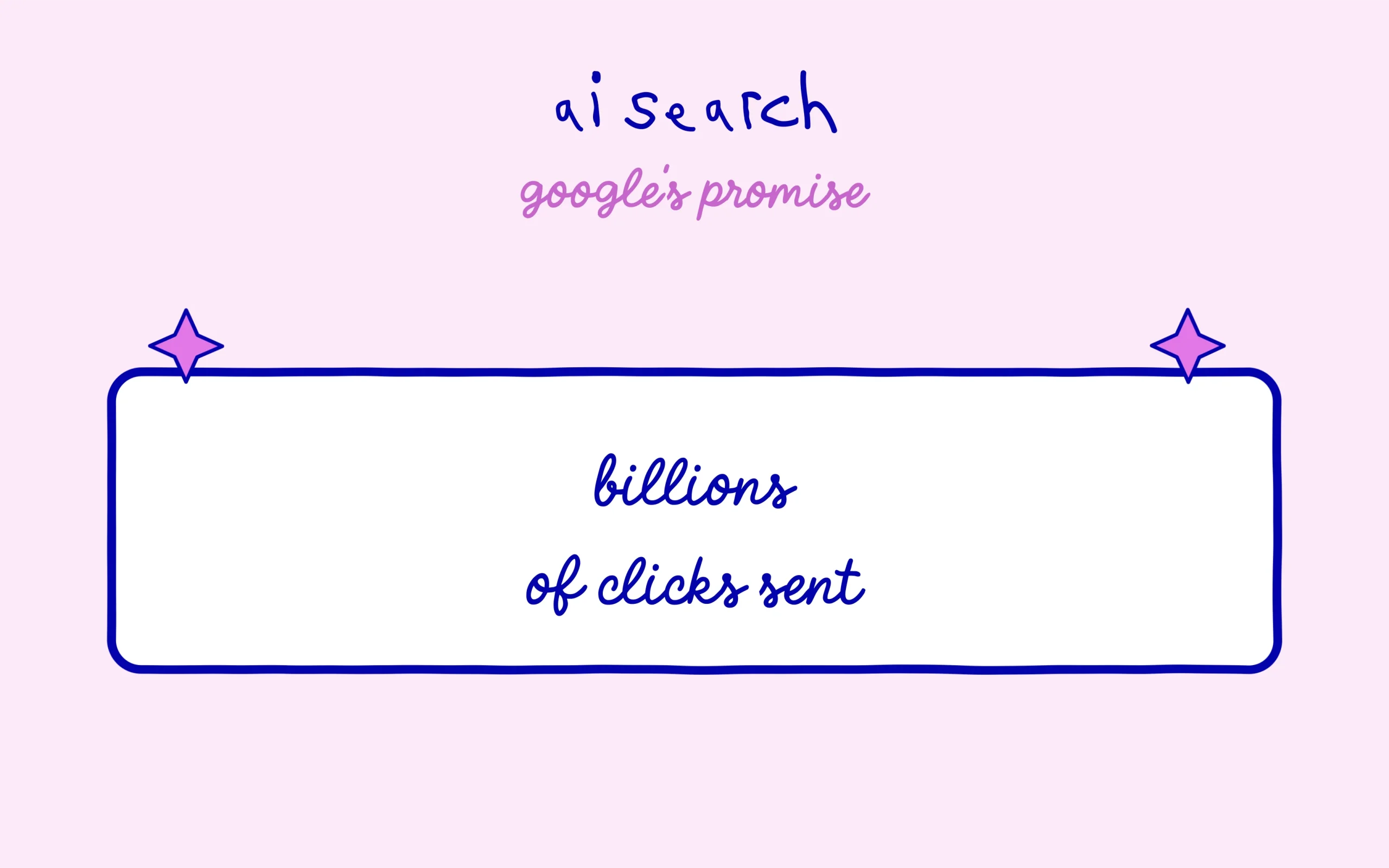
The announcement came through a post on LinkedIn, echoed in a shorter version on X. Nick Fox, who leads Search at Google, wrote that the company now sends billions of clicks to websites every week through AI Search alone. He was answering a question he says he hears often, whether AI in Search would mean people simply stop clicking through to sites.
Fox added that Search as a whole still sends billions of clicks a day, and that the volume only keeps growing. He backed the point with a concrete example, noting that Search hit its highest usage on record during Argentina’s comeback win over Egypt at the World Cup. The wider debate about searches that end without a single click is not new, and it was already measured in our look at the 68% of zero-click Google searches in early 2026.
There is a reason the timing matters too. Fox framed the post as a direct reply to publishers and site owners who have watched AI answers grow and feared the worst for their traffic. Coming from the person who runs Search, the reassurance carries weight, and it signals that Google wants the ecosystem of websites to keep believing there is a payoff in publishing. Intent and proof are two different things, though, and the post leans heavily on the first.
For a beginner, this is good news to hear. A click from a generated answer is still a click landing on your site, and Google’s post pushes back on the idea of a search engine that has closed in on itself. What still matters is what those billions actually contain.
Billions Claimed, No Data to Check Them
The catch is that Google offers the number without documenting it. The weekly figure tied to AI features rests on no public data, and it comes in billions, exactly like the daily Search total. That makes it impossible to know what share of clicks really comes from AI Search, or how the weekly AI volume compares to the overall daily one.
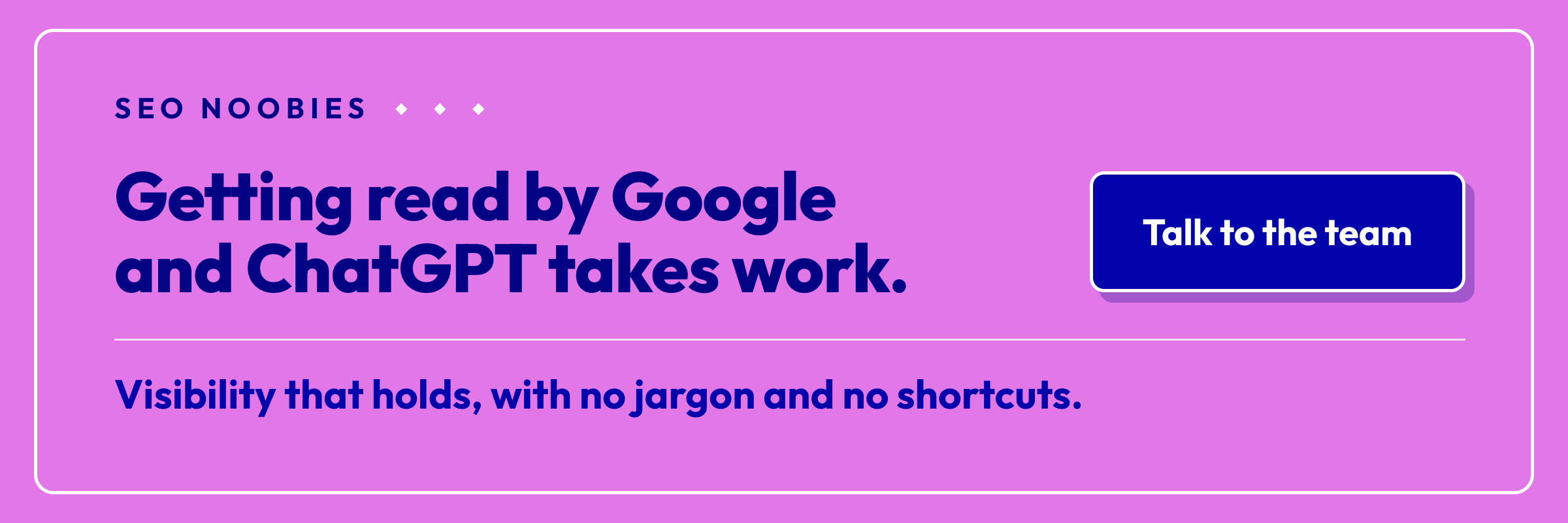
That vagueness changes how the announcement should be read. A round, impressive number reassures, but it says nothing about the trend on your own site. The same caution applies to features that cite themselves, as we saw with Google AI Mode putting its own listings first rather than external websites.
A simple example helps frame the gap. Saying AI sends billions of clicks a week while Search sends billions a day compares two numbers that look close, even though the time units differ and no proportion is ever given. A beginner can watch organic traffic slip while reading that the web receives more clicks than ever. Both statements hold at once, and that is exactly what makes the announcement hard to turn into a decision.
A global promise does not replace reading your own data. Google speaks at the scale of the entire web, while a beginner needs to know what happens across a few dozen pages. The two realities can drift apart without contradicting each other.
What a Beginner Should Do With This News
The most useful move is to open Search Console and watch how your own impressions and clicks have moved over recent weeks. It is the only data that truly speaks about your site, and it outweighs any general statement. Some content even picks up unexpected traffic from generative engines, something already seen when AI search revives old, forgotten content.
On the GEO side, the announcement supports a reasonable hypothesis. If AI features do send traffic, then getting cited inside those answers becomes a goal worth caring about, without dropping the fundamentals of classic SEO. Nothing yet tells us how fast that channel will grow, and moving every effort toward it would be premature.
In practice, the routine fits three plain steps. Compare your clicks over the past eight weeks in the Performance report, spot which pages climb or drop, and note the queries where a generated answer sits above your results. This calm reading beats any hot reaction, and it gives a far more faithful picture than a company statement ever will.
Tracking your own numbers matters more than commenting on Google’s. A statement like this points in a direction, it does not hand you a guarantee, and the safest way to avoid a mistake is to measure things yourself. The rest is one more signal to file next to your own observations.
Keep learning on SEO Noobies.



[…] The main driver is the expansion of AI Overviews, featured snippets and knowledge panels answering directly inside the results page. Google pushes back on the doom narrative, claiming AI Search sends billions of clicks. […]