If you are reading this, you have probably just started a site, a blog or a small shop, and the word SEO keeps showing up everywhere without anyone really explaining what it means. This chapter opens a full course to learn SEO in 2026 from scratch, with no technical background required. Before I show you what to optimize, I want to explain how the game works, because in ten years of doing SEO day in and day out, I have watched a lot of beginners burn months of energy on things that never mattered. So we start with the most useful part: understanding what Google is trying to do, how generative AI changed the picture this year, and which mindset keeps you away from the classic traps. You have nothing to install and nothing to buy. Just read calmly, because this chapter lays the foundation every later one will build on.
TL;DR
SEO is everything that helps a search engine understand your site and show it to the right people at the right moment.
In 2026 a second playing field appeared: GEO, which is about being cited by ChatGPT, Perplexity or Google’s AI Overviews, not only ranked in the blue links.
The fundamentals did not disappear: clear, useful, well-structured content is still the base everything rests on, for classic engines and for AI alike.
The real beginner lever is patience and method, not tricks, and this course gives you the order in which to learn, one chapter at a time.
Summarize This Article with AI
ChatGPTContents
1. What Google Is Actually Trying to Do When You Search
2. Crawl, Index, Rank: The Three Steps Google Runs on Repeat
3. GEO Joins SEO: Two Ways to Get Found in 2026
What Google Is Actually Trying to Do When You Search
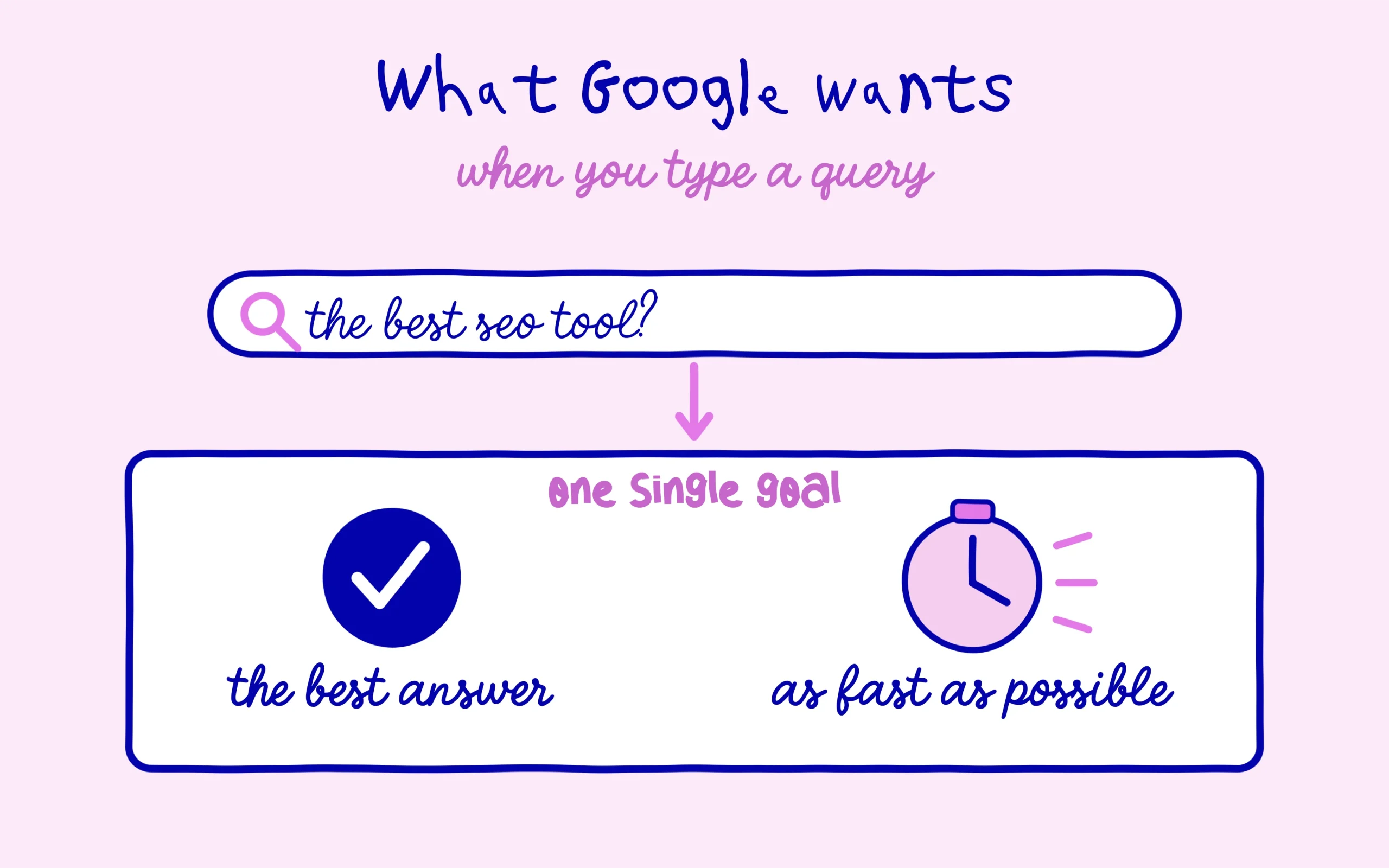
Let’s start at the very beginning, because everything flows from here. When someone types a question into Google, the engine has a single goal: give the best possible answer, as fast as possible. That’s it. The entire machinery of SEO comes out of that simple idea. If your page is the best answer to a question people are asking, Google has every reason to show it. If fifty pages are clearer, more complete or more trustworthy than yours, it will show theirs instead. Your job, all through this course, will be to become that best answer on specific topics.
Take a concrete example. Say you sell handmade honey and someone types “difference between raw and pasteurized honey”. That person does not want to buy yet, they want to understand. So Google looks for the page that explains the difference best, in clear language, with real information. If your article answers exactly that question, you have a shot at showing up, even if your site is brand new and tiny. That is what makes SEO exciting for a beginner: you are not fighting the big players on their turf, you are playing on precise questions you may know better than they do.
The thing to hold onto right now is that Google does not rank sites, it ranks answers to intentions. Two people typing the same words are not always looking for the same answer, and Google is constantly trying to guess what you really wanted. Someone typing “apple” wants the brand or the fruit? The engine decides based on thousands of signals. It even goes further by showing the answer right at the top of the page, to the point where a majority of searches now end without a single click. A beginner who gets this stops asking how to please the algorithm and starts asking which precise question their page answers, and for whom. It is a small shift in how you look at things, and it changes absolutely everything about the way you write.
⚠️ Important information
Google ranks answers to search intentions. Before writing a page, ask the one question that matters: which precise question does this page answer, and for whom?
Crawl, Index, Rank: The Three Steps Google Runs on Repeat
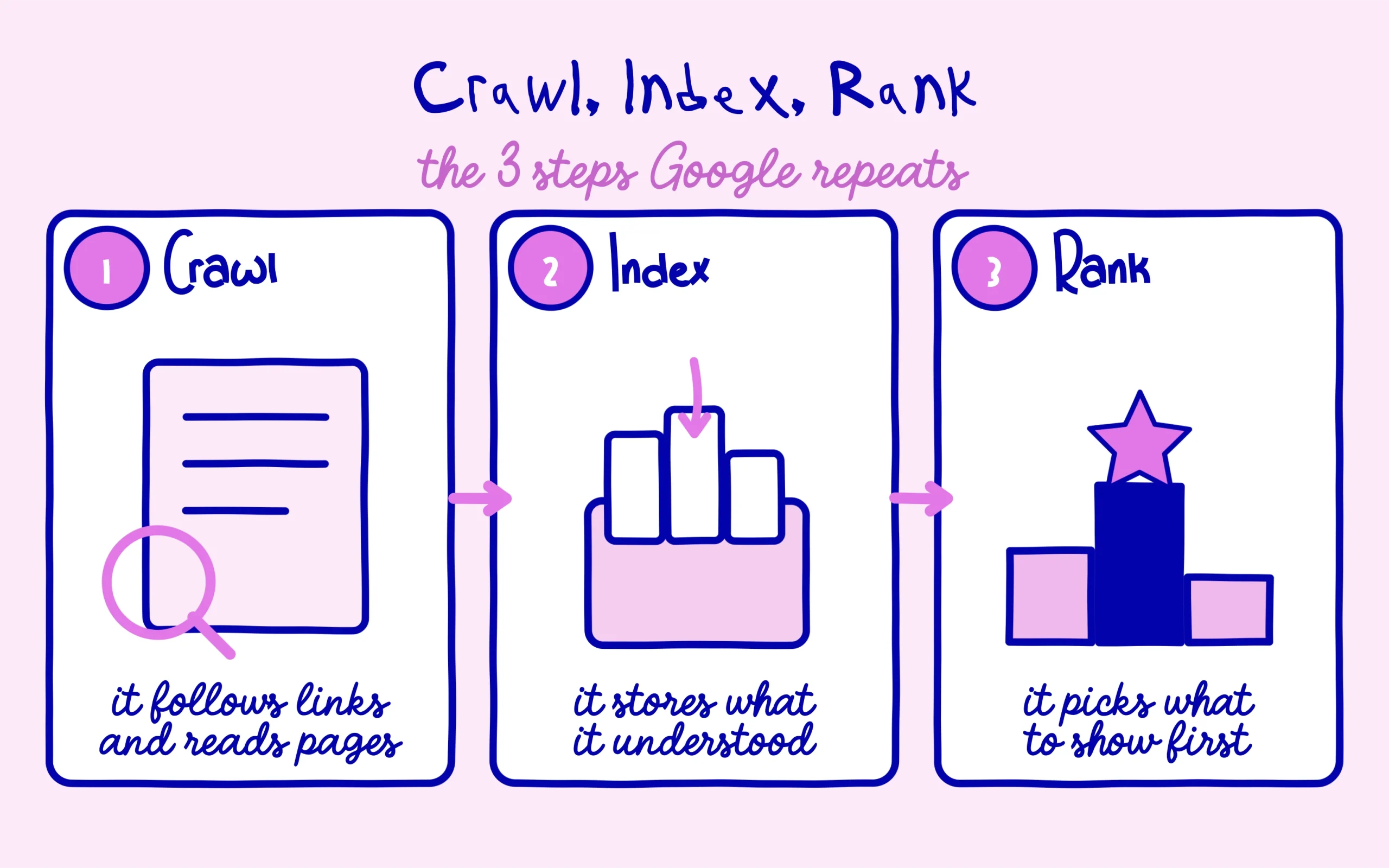
To sort out the web, Google does three things behind the scenes, and I am giving them to you now because you will meet them again in almost every chapter. The first is crawling. Robots travel the web by following links, page after page, like someone opening every door in a huge building. The second is indexing. Google files each page it finds useful inside a giant library, with a record that describes what it is about. The third is ranking, which happens when a query is typed: the engine reaches into its library and orders the pages from most relevant to least relevant. Google itself describes these three steps in its official documentation on how Search works.
Why do these three steps matter so much to you? Because a problem can appear at any of them, and from the outside the symptom is always the same: no traffic. If Google does not crawl your page, it does not know it exists. If it crawls it but refuses to index it, that page never enters the race. And even well indexed, it can rank too low to be seen. Many beginners confuse these three situations, when each calls for a very different fix. Knowing where the blockage sits is already half the diagnosis.
We will not dig into all of that today, it would be indigestible. Just keep the library image in mind: Google walks the shelves of the whole world, keeps what deserves a record, and pulls the right books at the right moment when a reader asks a question. The next chapter tackles indexing in detail, the step beginners neglect most, the one that explains why a page that is clearly online can stay completely invisible for weeks.
GEO Joins SEO: Two Ways to Get Found in 2026
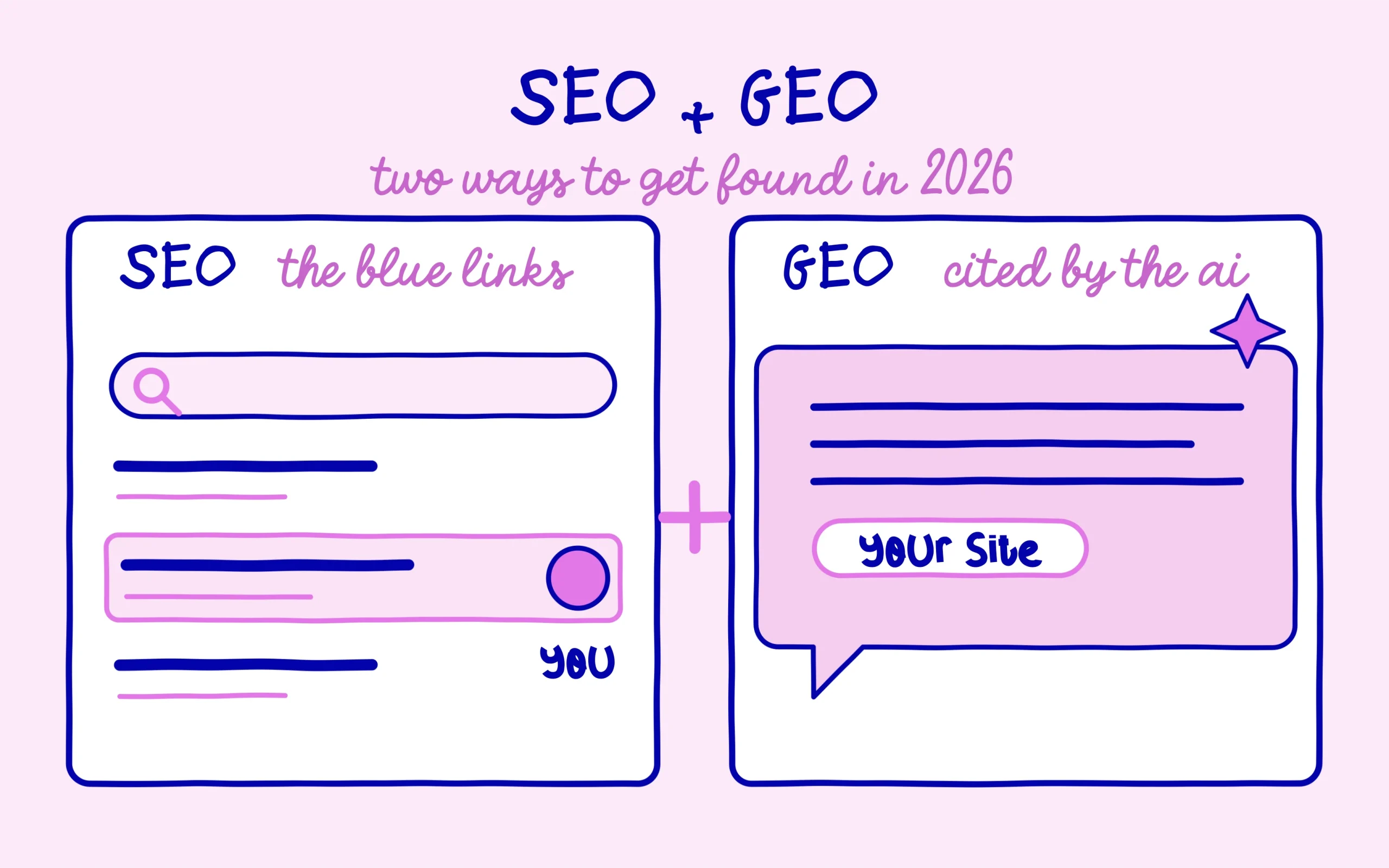
Here is what moved recently, and it matters because most older SEO guides still don’t mention it. For twenty years, being visible on Google meant one thing: showing up high in the list of blue links. In 2026 that is no longer the only game. When you ask ChatGPT or Perplexity a question, or when you see a generated summary at the top of Google’s results, an AI answers you directly while citing a few sources. Being one of those cited sources is what we call GEO, for Generative Engine Optimization.
In practice, that means there are now two ways to get found. The first, the historical one, is the click: someone sees your link and lands on your site. The second, more recent, is the citation: an AI reads your content, leans on it to shape its answer, and sometimes names you as a source. This behavior can even bring old, forgotten articles back into view. The two paths do not compete, they coexist. A single article can bring you visitors through the classic click and, at the same time, feed a ChatGPT answer that cites you. The spread of AI Overviews rolling out in more countries makes the topic very concrete for everyone, including beginners who had never heard of GEO six months ago.
Let me be honest with you on one point, because there is a lot of hype around this. No, classic SEO is not dead, and the people telling you to bet everything on GEO are moving too fast. The two fields overlap, and the good news for a beginner is that they rest largely on the same foundations. Clear, structured, trustworthy and genuinely useful content helps you rank on Google AND get cited by an AI. My read, after watching this play out on my own sites, is that GEO will gain weight over the next twelve to eighteen months, without forcing you to relearn the craft from zero. We will spend a whole module on it near the end of the course, once your SEO base is solid, because trying to do GEO with no SEO foundation is putting the cart before the horse.
The Beginner Habits That Actually Move the Needle
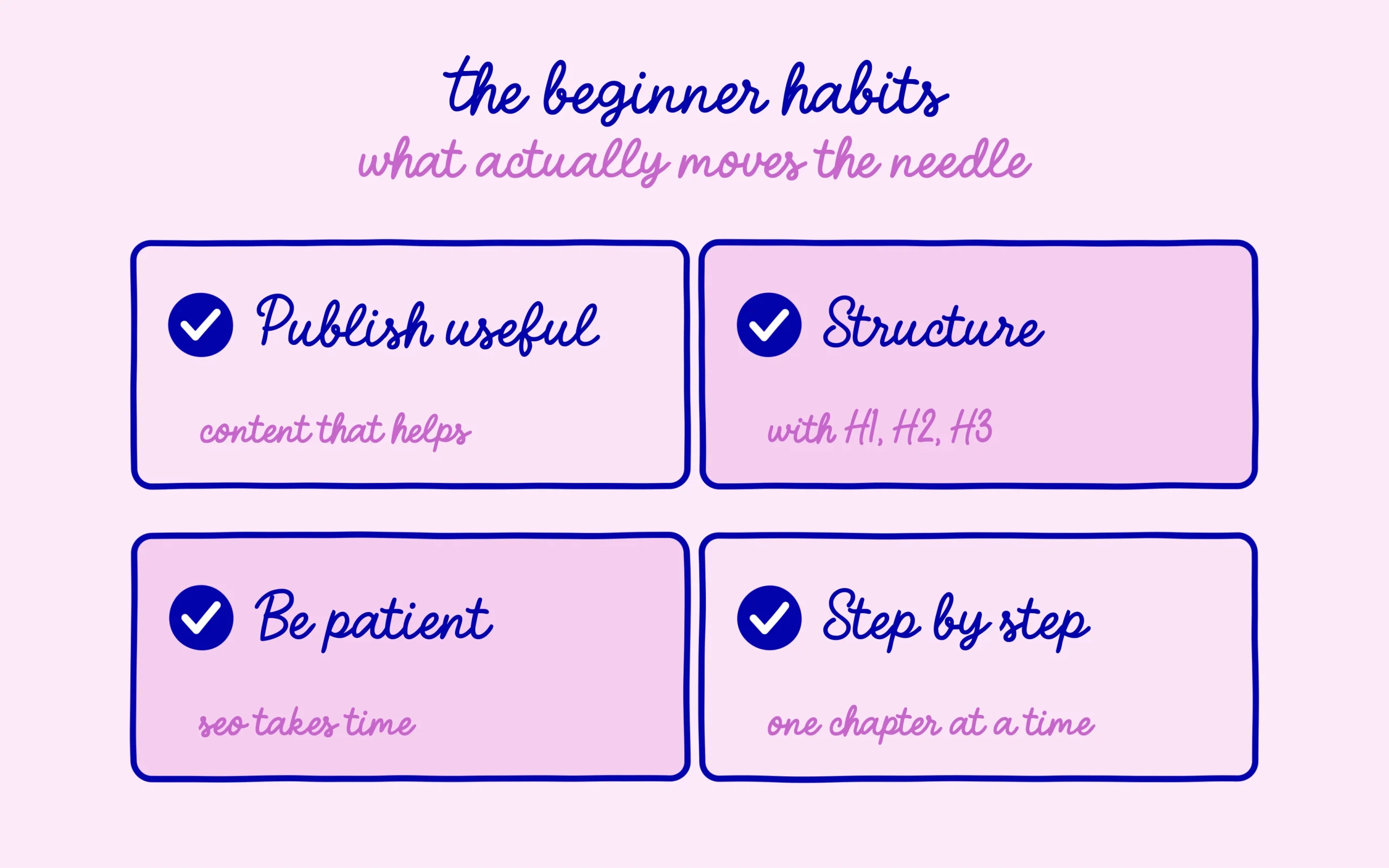
Now that the ground is set, let’s talk about mindset, because succeeding at SEO in 2026 is as much about mindset as technique, and this is where most people slip. The first habit to build is patience. SEO is not an instant channel. You can publish an excellent article today and only see serious results three to six months later. It is disorienting at first, especially coming from social media where everything plays out in a few hours. But that slowness is also what makes SEO strong: once a page starts to rank, it can bring you traffic for years with no extra effort. An article I wrote four years ago still brings me visitors every day, and I have not touched it since.
The second habit is to write for humans before writing for Google. It sounds obvious said like that, but I still see beginners stuff their text with keywords until it becomes unreadable, thinking they are pleasing the algorithm. The opposite happens. Google spent years learning to spot content written for the machine, and it is getting better at recognizing low-quality content churned out at scale. Write the way you would explain the topic to a friend who is a bit lost. That is the best SEO brief there is, and it lines up with what Google asks for in its guide on helpful content made first for people. It also happens to be what AI engines like most when they look for a clear source to cite.
The third habit is to avoid shortcuts that promise fast results. Buying link packs, copying other people’s content, stacking empty pages to trap the engine, all of that exists and has a name: black hat. It can work for a few weeks, then it almost always ends in a brutal drop when Google cleans house. On this course we will never touch those methods, for one simple reason: they destroy in a single update what took you months to build. Durable SEO is built slowly and does not break overnight.
The fourth habit is to stay curious about your own results. SEO is steered by observation, not by gut feeling. Which articles bring people in? On which queries are you showing up without knowing it? Which pages stall at the bottom of page two? Google gives you a free tool, Search Console, that answers all of those questions, and we will devote a full chapter to it. For now, just keep the habit in mind: look at your numbers regularly, without obsessing, to understand what works and do more of what works. A beginner who builds this reflex early progresses twice as fast as one who publishes blind for a year.
One last reassuring point: you do not need to be a technical expert to start well. A lot of people think SEO is all code and obscure settings. In practice, most of what makes a small site rank comes down to very accessible things: a good topic, a clear page, an honest title, and time. The technical side exists, we will cover it in a dedicated module, but it comes much later, and it is far less scary than it looks once you take it step by step. Do not let it intimidate you on day one.
Where We Go From Here
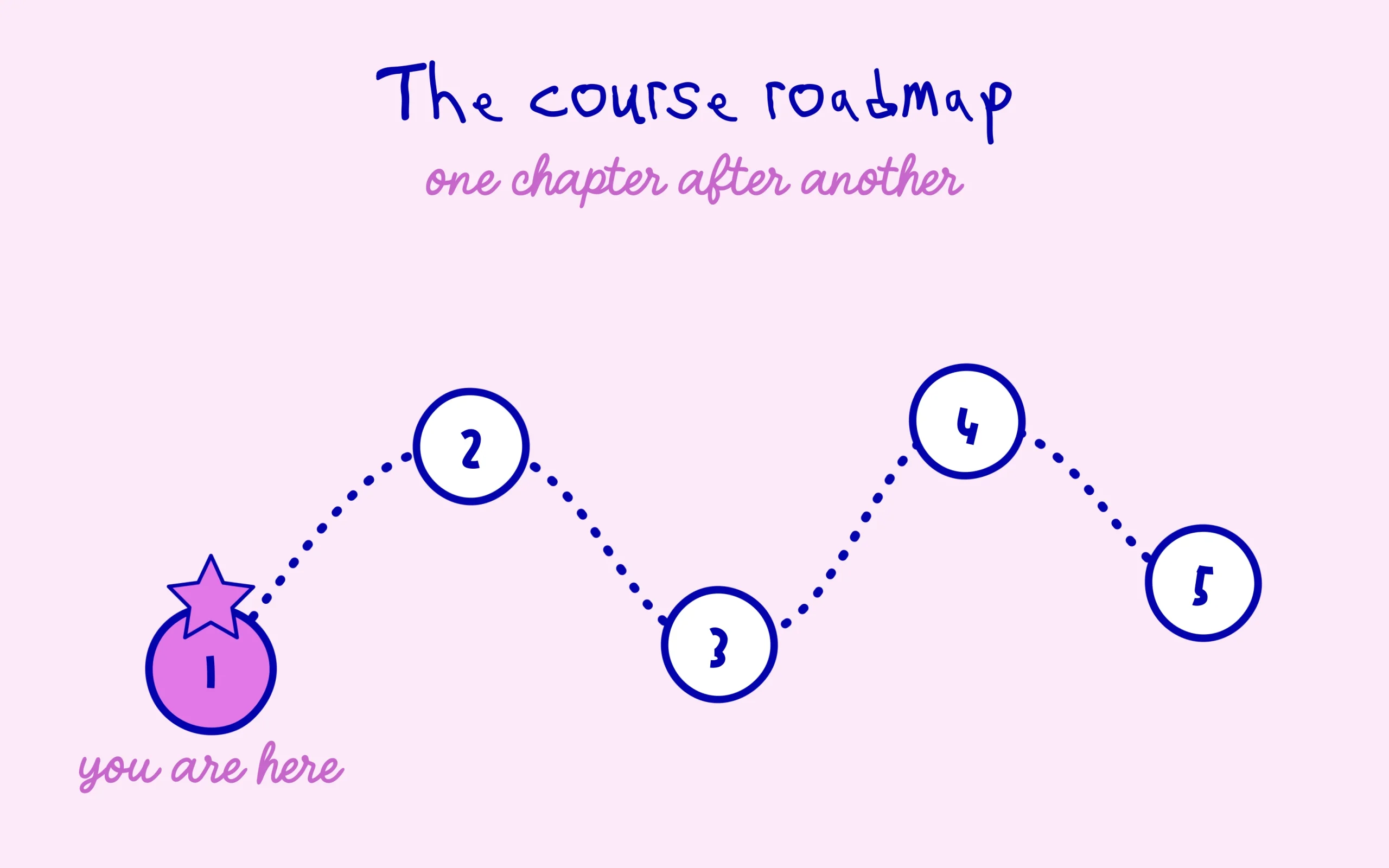
This course is meant to be followed in order, like steps on a staircase. Each chapter builds on the previous one and sets up the next, so you construct your foundations layer by layer instead of picking random tips with no thread. We will move by modules. First, understanding how Google really works. Then finding and choosing your keywords, which is the engine room for a beginner. Then optimizing your content, laying the technical groundwork, and building authority with backlinks. We will finish with a whole GEO module, to be visible to AI engines once the SEO base is in place. It is a lot, but broken into small digestible steps it becomes entirely doable, even with little time each week.
Today we saw that Google tries to answer intentions, that it crawls, indexes and ranks on repeat, that GEO adds a second way to get found, and that a good mindset beats every trick in the world. The next chapter tackles the first concrete building block: indexation. You will understand why Google sometimes refuses to show pages that are clearly online, how to check whether yours are properly picked up, and what to do when they are not. It is the foundation of everything else, and many beginners spend months wondering why they get no traffic when the problem was simply sitting there. See you in the next chapter.
Test What You Just Learned
What are the three steps Google runs on repeat?
Show answer
Crawling (robots follow links from page to page), indexing (useful pages enter the library) and ranking (pages get ordered on every query). A problem can appear at any of the three, and from the outside the symptom is always the same: zero traffic.
What is GEO?
Show answer
Optimizing to get cited by generative AI engines such as ChatGPT, Perplexity or Google’s AI Overviews. It adds to classic SEO and rests largely on the same foundations: clear, structured, genuinely useful content.
How long before serious SEO results show up?
Show answer
Count three to six months for a good article. The upside of that slowness: once a page starts ranking, it can bring traffic for years without a single edit.