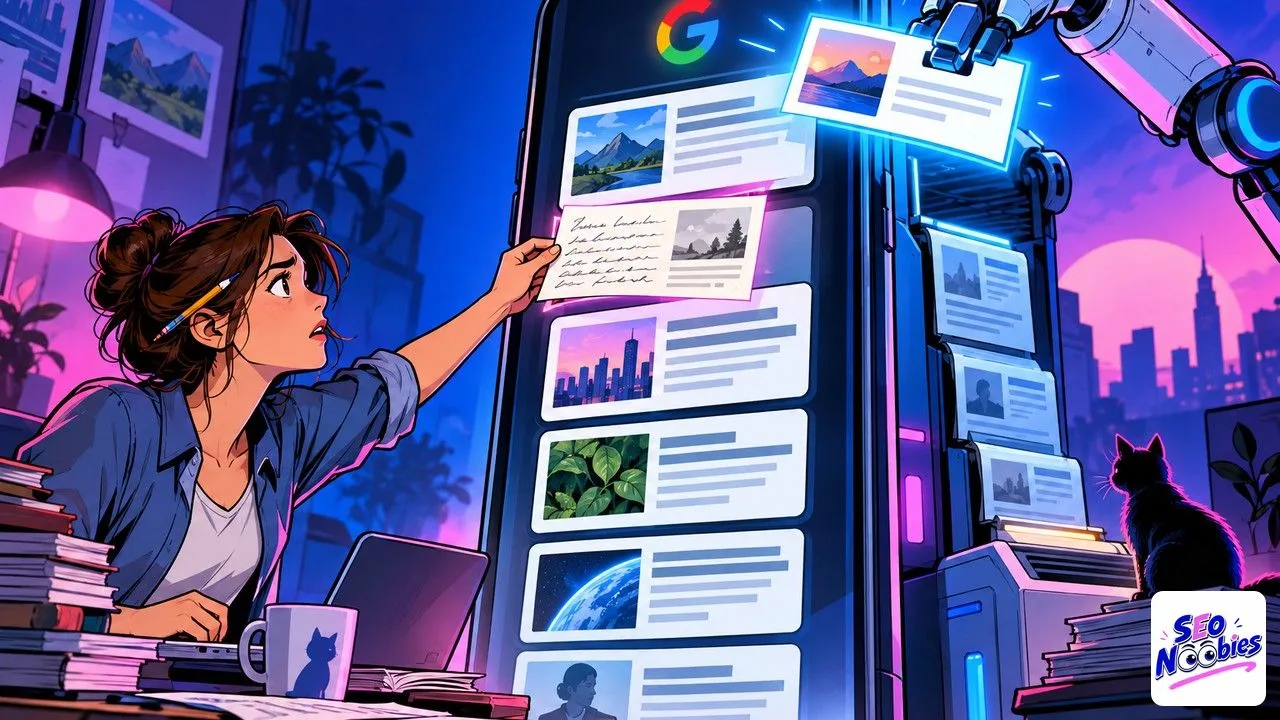
Google Discover, the article feed that sits under the search bar in the Google app and on many Android phones, looks set to change what it actually shows people. Three job listings posted by Google describe a team that recommends AI-generated content in that feed, plus a design leadership role meant to turn it into a hyper-personalized assistant. Google gives no launch date, and nothing says yet how much of the feed would be affected. Still, if part of your traffic comes from Discover, these listings give a fairly clear picture of where the product is heading.
TL;DR
Three Google job listings live in October 2026 describe a Discover team that recommends AI-generated content and checks its quality.
The design listing aims for a proactive, hyper-personalized Discover built together with YouTube, Shopping, Chrome and Android.
None of the listings gives a timeline, and the share of AI content in the feed is unknown.
Search Console already counts your impressions in Discover’s AI features, which makes it the first report to open.
Get an AI summary of this article
What the Google Discover job listings actually say
Damien Andell spotted the listings and flagged them on X, and Matt G. Southern then covered them for Search Engine Journal. They are still live on Google’s careers site, and the wording leaves little room for guesswork. The clearest one is a machine learning engineer role on the Google Discover feed recommendation team. The listing states that this team leads by recommending AI-generated content to fulfill user interests, and the job itself is about quality control for that content.
The responsibilities go well past picking articles. The new hire is expected to build “agentic flows”, meaning chains of tasks run by AI models, to generate content for what Google calls proactive surfaces: Discover and notifications. The same person has to make sure that content stays factual, fresh, coherent and on tone. Put simply, Google is hiring people to produce text at scale and to keep it reliable.
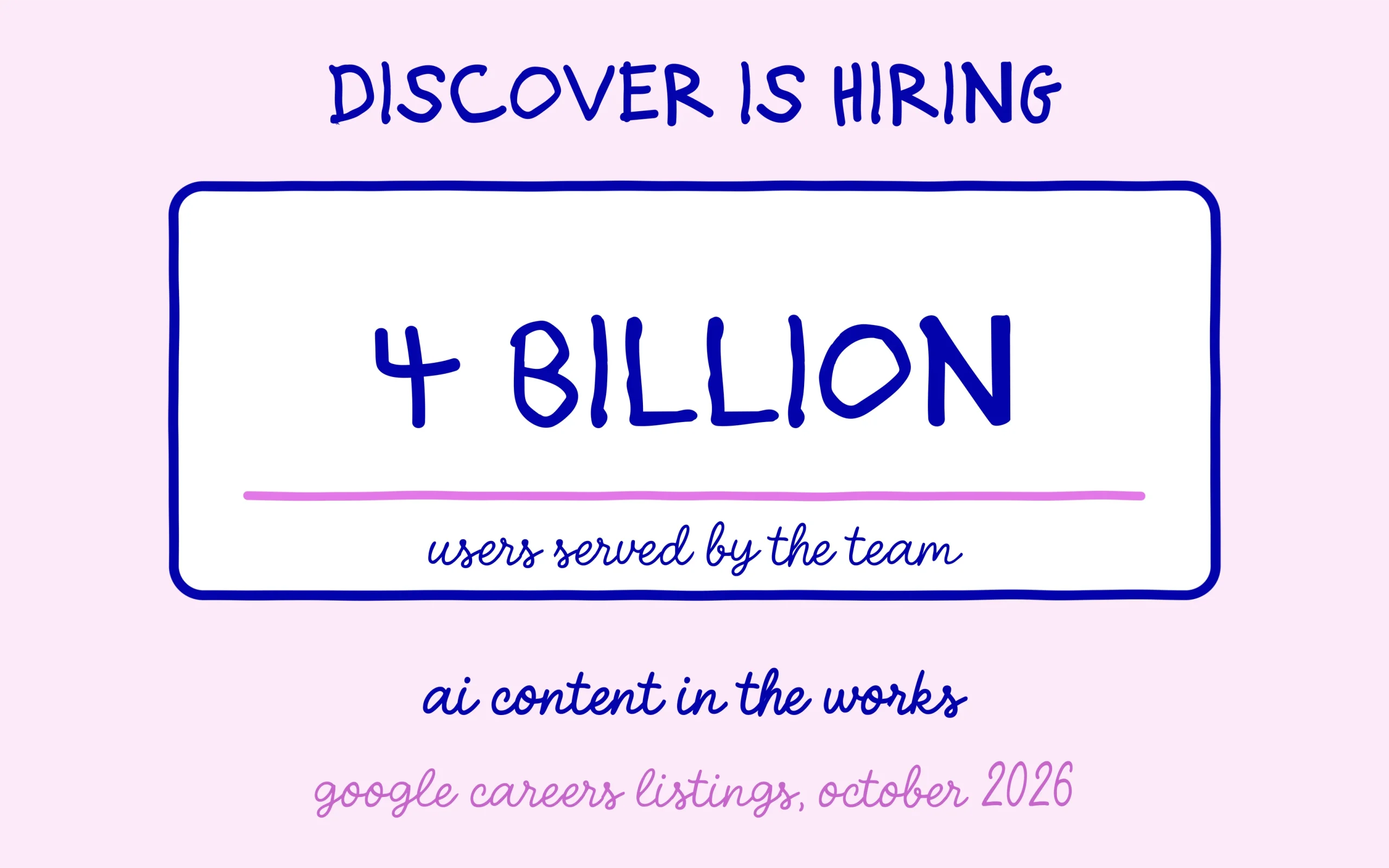
A second, more senior engineering listing repeats the idea in almost the same words: AI-generated content recommendation systems and agentic flows for Discover and notifications. It adds that the team serves more than 4 billion users. Google now describes a feed that writes some of its own stories. That shift in wording matters for every site that feeds Discover today, many of which have already watched their clicks move since AI answers started showing up above the results, as covered in the look at AI Overviews cutting clicks in France.
Discover the SEO Noobies agency

A more personal feed that still promises room for human sources
The third listing is for the design lead of Google Discover, a role paid between $275,000 and $382,000 a year in base salary. It sums up the goal in one line: transform Discover into a proactive, hyper-personalized “concierge experience” that helps users make progress on their goals. The same listing talks about moving people from inspiration to action, and about working with the YouTube, Shopping, Chrome and Android teams on a unified experience.
What’s reassuring is that the listing comes back to balance twice. The future design lead has to weigh AI capabilities while “centering human voices and sources”, and scale AI-enabled formats while elevating human perspectives in the feed. In other words, Google frames AI content as a layer added on top, with publishers’ articles still part of the mix. The big unknown remains: none of the three listings says what share of the feed would be generated, or when any of this ships.
These hires also follow a clear thread. On June 3, 2026, Google launched Search Console reports dedicated to generative AI features, including a separate report for Discover, and a note on the post says they reached every site worldwide on August 31. That report counts how often your pages appear in Discover’s AI features, by page and by country, with no click data. How those numbers work is explained in the piece on the AI impressions report in Search Console.
What a site that relies on Discover can do right now
Nothing changes overnight. A job listing describes a plan and a team, and months can pass between a hire and anything users actually see. That gap is useful, because it gives you time to read your own data before the feed moves instead of after a drop.
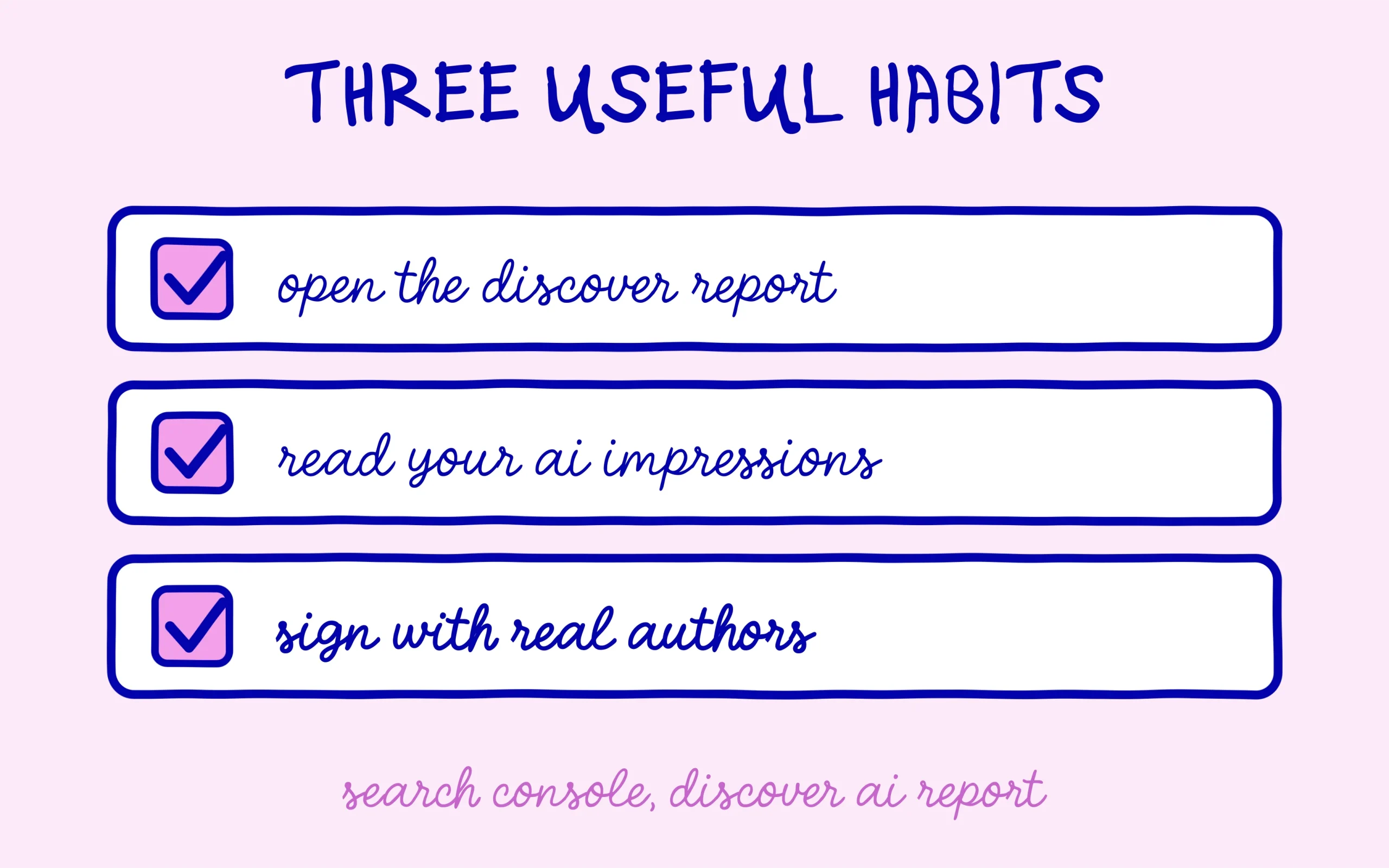
Start by measuring how much of your traffic comes from Google Discover. In Search Console, the Discover report shows up under Performance once a site has earned enough impressions in the feed. If you have never seen that report, Discover sends you too few visits for this change to hurt much. If it shows a large share of your traffic, you want to know that now. To read those numbers next to your sales or sign-ups, the comparison of Search Console and Google Analytics helps you pick the right tool for each question.
The second habit ties back to what the design listing calls human voices. If Google wants to keep room for human sources in Google Discover, an article signed by a real person, with experience a reader can check and an opinion backed by reasons, fits that promise far better than a generic piece the feed could summarize on its own. What an AI cannot write for you gains value. A first-hand account, a photo taken on site, a number pulled from your own business: those remain hard for a model to generate.
Finally, leaning on a single traffic source is risky whatever the platform. A site that gets most of its visits from Google Discover is better off growing its classic search traffic, its newsletter or its social following on the side, so the next feed change does not cut everything at once. That said, there is no reason to panic today: the listings describe a project, Google says it will keep human sources in the feed, and Search Console already gives you the numbers to follow the shift week by week.
Keep learning on SEO Noobies.