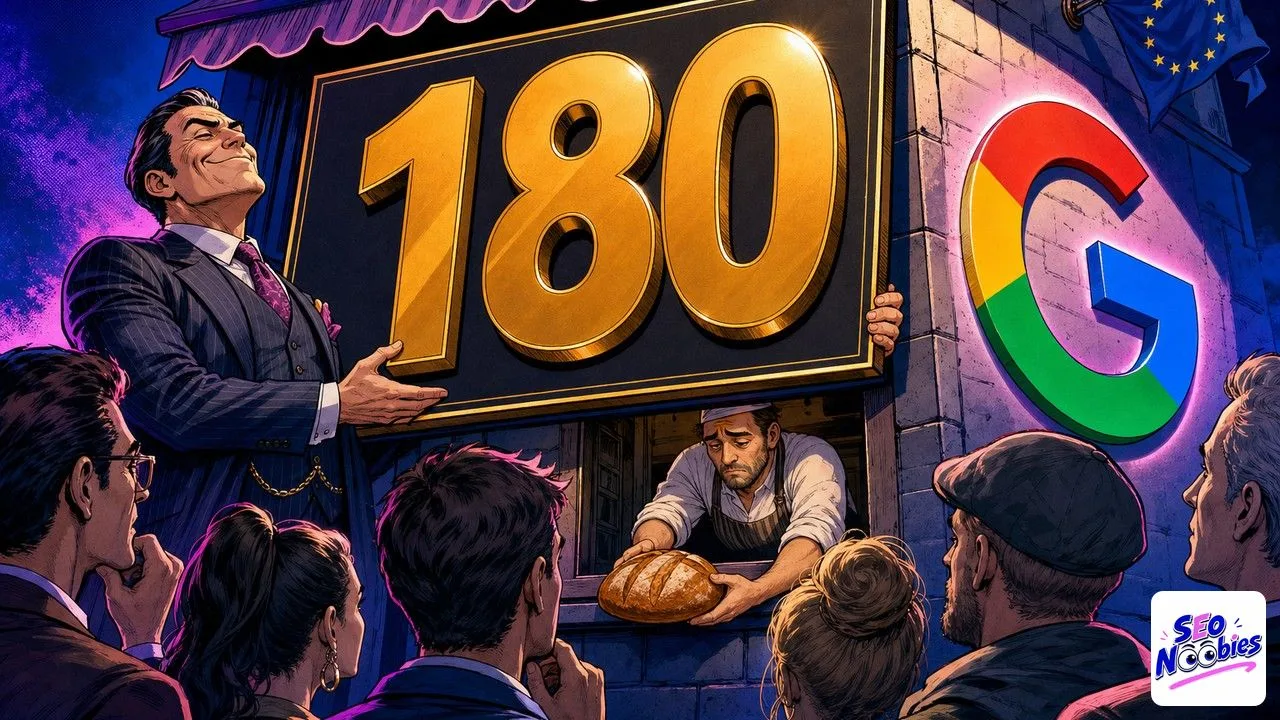
Companies rarely announce that they have made their own product worse. Google just did exactly that for its search results across Europe, rolled out in a new form on September 8. Nick Fox, senior vice president for knowledge and information at Google, calls it the largest drop in service quality in the search engine’s twenty-nine year history. The cause sits in three letters, the DMA, plus two fines handed down over the summer. For anyone running a small site, the standoff itself matters far less than what just changed on the page where customers look for you.
TL;DR
Google rolled out a new layout for its search results across the European Union on September 8, to comply with the Digital Markets Act.
The company itself calls the change the steepest quality reduction in twenty-nine years of running the search engine.
Comparison sites and online intermediaries move to the top of the page, while businesses selling directly drop down to a minimal listing.
Google puts the drop in free direct booking traffic caused by its earlier DMA adjustments at 30 %, and expects this version to deepen it.
Summarize This Article with AI
ChatGPTWhat Google changed inside European search results
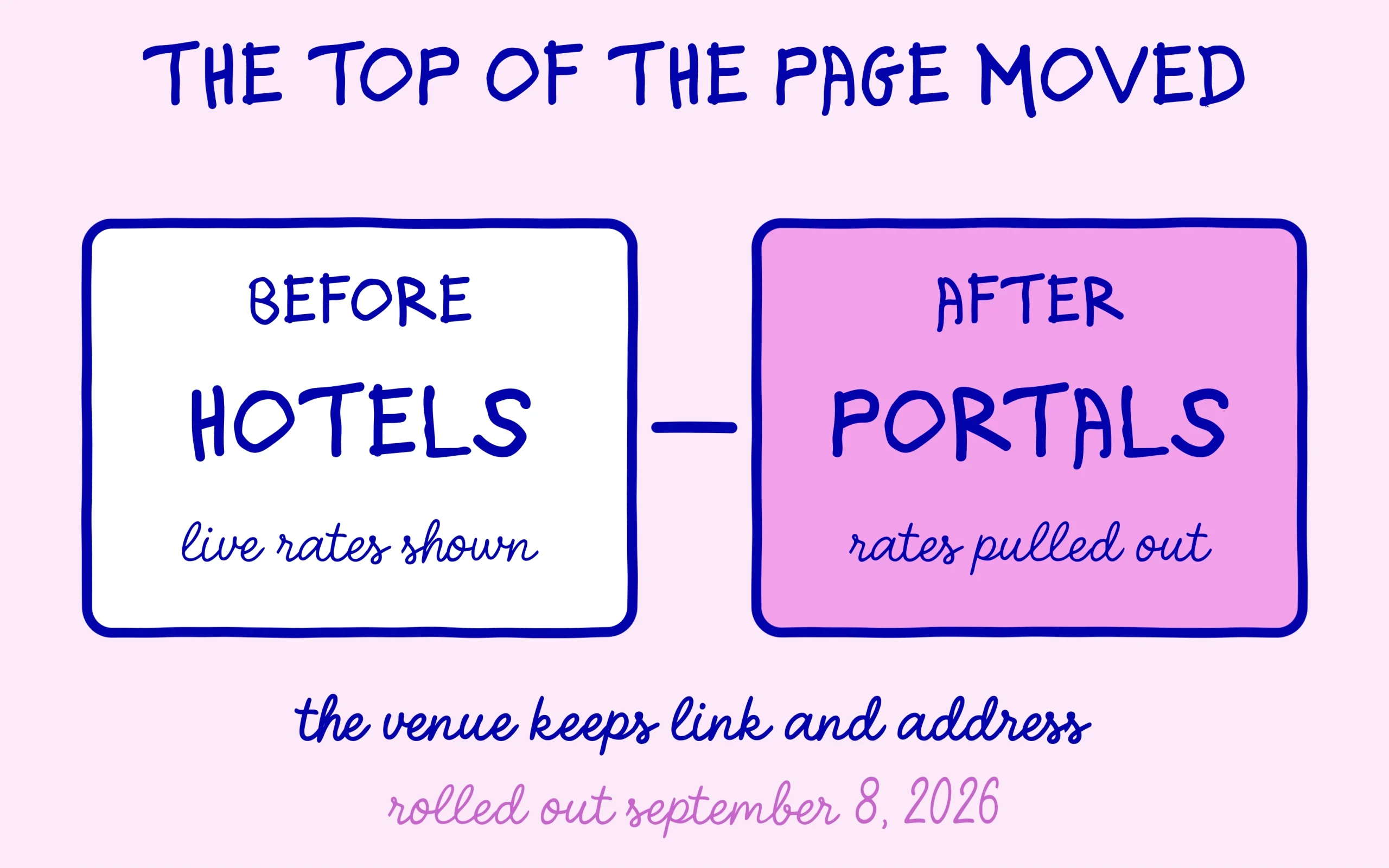
The change lands at the top of the search results, the part everyone sees before scrolling. One specialised search service now appears first, with a detailed display. Two more of the same kind follow underneath, stripped down. A carousel of individual businesses only shows up after that. In practice, a comparison site such as Booking or Expedia now occupies the slot that used to hold a mixed block of venues and their live rates.
The second change is quieter and probably heavier. Businesses appearing directly now get a listing trimmed to three items: a website link, a phone number, an address. Live pricing and availability have been pulled out of the hotel and flight carousels entirely. A hotel owner who used to show tonight’s rate straight inside Google no longer shows it, while the comparison site sitting above them still does.
A quick reminder helps here, because search results have turned into a stack few people break down. Between paid ads, AI answer blocks, related questions and themed carousels, the classic blue links have drifted far below the fold. If that anatomy feels blurry, the breakdown of every block on a Google results page covers the groundwork.
Fox’s own wording deserves quoting directly, since it describes the mechanism better than any commentary could. The changes, he writes, degrade the experience for Europeans by boosting online intermediaries at the expense of local businesses, and by removing helpful features people rely on every day. Coming from the company that built those features, the admission is unusual.
The ranking algorithm itself went untouched. Google still decides which comparison site outranks which, and which business makes it into the carousel. What changed is the kind of element allowed to hold the top positions, and how much detail each one may display. A business can keep its exact ranking and still lose half its visible surface.
One last framing point, and it matters for reading the analyses about to circulate. These changes only reach users located inside the European Union. An American agency posting a screenshot of its own search results page is not showing what European customers see. Any before-and-after comparison making the rounds deserves a check on where it was captured.
Why businesses selling directly lose clicks
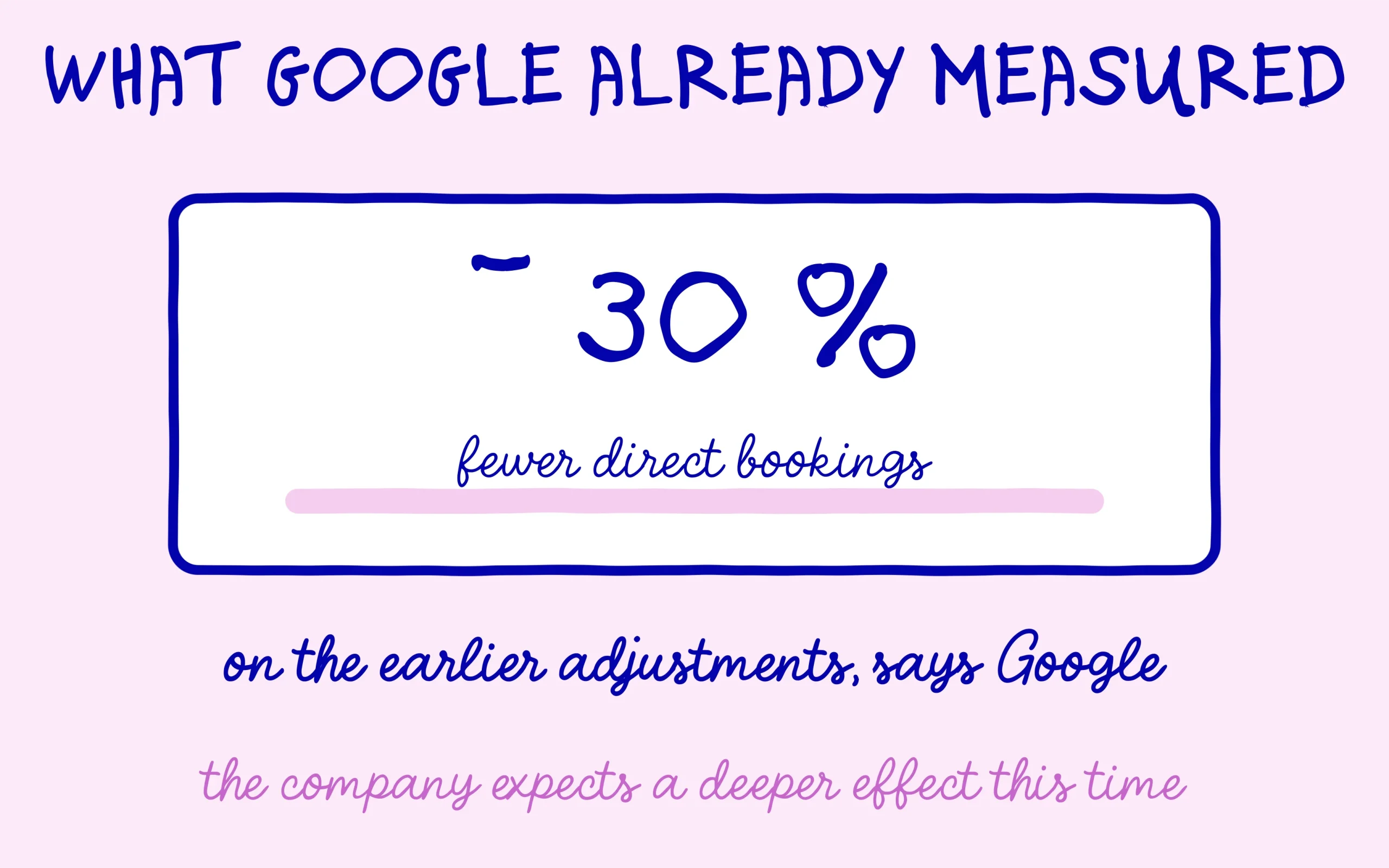
The firmest number in this whole story comes from Google rather than from an outside observer. Earlier adjustments tied to the same regulation had already cut free direct booking traffic to European businesses by 30 %. The company says it expects the new version to widen that gap. A statement like that deserves the obvious caveat, since Google is defending its corner in a regulatory fight, though the figure is its own and measured on its own data.
The mechanism is easy enough to follow for anyone selling a bookable service. There is now an extra layer between a searcher and a hotel, and that layer takes a commission. The customer may well end up booking the same room, in the same venue, having passed through a middleman who charges for the passage. The visit did not vanish, it changed owner.
That said, this shift stacks on top of others already under way for months. Links shown in results stopped pointing straight at sites once Google began routing them through an intermediate redirect page of its own, and generated answer blocks keep absorbing a growing share of informational queries. Each layer looks bearable on its own. Their accumulation explains why so many sites watch impressions hold steady while clicks erode.
On the financial side, July’s penalties covered 460 million euros for favouring Google’s own shopping, hotel and transport services, plus 430 million over app developer restrictions. Cumulative European antitrust sanctions now reach 10.38 billion euros, and with fines able to climb to 5 % of global revenue, compliance costs less than resistance. Travel and hospitality are the immediate proving ground because they sit at the heart of the complaint, though nothing yet says the same mechanics will extend to other verticals.
What a small site can do while the page shifts
The first move takes fifteen minutes and no paid tool. Open Search Console, isolate your twenty main queries, then compare impressions and clicks from the last week of August against the week of September 8. Steady impressions paired with falling clicks point to a result that slid down the screen without sliding down the rankings. That pattern is the signature of the change described above.
Next comes real work on what your listing shows once it gets trimmed to the bone. If Google displays nothing but your link, your phone number and your address, those three items carry the customer’s decision alone. A page title naming exactly what you sell and where, a meta description giving a concrete reason to click, a business profile kept current: details long treated as secondary now serve as your entire shopfront.
Dependence on the engine is worth facing squarely too. A business pulling 90 % of its enquiries from Google absorbs every change to that page with no cushion. An email list, visitors returning by typing your name, local word of mouth: those channels look modest while the search curve climbs, and turn decisive the day it flattens.
Worth flagging to head off a common misreading: losing surface at the top of the page does not make search work pointless. Ranking still decides who enters the carousel and who stays out, and that spot is earned the same way it always was. What drops is the yield of any given position, which lines up with the long-running measurement of how many Google searches now end without a single click.
Finally, a word on timing. A rollout this size takes weeks to settle, and early readings blend the change with the usual September pickup in activity. Waiting until late October before drawing conclusions from your own numbers will spare you from fixing the wrong thing. Reuters first reported Google’s warning, and the coverage of Nick Fox’s statement on the degraded European experience lays out the full regulatory timeline.

Keep learning on SEO Noobies.