
Topical authority is an old SEO idea that is roaring back with the rise of AI answers, and for once the hype is partly earned. A large study just measured what makes a brand get cited or ignored by ChatGPT on a given subject, and the result is rather encouraging for small sites. After ten years in SEO, this is the kind of data I had been waiting for to stop talking about GEO on gut feeling alone. It shows that most subjects still have no clear winner on the AI side, and that the field is wide open. Here is what it says exactly, and how a beginner can put it to work without losing any sleep.
TL;DR
Topical authority means being recognized as a reference on one precise subject rather than on everything at once.
A study across more than a thousand categories found that only 15% had a clear owner in ChatGPT answers.
Close to 90% of AI-search demand therefore sits on subjects with no established winner yet.
For a young site, picking a narrow theme and covering it fully beats spreading thin across fifty topics.
Summarize This Article with AI
ChatGPTWhat topical authority changes inside AI answers
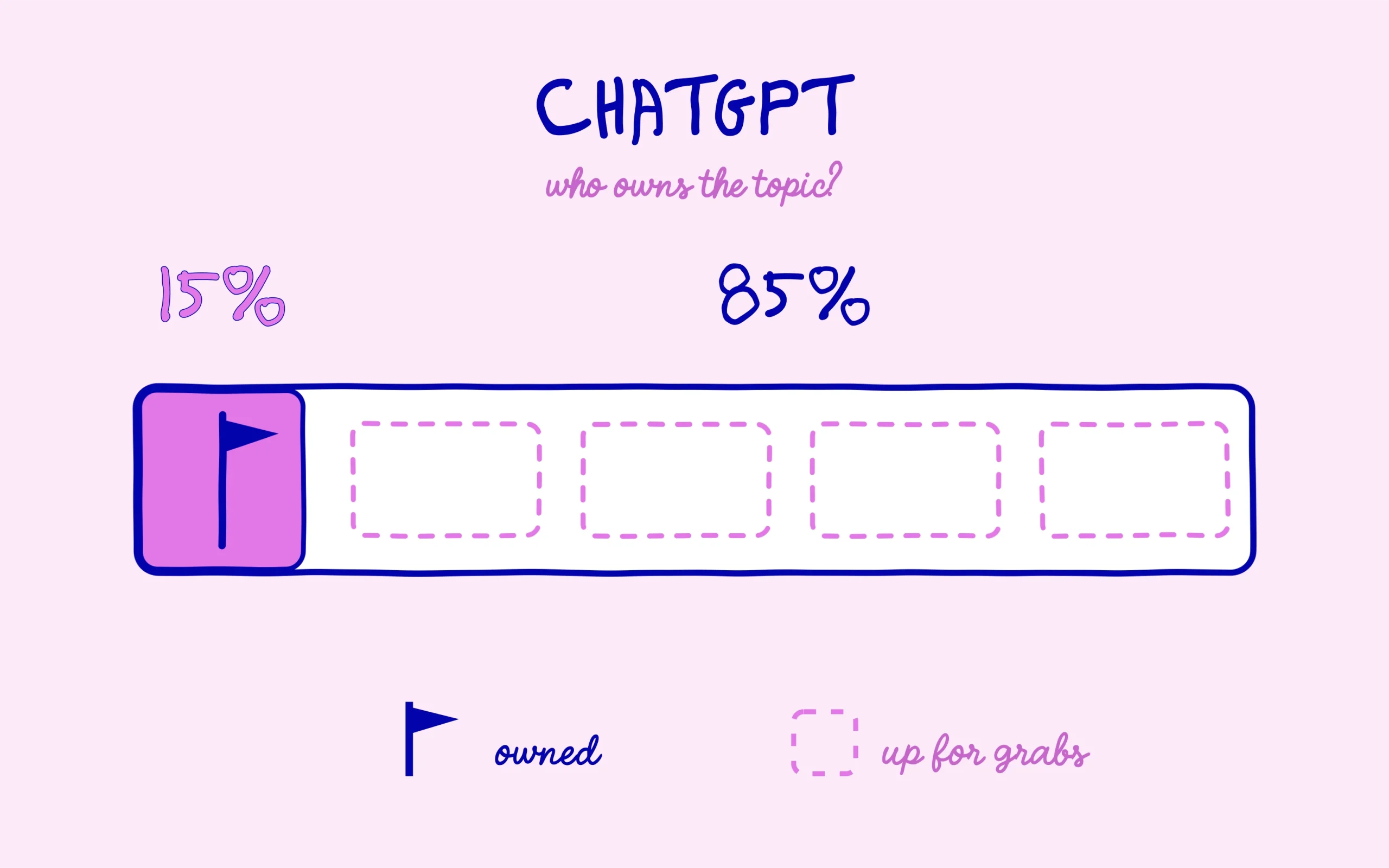
The study tracked 1,094 US categories month after month inside ChatGPT, across a sample of more than 220,000 domains and 50,000 brands. The first surprise fits in a single number: barely 15% of those categories had a clear owner, a brand cited almost every time you ask the AI about the subject. More than half were open fields, with several contenders neck and neck. Nearly 90% of demand sits on subjects with no established winner, as detailed in the Semrush study on topic authority inside ChatGPT.
Once a brand builds that topical authority, it tends to keep it. Owners with a solid lead held first place in nine month-over-month comparisons out of ten. Leaders with a thin lead, on the other hand, got knocked off far more often, and in the still-unsettled categories the top brand changed in close to one case out of three. In other words, the AI rewards consistency on a theme, not the isolated big splash. That pattern lines up with the way AI engines keep the sources they judge trustworthy in memory over the long run.
So what does owning a category actually mean? Picture someone asking ChatGPT for the best invoicing software for freelancers. If your brand comes back almost every time in the answer, you own that subject in the eyes of the AI. If ten brands share the mentions without any of them standing out, the category is open. Topical authority is exactly that: the odds that the AI thinks of you when it talks about your niche. And the study shows that, on the vast majority of subjects, that spot is still taken by nobody.
One honest word on the method, because it matters for reading these numbers right. The study only looks at ChatGPT, in the United States, with five prompts per category, and it counts brand mentions in the answer, not the exact prominence of the citation. So it covers neither Perplexity, nor Gemini, nor the French market, and the orders of magnitude will surely move elsewhere. But the underlying trend is solid and matches what I see on the ground: on most subjects, no brand has locked in its spot yet, and that is a window that will not stay open forever.
Why strong SEO no longer means owning a subject
The point that should speak to everyone here is that the old SEO signals are no longer enough to claim a subject. The study checked whether the big domain metrics, overall authority or organic traffic, predicted ownership of a category. They matched only about half the time. Strong SEO puts you in the race, which stays essential, but once several brands are in contention, it is the depth of coverage on the precise subject that turns an underdog into an owner.
In practice, the winners are not the biggest sites, they are the ones that treat a theme in full rather than on the surface. They publish on every angle of a question, they pile up mentions around that theme, they become the obvious address on their niche. That is genuinely good news for a beginner, because domain size matters less than it used to. It echoes what we already saw about what Google rewards or penalizes in content in the AI era: consistency and real added value beat raw volume.
What separates the owners from the runners-up is not mysterious either. They more often have a high brand search volume, more organic traffic, a better authority score, but each of those signals only makes the difference a little more than half the time. None of them is a guarantee on its own. The common thread that really shows up is that people talk about them on their theme all over the place, not only on their own site. Mentions of your brand around a subject, on other sites, in discussions, in videos, weigh as much as your own pages in what the AI ends up remembering.
How a beginner can target a category still up for grabs
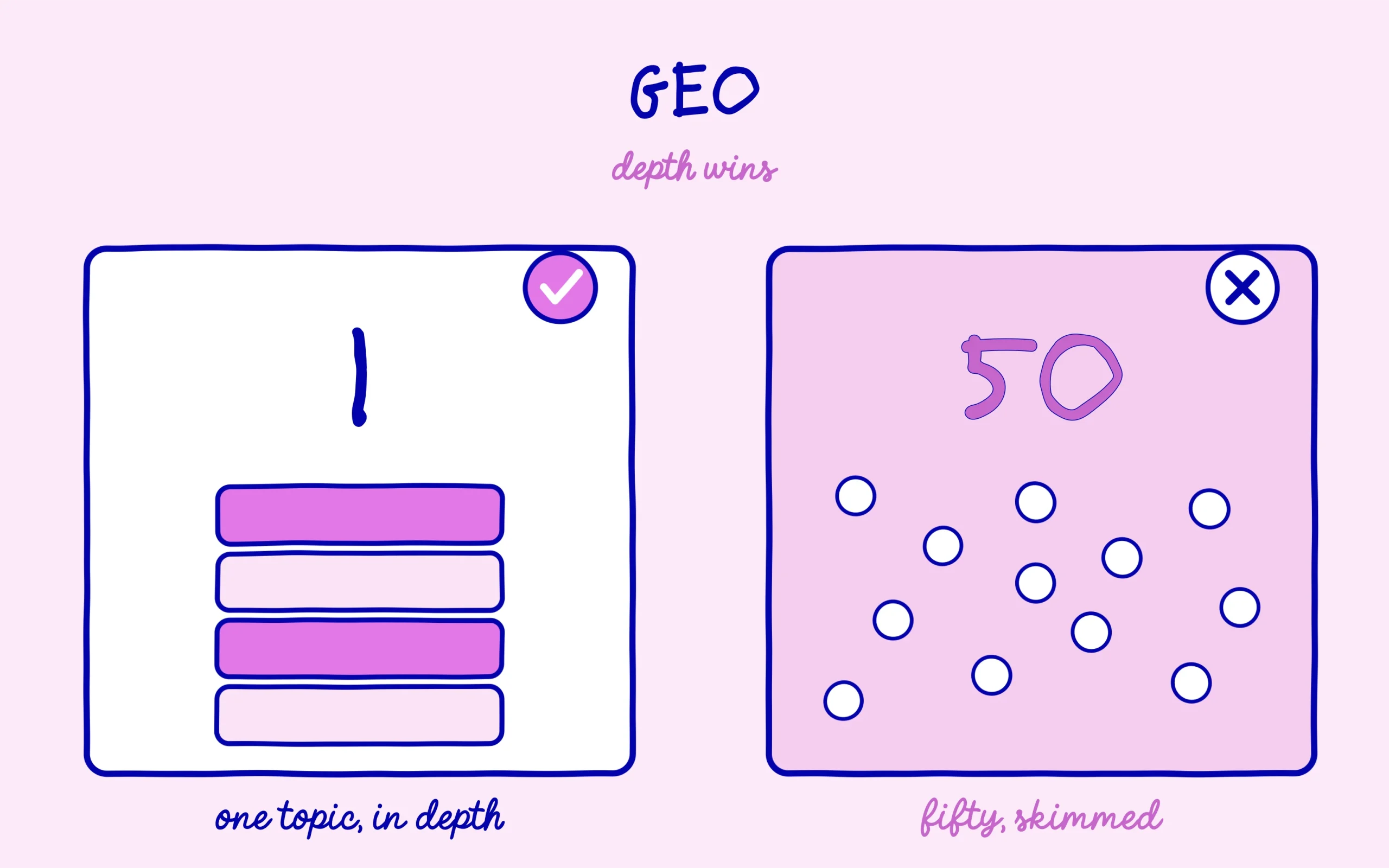
The practical lesson is almost counterintuitive when you are starting out and want to rank on everything. Better to pick ten to twenty subjects that truly matter for your business and cover them seriously, rather than sprinkle a hundred articles across a hundred different themes. And within those subjects, aim first at the ones with no clear owner yet, where several brands share the citations without any of them dominating. That is where the room is free to build your topical authority. To frame that thinking from the start, going back over how SEO and GEO play together in 2026 helps you pick the right battles.
My method when a client starts out comes down to three simple moves. First, list the five to ten questions their audience genuinely asks about their work, the ones that keep coming up in calls or emails. Then, check by hand in ChatGPT or Perplexity whether a brand already dominates the answers on those questions, or whether it is all blurry. Finally, go first for the blurry subjects, the ones with no favorite, publishing serious content on every angle of the question rather than one rushed article. It is slow, it takes consistency, but that is exactly where a topical authority that lasts gets built.
The rest is patience. Becoming an AI engine’s reference on a subject does not happen in three articles, it is deep work measured in months. But the study is clear on one thing: positions freeze fast once a brand takes the lead on a theme. Those who plant their flag now on a subject still up for grabs gain a head start that is hard to claw back once the AI has picked its favorite.



[…] All four share the trait that makes them harmful. AI answers come out in the same steady tone in every case, with no caveat, no hedge, no mention of the patch-up that just took place. The buyer reads something believable and walks away with it. nothing in the wording flags the substitution, so the signal that would make you react never arrives. Building a recognisable place on your subject remains the sturdiest defence, which is the whole point of the topical authority generative engines look for before citing anyone. […]
[…] structure moves a page from unusable to usable, it does not create standing. That is the subject of topical authority and how it gets built, and it is months of work no amount of formatting substitutes […]