
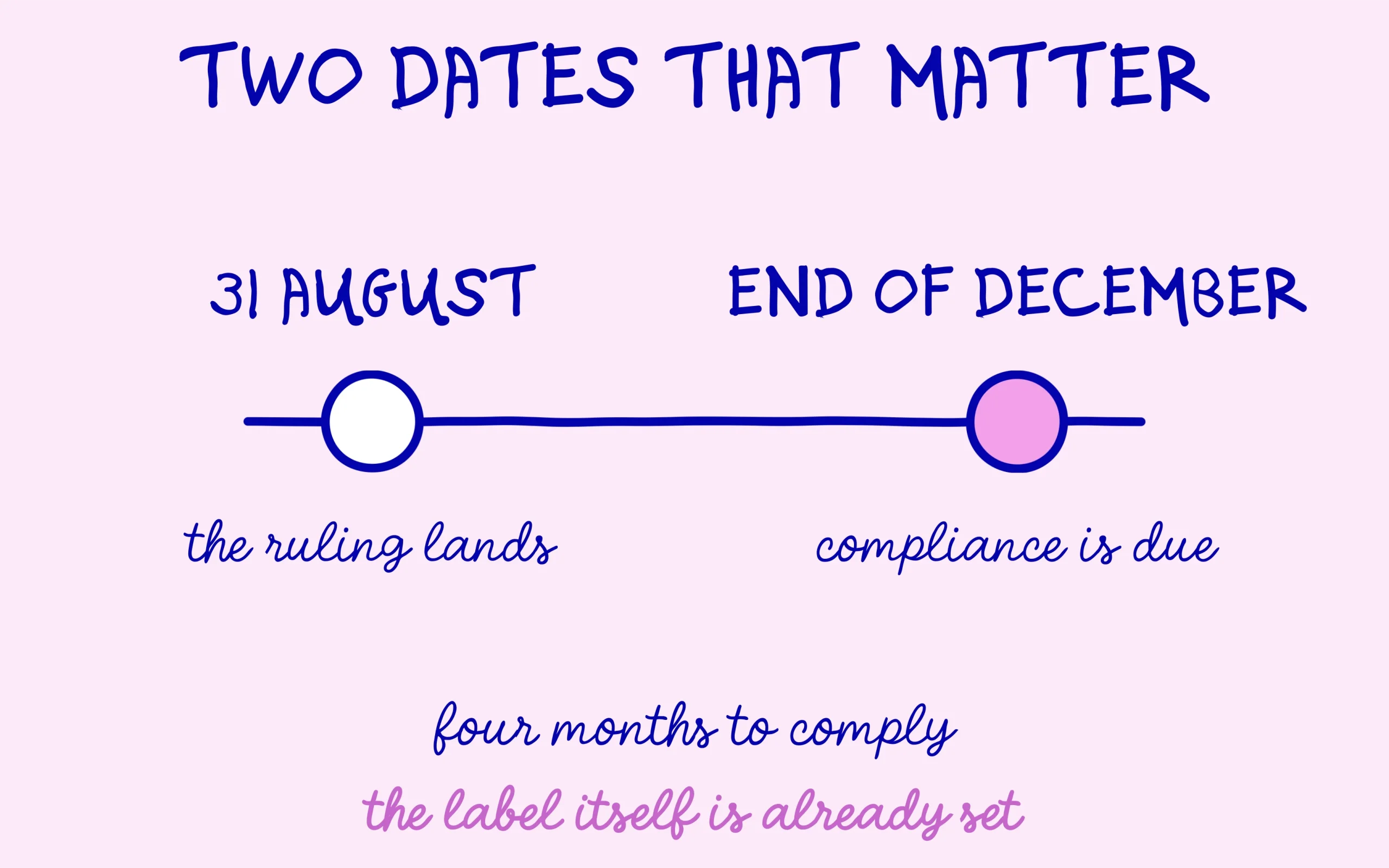
On 31 August, the European Commission put ChatGPT in the same regulatory box as Google Search and Bing. If you run a small site, a Brussels classification probably sounds like the least useful piece of news you could read this week. There is a number behind it though, and a piece of official recognition, and both say something concrete about where the people you want to reach are now looking for answers. Here is what the Commission actually decided, why the number matters, and what a young site can reasonably do with it.
TL;DR
The European Commission designated ChatGPT a Very Large Online Search Engine on 31 August 2026, under the Digital Services Act.
OpenAI reported roughly 159.1 million average monthly users in the EU for ChatGPT search, well past the 45 million threshold that triggers the category.
OpenAI has four months, until the end of December 2026, to meet the heavier obligations that come with the label.
For site owners the practical takeaway is short: getting cited inside ChatGPT now sits under search visibility, not under experimental side projects.
Summarize This Article with AI
ChatGPTWhat counts as a search engine in Brussels
The Digital Services Act, usually shortened to DSA, is the European law that has governed large online services since 2023. It runs on one simple trigger: any service averaging more than 45 million monthly users across the Union moves into a tier with heavier duties. Platforms land in the Very Large Online Platform bucket, and search products land in the Very Large Online Search Engine bucket.
On 31 August 2026 the Commission notified three services at once. Reddit and Roblox move into the platform tier. ChatGPT moves into the search tier. The Commission framed the call by describing ChatGPT as a hybrid service that answers user prompts and queries, including by searching the web, which is what pulls it into the legal definition of a search engine.
What stands out is that the question was settled on behaviour, not on architecture. Whatever model runs underneath, if tens of millions of people use the thing to look up information, the regulator treats it as a search product. real usage outranks the label on the box, and that is exactly the reasoning a site owner should borrow.
In practice OpenAI has four months from the notification, so until the end of December 2026, to comply. The duties cover assessment and mitigation of systemic risks: spread of illegal content, effects on minors, harm to fundamental rights, integrity of electoral processes. None of that touches ranking directly, and it would be dishonest to pretend otherwise.
With these three additions the European list of services under the stricter regime reaches twenty-eight names. Most of them are the usual suspects, the big social platforms and the two established search products. This is the first time a mainstream artificial intelligence assistant joins that list, which explains why the decision travelled far outside legal circles.
The 159 million figure and what it signals
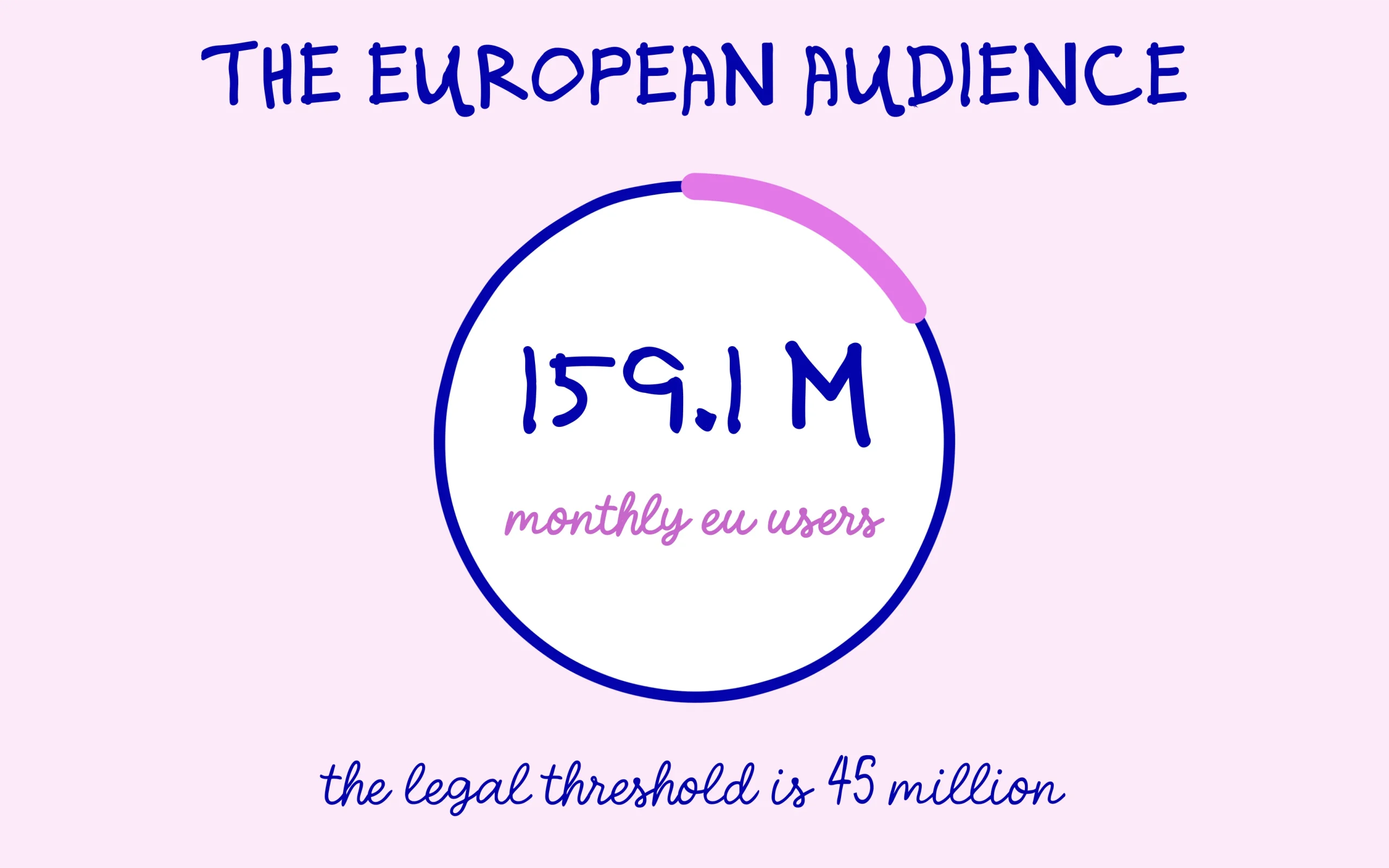
The number OpenAI reported for ChatGPT search inside the Union sits at roughly 159.1 million average monthly users. With the legal threshold set at 45 million, that is more than three times the bar. The designation was never a borderline call anyone could argue about, it was arithmetic.
The value of that figure is mostly as an order of magnitude. Anyone who kept wondering whether GEO, meaning optimisation for generative engines, deserved attention now or later has a numeric answer. The audience already exists, it is European, and the publisher declared it in a legal setting where inflating the count would buy nothing. Who ends up quoted in those answers is the harder question, and the licensing deals OpenAI has signed already weigh on it.
Another angle gets missed when this kind of announcement goes round: the category also drags transparency duties along with it. Very large search services have to publish regular reports, open a supervised data channel to vetted researchers, and disclose the main parameters behind their recommender systems. The Commission lays out that transparency layer in its documentation on the regulation.
Does that mean anyone will finally learn why ChatGPT quotes one site over another? Honestly, expect nothing on that front in the short term. The duties land on risk and moderation, not on the ranking recipe. What might come out of it is a bit more public material to work from, in the same spirit as what already surfaces when you dig into how ChatGPT assembles its recommendations.

What a young site should actually do
Step one takes ten minutes and costs nothing: open ChatGPT, ask the five or six questions your site answers, and read what comes back. Does your domain show up in the sources panel? Are those your competitors instead? Are there no sources at all? Those three outcomes point to three different pieces of work, and the full method sits in our walkthrough on checking your AI citations for free.
Step two is resisting the urge to rebuild everything. A generative engine leans heavily on the same pages classic search leans on. The fundamentals that get you ranked on Google, a page that genuinely answers a question, a readable structure, sources you actually cite, are the same ones that get you pulled into a generated answer. The extra work is real, but it runs alongside your SEO rather than replacing it.
That said, one difference deserves your attention. Generative engines pull passages rather than whole pages. A clear answer written in three sentences under an explicit subheading has a far better shot at being reused than the same idea buried in a fifteen-line block. That is a writing habit to pick up, not a technical rebuild to commission.
A second difference tends to surprise beginners. A conversational assistant does not always link out, and when it does it shows a handful of sources where a classic results page lines up ten. Competition for a slot is therefore tighter than in traditional SEO, and the room to improve sits in the quality of a single answer far more than in the volume of pages you publish.
Then there is the question of how much time this deserves. For a young site the sensible split keeps the bulk of the effort on Google, still by far the biggest traffic source, and reserves a small slice for watching what generative engines say about your topic. The European classification does not change that trade-off. It confirms that the slot exists and that it is the size of a genuine channel.
The lasting point from this week is a shift in vocabulary with practical consequences. When an institution files a conversational assistant under search engines, it is acknowledging that people go there to look things up. A site that wants to be found now has one more place to watch, governed by rules that look a lot like the ones it already knows.
Keep learning on SEO Noobies.



[…] readers and search engines. Europe had already put ChatGPT in a category of its own, as covered in ChatGPT being treated as a search engine under EU law, and this watermark belongs to the same wave of […]