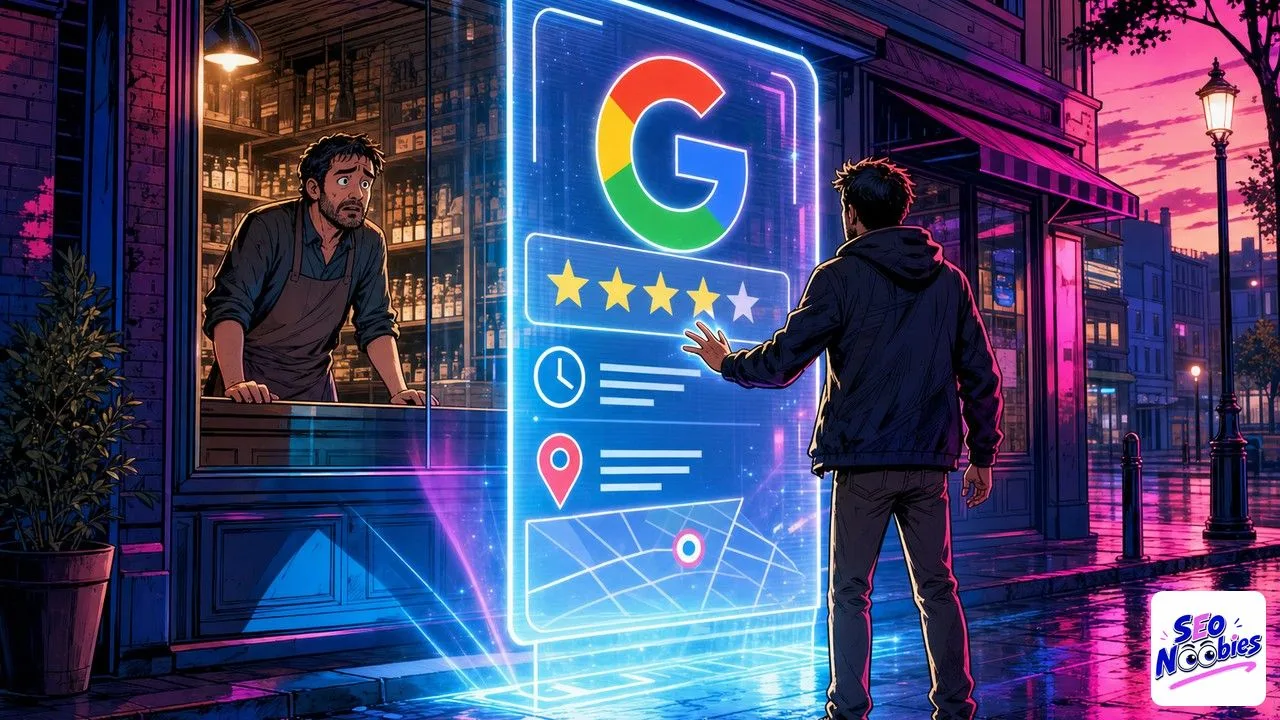
Google AI Mode just crossed a line that is easy to miss when you are starting out, and it changes how your business shows up inside AI answers. In roughly two months, google.com has become the second most-cited domain in AI Mode. Almost all of that jump comes from content Google already owns: its business listings and product panels, shown right inside the answer. In plain terms, when someone asks a local question, Google’s AI increasingly cites Google itself. Here is what is happening and why it matters if you run a site, a shop, or any local business.
En bref
From mid-April to the end of June 2026, citations to google.com in AI Mode grew 8.4x, making it the second most-cited domain in the engine.
Nearly all of the increase comes from Google Business Profile listings and product panels that Google inserts into its own answers.
On local queries (hospitality, dining, home services, real estate, healthcare), Google steps between your brand and the customer, often without sending anyone to your site.
For a beginner, the priority becomes optimizing your Google Business Profile, because that is what the AI displays and cites first.
Summarize This Article with AI
ChatGPTgoogle.com becomes the second most-cited source in Google AI Mode
The finding comes from an analysis of more than 32 million citations tracked in AI Mode between mid-April and the end of June 2026. Over that window, links back to the google.com domain grew 8.4 times, pushing Google into second place among the domains most cited by its own answer engine. The full breakdown appears in the Profound platform’s study on the rise of google.com inside AI Mode. For an engine meant to point people toward the best sources on the web, citing itself at this pace is far from trivial, and the speed of the shift is striking.
Almost the entire increase rests on two kinds of content Google already owns. First, Google Business Profile listings, the cards that show opening hours, photos, address, and reviews. Then product panels, which display specs and comparisons directly in the answer. These cards now open as inline pop-ups inside AI Mode, and Google’s AI cites Google before your brand ever gets the click. The move extends a trend already visible with the rise of Google searches that end without a click, where the answer is enough on its own and the user never needs to leave the page.
One point is worth making to avoid jumping to conclusions. The analysis does not name the top domain, and this second place does not mean Google monopolizes AI Mode answers. What it does show is that a channel you only partly control, your business listing, now carries new weight in how the AI describes you. The signal is still quiet in your traffic numbers, yet it is very real in the answers your potential customers read every day.
On local queries, Google steps between you and the customer
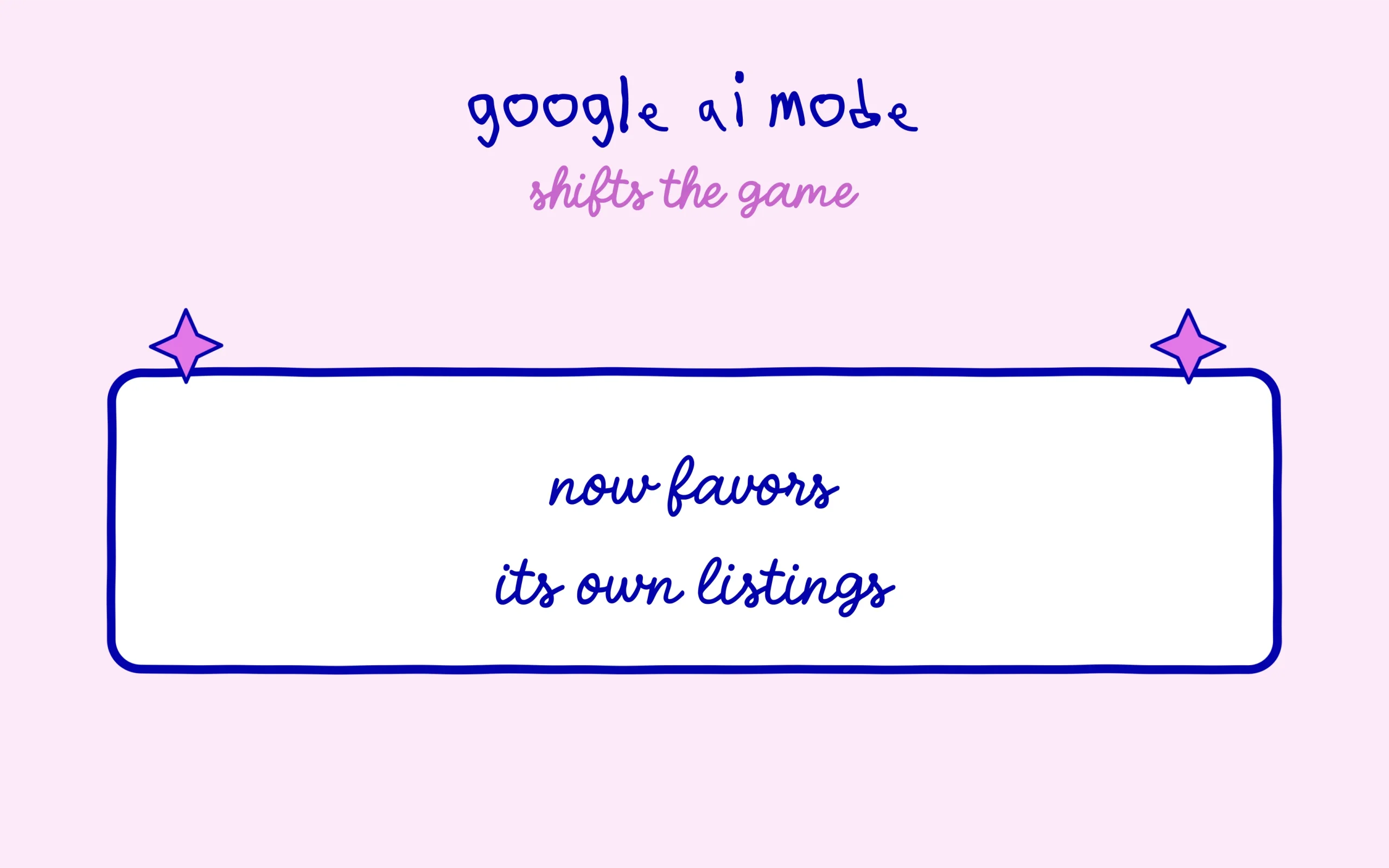
This shift does not touch every topic the same way. It concentrates on local-intent queries, the ones where someone is looking for a service near them. The sectors most affected are hospitality and travel, dining, home services, real estate, and healthcare. All of them are fields where a customer’s first move is to ask for an address, an opening time, a price, or a review, which is exactly what Google’s listings surface at a glance inside the generated answer.
Where it really changes things for a small business is the contact with the customer. When the AI answer shows your Google listing with your hours and your reviews, the person gets what they came for without ever landing on your site. You stay visible, but you lose the direct contact with the customer and the data that comes with it. This mechanism is set to reach French-speaking markets with AI Overviews launching in France on September 23, which will spread this kind of enriched answer to everyday searches.
That said, there is a more favorable reading for anyone just starting. If your listing is well kept, Google does part of the visibility work for you, without you having to fight for a blue link on page one. The channel becomes central, so it deserves the same care as a homepage, while many beginners still leave it half filled. It is a more reachable starting point than a long link-building campaign, as long as you actually tend to it.
Optimize your business listing to stay visible
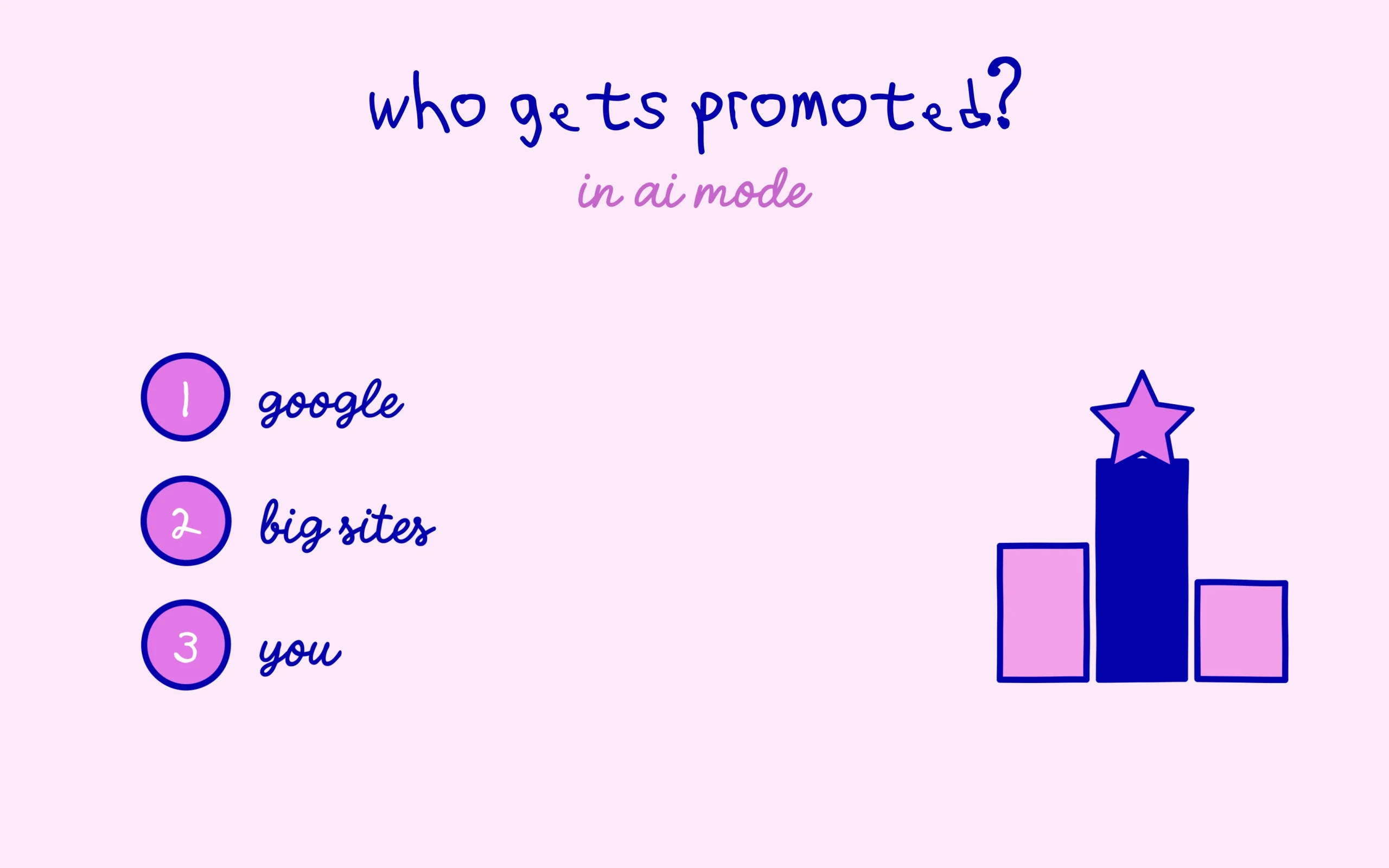
The first action is simple and free: complete and keep your Google Business Profile up to date. Precise business category, exact hours, recent photos, a clear description, regular replies to reviews. This is the content Google AI Mode pulls from first, so every field you fill raises your odds of being cited accurately rather than vaguely. A half-empty listing leaves the AI to guess, and it rarely guesses in your favor.
The second action is to keep your information consistent everywhere it appears. The same name, address, and phone number on your site, your listing, and your directories. Generative engines work on the same web as classic search, as Google reminded everyone when it explained that you do not need a separate site to be read by AI. For a local business, a complete listing outweighs a perfect website in what the AI keeps and serves to your future customers.
That leaves the deeper question of dependence. Building all of your local visibility on a listing hosted by Google is closer to renting land than owning it. The sensible response is to keep your listing seriously while holding on to a site and an audience of your own, email or social, that Google does not control. The exact pace of this shift stays uncertain, but the direction is clear, and preparing early costs far less than catching up once you have fallen behind.



[…] more accessible, yet it also changes how visible each link is. The same tension showed up with Google AI Mode putting its own listings first, where the interface decides what surfaces before anything […]
[…] competition for answer space is hardly unique to OpenAI. It echoes what happens when Google AI Mode starts citing its own listings, with every generative engine constantly rebalancing free citations, in-house listings and paid […]
[…] similar observations about which AI Overview links these boxes favour. AI Mode was already caught leaning on Google’s own business listings as a top cited source, which raises the same underlying question: how much of what looks like a link out actually leads […]