
AI visibility, meaning how often a brand gets named when ChatGPT, Gemini or Claude answer a recommendation question, usually tracks what regular SEO metrics would predict. A study released this week by the growth agency Fractl put actual numbers on the exceptions, and they are worth a close look. Roughly one brand in twenty holds strong SEO authority yet barely shows up in model answers. Meanwhile, some brands with modest Google footprints keep getting recommended far beyond what their metrics suggest. If you run a young site, understanding what pushes a brand into one group or the other is time well spent.
TL;DR
Fractl analyzed 4,320 answers generated by GPT-4o, Gemini 2.5 Flash and Claude Sonnet 4.6 across 8 industries.
For about 90% of brands, AI visibility lines up with measurable SEO authority.
471 brands with solid SEO stay nearly invisible in AI answers, while 377 punch far above their weight.
The difference maker: being mentioned in roundups, reviews and comparison content published by other sites.
Summarize This Article with AI
ChatGPTWhat Fractl Measured Across 4,320 AI Answers
The setup is easy to follow. Kelsey Libert, co-founder of the growth marketing agency Fractl, ran 96 industry-specific prompts of the “recommend me a tool for X” variety, each repeated 15 times on three different models: GPT-4o, Gemini 2.5 Flash and Claude Sonnet 4.6. That produced 4,320 answers and more than 8,500 brand references spread over 8 industries, from travel to insurance. Every brand mentioned was then cross-checked against its classic SEO metrics through Ahrefs, including domain rating, organic traffic and referring domains. The full breakdown sits in the AI visibility index Kelsey Libert published this week.
The headline finding should reassure beginners. In the vast majority of cases, a little over 90% of the brands observed, AI visibility follows measurable SEO authority. A brand that ranks well and earns links tends to be known by the models, and a brand invisible to search engines is invisible to AI as well. The classic groundwork of content, reputation and inbound links remains the foundation. That matches what we saw when looking at how ChatGPT recommendations get settled before the search even starts: models reach first for what they already know.
One number complicates the picture, though, and it deserves attention. Only 11% of the brands referenced appear in all three models at once. Another 12% show up in two, and a full 77% get cited by a single model only. Each AI draws its own map of brands, shaped by its training data and its retrieval choices. Being visible in ChatGPT guarantees nothing on the Gemini side, and the other way around.
Why AI Visibility Sometimes Breaks Away From Strong SEO
The interesting part of the study is the minority that breaks the correlation. About 5% of brands, 471 in the sample, combine high domain ratings and comfortable organic traffic with near-total absence from AI answers. The list is surprising for the names it carries: Sephora, Samsung, GE Appliances, GoodRx, plus major American insurers such as Aetna, Cigna, Humana and Liberty Mutual. Nobody would call these companies weak on brand awareness, yet the models keep skipping them on their own categories.
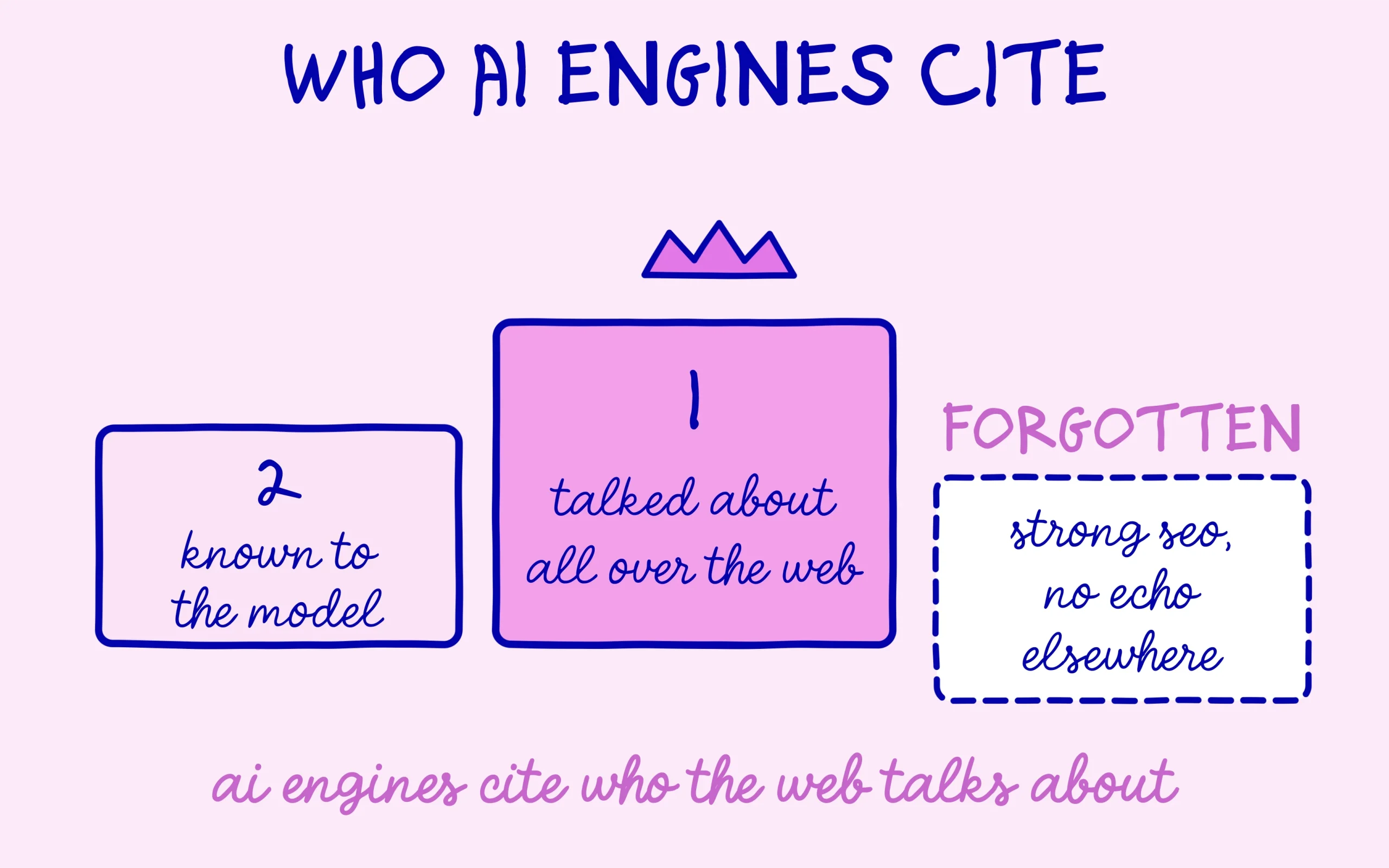
The opposite group exists too. Close to 4% of brands, 377 in the sample, earn more AI visibility than their SEO metrics would predict. Monday.com, Notion, Stripe, Khan Academy, Root Insurance and Doxy.me all sit in that bucket. What these overperformers share is not found on their own pages: they are heavily present in content published by others, the recommendation lists, the comparisons, the expert reviews, the niche write-ups. Models cite the brands the rest of the web talks about, not the ones with the best homepage. The mechanism maps directly onto what builds the topical authority AI engines actually reward.
The study points to a second explanation for the vanishing brands: category positioning inside training data. Some companies end up attached to a sector that does not match their real business, the way Microsoft and Spotify surfaced under fintech in some answers. When a model files a brand in the wrong drawer, it simply never proposes it on the queries that matter. At the top end, sector leaders crush everyone else: Booking.com collects 285 mentions in travel, ahead of Airbnb at 227 and Expedia at 215, while Teladoc dominates health with 275 mentions and Lemonade leads insurance with 213.
Third-Party Mentions, the Lever That Gets a Brand In
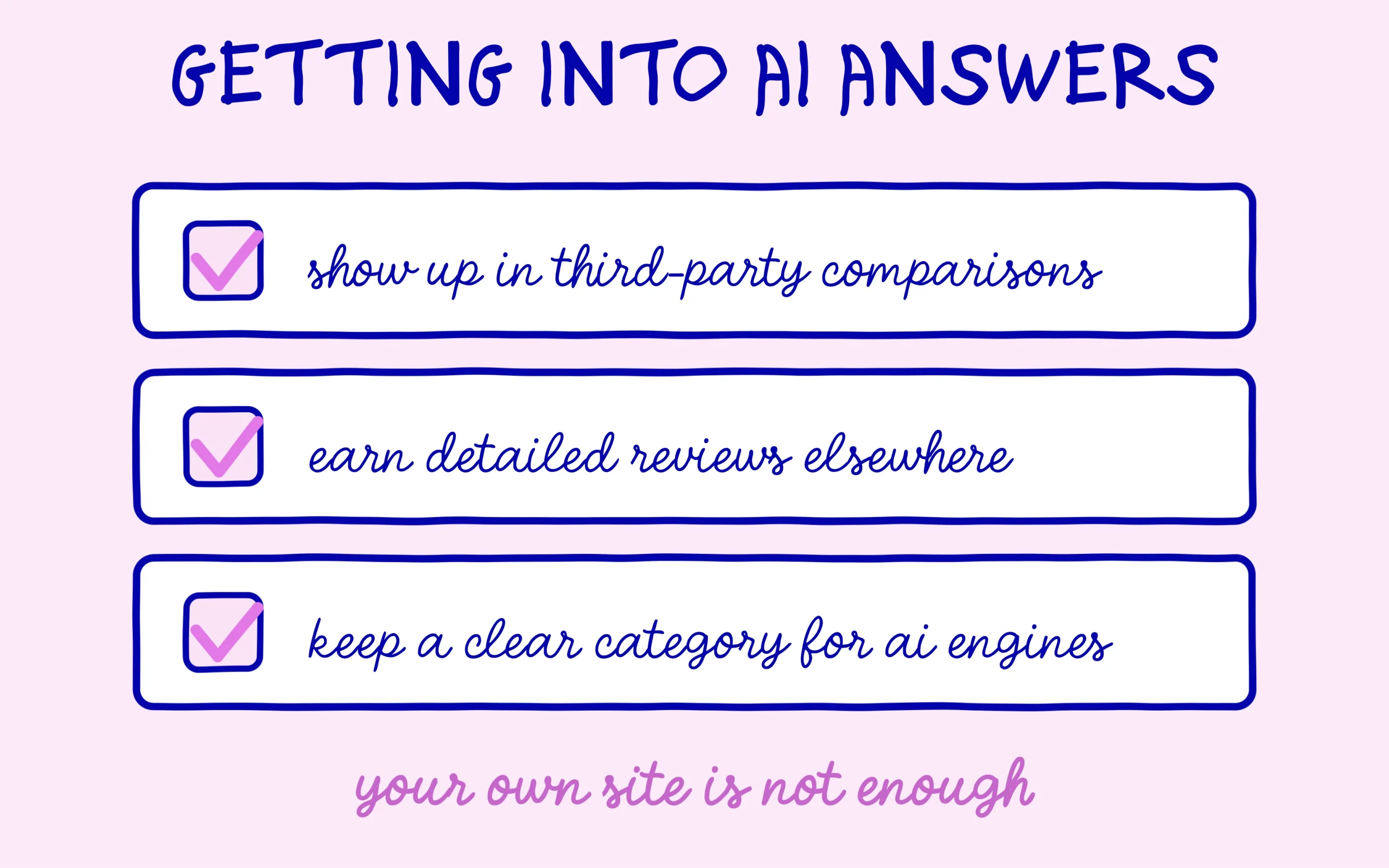
So what can a small site actually do with these numbers? The core lesson fits in one line: AI visibility gets built largely away from your own pages. The overperforming brands owe their spot to roundups, hands-on tests and best-of lists written by third parties, exactly the kind of content the models absorbed in bulk during training. Pitching the comparison articles of your niche, answering the journalists and bloggers who cover your space, collecting detailed reviews on recognized platforms: that external presence now weighs as much for AI engines as it does for Google. Community platforms play an outsized role in this loop, as shown by the data on how heavily AI tools cite Reddit and Wikipedia.
A second reflex follows from the categorization problem. Check which category the models file you under by asking them directly: “what does company X do?”. If the answer describes your business poorly, your content and your external mentions are not tying your name to your sector clearly enough. A misfiled brand is an absent brand on the queries it should own. Sharpening how your pages, public profiles and announcements state what you do corrects that signal over time.
A few reading precautions still apply. Fractl is a growth marketing agency, and a study like this one also serves its commercial visibility. The sample is a snapshot: 96 prompts, three models, one moment in time, while the models themselves change with every update. Treat the percentages as a credible direction rather than a market law. That direction, however, converges with everything recent work on generative engines keeps repeating: keeping your site in shape stays necessary, and getting talked about elsewhere has become decisive.
Keep learning on SEO Noobies.

[…] in. Visibility inside generative engines does not track SEO performance either, as the study on brands that rank well on Google yet stay missing from generative answers made […]
[…] finding still lines up with what turns up elsewhere. The observation that some brands with solid SEO stay missing from generative answers points in exactly the same direction. A site can tick every technical box, rank perfectly well, and […]