
AI chatbots do more than recommend products, and that half rarely makes headlines. Most talk about generative visibility pictures one happy scenario. Someone asks ChatGPT for advice, your brand comes up, you win a customer. A survey published on 7 September by Exploding Topics on the Semrush blog shows the opposite movement happens just as often. Across 2,338 US adults polled in July 2026, 57.5% say they have walked away from a purchase because of what a chatbot told them. In the same panel, 57.51% say they have bought something a chatbot recommended. Here is what those numbers mean for a site that is still finding its footing.
TL;DR
57.5% of AI users have cancelled a purchase after a chatbot answer, against 57.51% who bought on a chatbot recommendation.
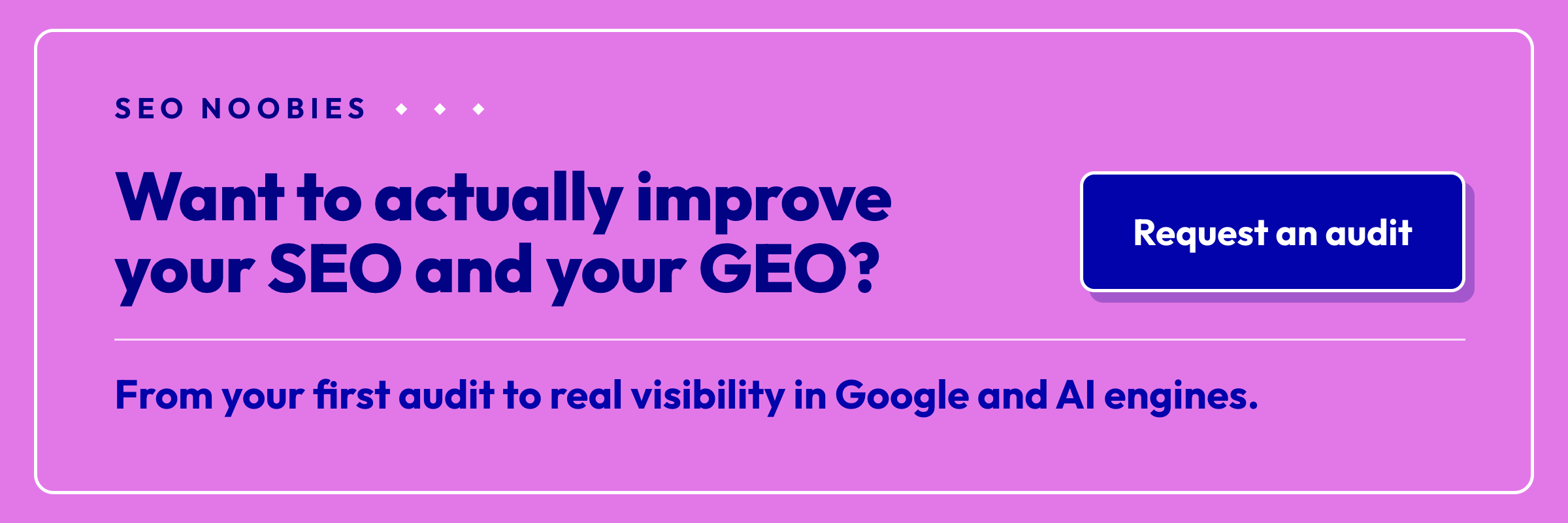
74.15% say they are less likely to buy when the chatbot reports negative reviews about the seller.
87.41% would consult an AI before hiring a local business, which pushes this well past ecommerce.
The practical takeaway fits in one line: what AI tools find about you matters as much as being cited at all.
Summarize This Article with AI
ChatGPTWhat AI Chatbots Actually Do At The Moment Of Purchase
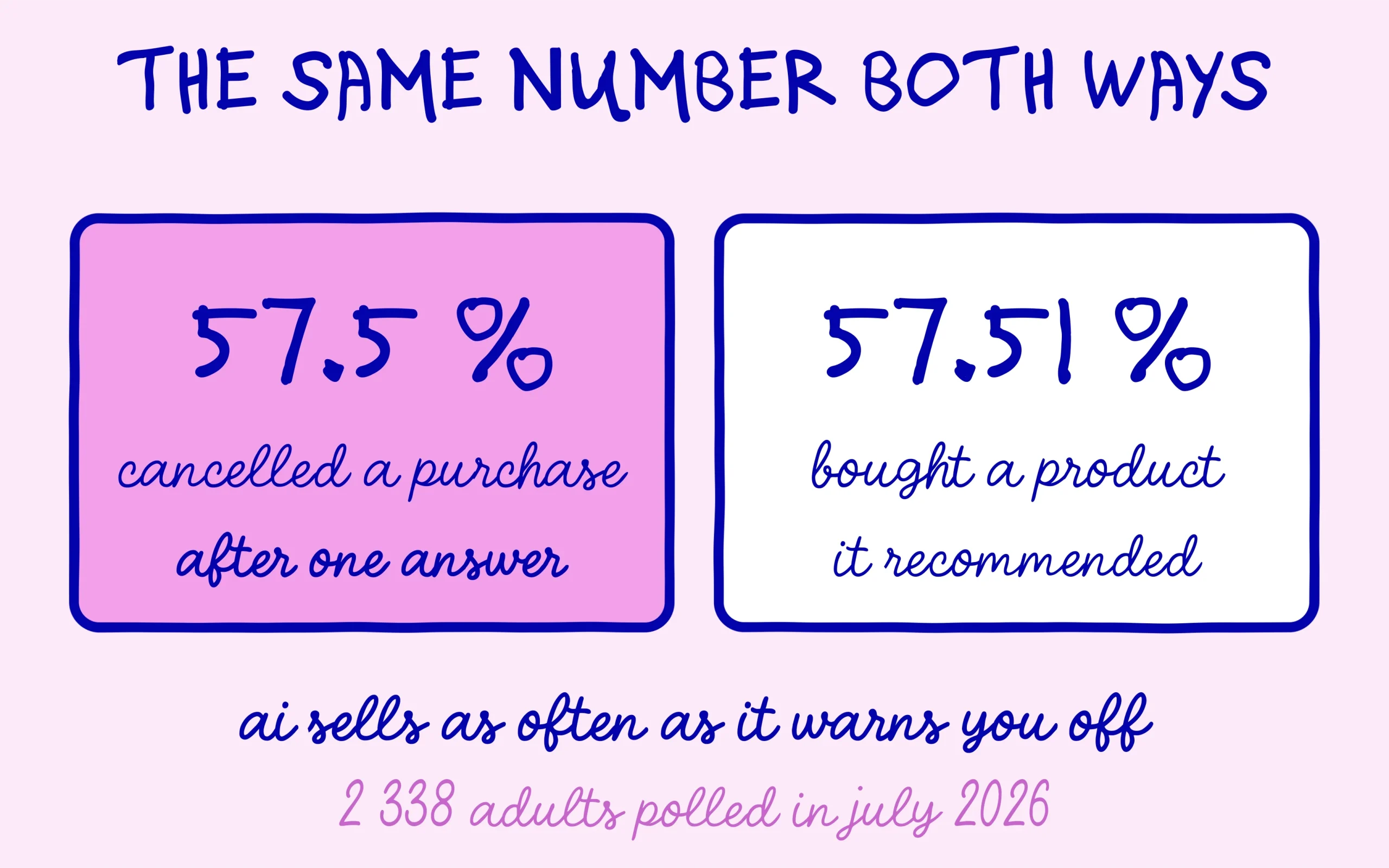
The survey ran in July 2026 across 2,338 US adults, with a stated margin of error of two points at a 95% confidence interval. Carlos Silva, who wrote up the findings on the Semrush blog, breaks the answers down by how heavily people use AI, and that is where the picture gets interesting. Among people who open AI chatbots several times a week, 69.7% have already talked themselves out of a purchase on the advice they got. Among that same group, 80.45% have bought a product a chatbot suggested.
Heavier use inflates both effects together. what AI mostly produces is shoppers who check more before committing. One number captures it: 47.54% of respondents ask an AI about the seller itself before ordering, not only about the product. The habit echoes the old reflex of typing a shop name into Google before reaching for a card, except the answer now arrives as a summary the machine puts its name on.
The same shift shows up elsewhere in the data. 65.01% of respondents admit they have moved part of their product research off Google and onto AI chatbots. That said, only 19.43% would make AI their single source before buying. Mixed behaviour still rules, which lines up with what was already visible when ChatGPT recommendations turned out to be settled before the search even runs, inside what the model learned long ago.
Why One Bad Review Outweighs A Missing Citation
The sharpest figure in the survey concerns reviews. 74.15% of respondents say they are less inclined to buy once a chatbot relays negative feedback about a seller. A classic search engine shows star ratings and lets the visitor decide. An assistant writes a sentence instead, and the reader takes it the way they would take a friend’s warning. a caveat phrased by an AI lands as personal advice, and that gap matters more than beginners expect.
For a small site the implication is blunt. Working on visibility inside AI chatbots goes past collecting citations. Whatever sits publicly about a brand, its reviews, its legal pages, its delivery windows, its return terms, feeds the answer alongside the site content itself. A thin contact page or three unanswered complaints become material an assistant can quote back, in one sentence, at the exact moment someone hesitates. And this reaches far beyond online shops: 87.41% of respondents would consult an AI before hiring a local business.
However, the survey also shows the upside. 59.27% of respondents report discovering brands they had never heard of through AI chatbots, and 81.24% believe a chatbot can genuinely point to the best brands in a category. For a young site that entry point counts, because it does not hinge on domain age the way a first position on Google does. A brand nobody searches by name can still surface in a generated answer, much like the Shopify merchants whose AI referrals jumped while their organic numbers barely moved.
Three Checks Worth Doing Before Chasing A Citation
The first takes five minutes. Ask the most used AI chatbots, ChatGPT, Perplexity and Gemini, the questions a customer would ask before buying from you, naming your brand, then read what comes back. The thing to watch is accuracy rather than presence, because an AI quoting you wrongly costs more than silence. Outdated information, a price that no longer exists, a service you dropped last year, all of it keeps circulating until something more recent contradicts it. The mechanism mirrors what happens when AI answers fill a gap with a competitor’s details.
Next comes the sort of page that reassures. Shipping terms, returns, warranty, real contact details, company identity: these get rushed on a beginner site because they bring no traffic. Yet they answer precisely the questions 47.54% of buyers now put to AI chatbots about the seller. Written plainly, in full sentences, they hand the assistant something correct to say on your behalf.
Reviews come last, and they weigh more than people expect. An unanswered complaint stays an unanswered complaint in the eyes of an AI as much as a visitor. Replying publicly, explaining what got fixed, creates text that generative engines can pick up. A single measured reply under a two-star review often reads better to a model than a wall of glowing five-star ratings with nothing written underneath them.
One caveat is worth stating plainly before anyone rebuilds a strategy around these numbers. The panel is American, it was polled once in July 2026, and self-reported behaviour rarely matches what people actually do at checkout. Someone who says a chatbot talked them out of a purchase may simply have found the price too high that day. The direction of travel still looks solid, because both halves of the finding move together across every usage band, but the exact percentages deserve to be read as an order of magnitude rather than a forecast.
None of these three jobs needs advanced technique. They mostly require accepting that a machine-written answer now travels faster than a results page, and that the answer gets assembled from whatever happens to be lying around about you.
Keep learning on SEO Noobies.