Almost every GEO conversation right now runs along the same track: how do you get cited for free inside a ChatGPT answer. A study published this week by OtterlyAI looks at the other side of the screen, at ChatGPT ads themselves, and the headline number is worth sitting with. On commercial questions, more than three answers out of four already carry an ad. What caught my attention was not the volume itself but who is buying, because the list looks nothing like what most people would guess. Here is what the study found and what a small site can reasonably do with it.
TL;DR
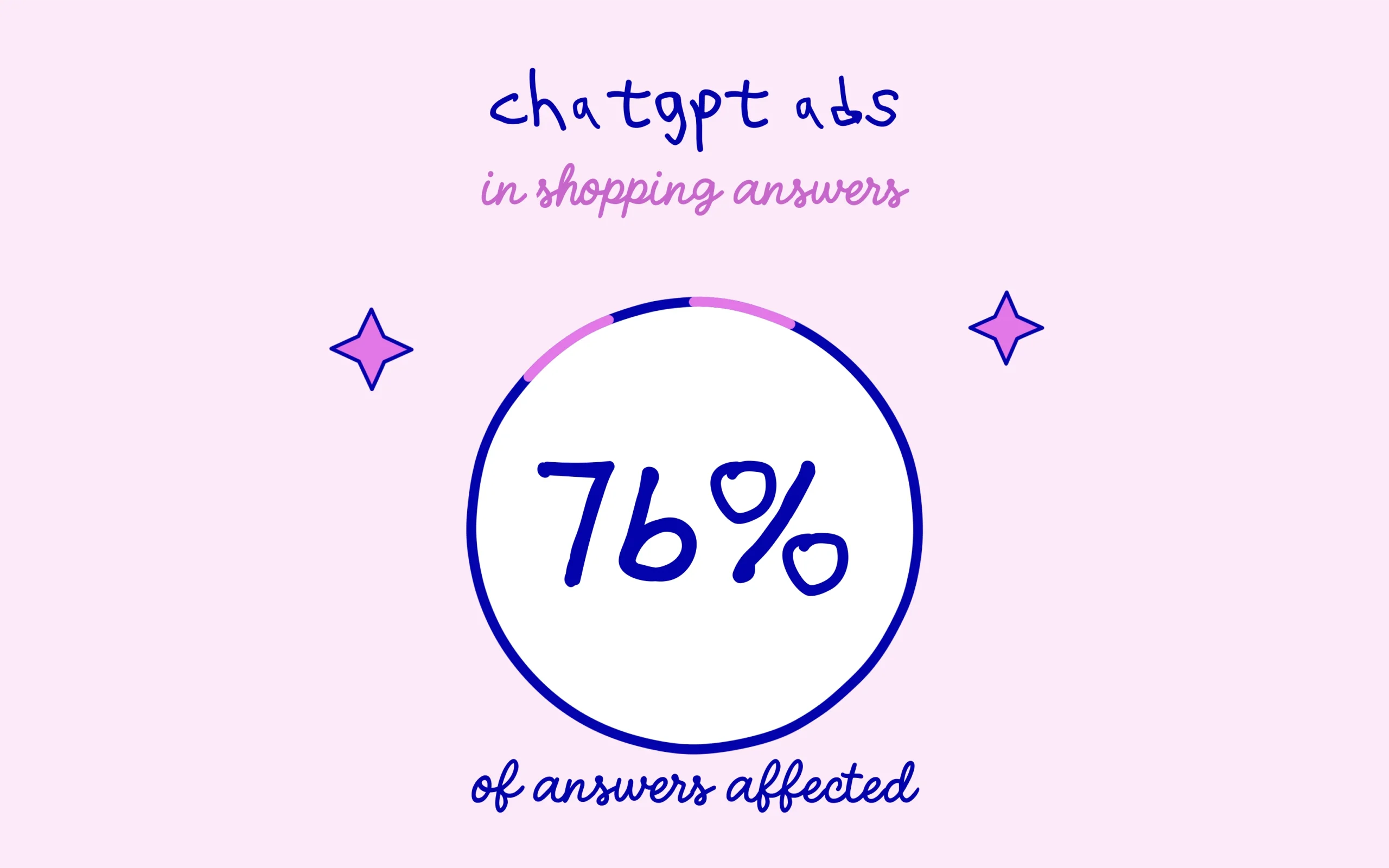
76.4% of shopping questions asked to ChatGPT return an answer containing an ad.
Finance and insurance peak at 85.9% saturation, while healthcare sits at 42.3%.
In 12 industries out of 14, the market leader bought no ChatGPT ads at all.
Organic shopping cards appear in only 2.2% of answers, across 8 of the 16 categories.
Summarize This Article with AI
ChatGPTHow the Study Measured Ad Coverage
The method is straightforward, which matters because it makes the numbers checkable. The team tracked commercial prompts across 16 industries, on the US market only, over a two-week window in July 2026.
For every answer they logged whether a ChatGPT ads unit appeared, then identified the advertiser by examining the unit directly and unwrapping its click trackers. That last step matters more than it sounds, since without it a large share of ads gets credited to an intermediary rather than the brand actually paying. The full methodology and category breakdown sit in the OtterlyAI study on ChatGPT advertising.
The headline result comes down to one line: 76.4% of the time, asking ChatGPT a shopping question returns an answer with an ad in it. For context, no traditional search engine posts that kind of coverage across its full commercial query set.
However, that aggregate hides very wide gaps between sectors, and the sector view is where this becomes practical for anyone with a site to position.
85.9% in Finance Against 42.3% in Healthcare
Finance and insurance lead the table with 85.9% of answers carrying an ad. Healthcare sits at the bottom with 42.3%. That leaves 43.6 points between the two extremes.
The spread tracks commercial value fairly closely. A credit or insurance lead has always been expensive, and the players in those verticals are used to paying near the top of the market to capture intent. Healthcare carries regulatory friction and platform caution, both of which mechanically shrink available inventory.
For a beginner site, the practical read is direct. The more your sector is saturated with ChatGPT ads, the less comfortable the remaining organic space becomes. On a finance topic, a free citation shares the screen with a sponsored block that pulls the eye first. On a healthcare topic, organic still owns most of the surface.
One more figure deserves attention because it tends to slip past. Organic shopping cards, the product listings ChatGPT surfaces without anyone paying, appear in just 2.2% of answers and only across 8 of the 16 categories studied. Free commercial real estate is thin, which extends the pattern already visible in zero-click Google searches reaching 68% in early 2026.
That 2.2% is probably the number I would watch first if I were positioning an online shop right now. It says the engine has not yet built a genuine free listing surface, unlike what Google assembled over the years with Shopping.
Two paths open from there, and honestly I have no idea which one wins. The engine can gradually open organic cards to keep the answer experience balanced, or keep that space scarce to protect the value of paid inventory. The second pays better in the short run, the first protects user trust over time.
The only settled point is that the July 2026 split has no particular reason to hold. A two-week study photographs a moment rather than an established trend.
Worth noting too that saturation and cost are different questions. A sector where ads appear constantly is not automatically a sector where clicks are expensive, and the study measures presence rather than price.
Market Leaders Are Sitting This One Out
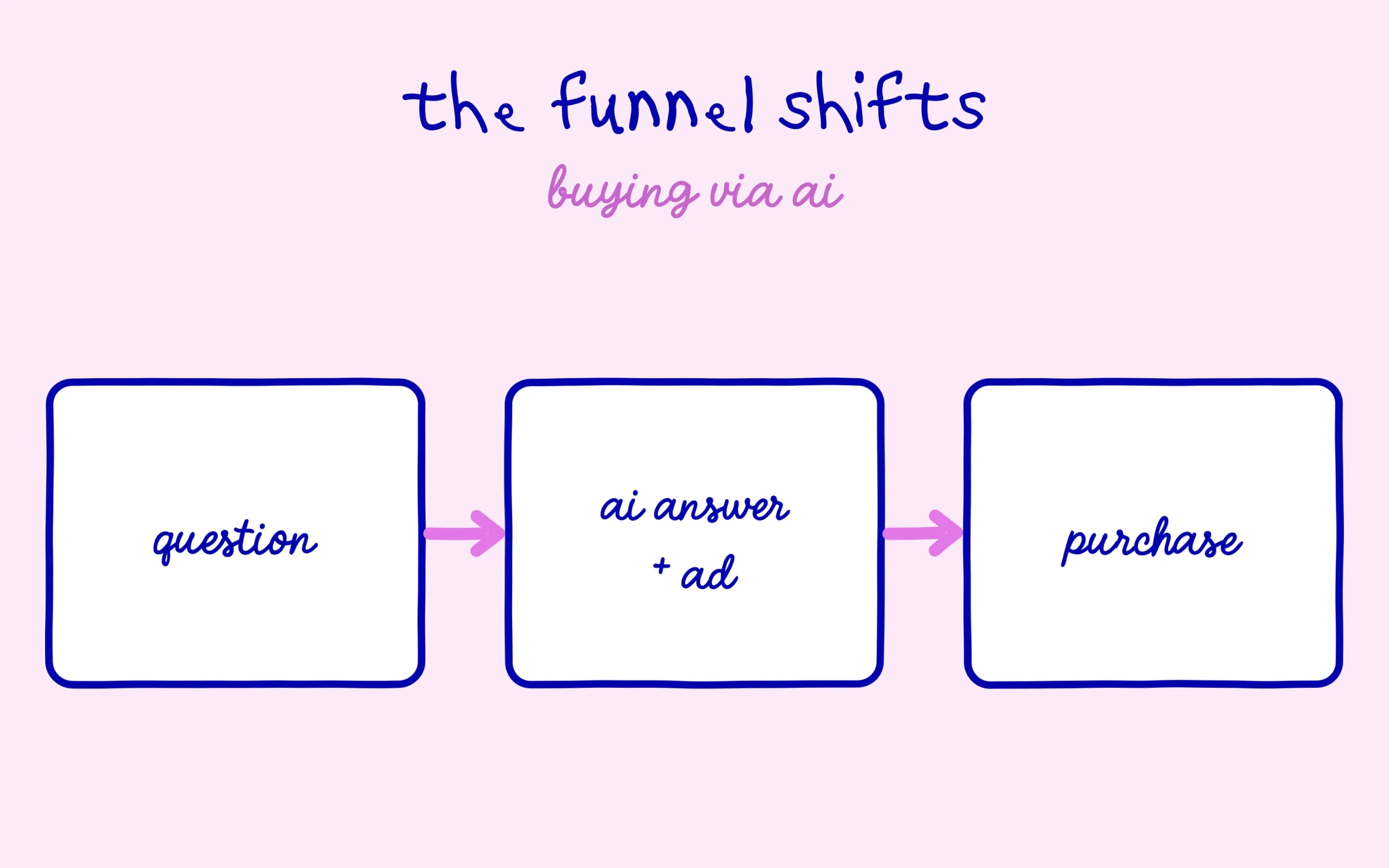
The least intuitive finding concerns who is actually buying. In 12 industries out of 14, the market leader ran zero ChatGPT ads across the entire observed period.
The most present advertisers are BestMoney and LegalZoom, each showing up in 15 of the 16 industries, followed by Angi, Shiply and Booking.com. Comparison sites and performance-media specialists, in other words, rather than the household names most people would expect to find there.
That advertiser profile says something specific about the channel. Comparison sites live on traffic arbitrage, they test every new inventory the moment it opens, and they can measure click-level profitability on very short cycles. Large brands wait for measurement guarantees and brand safety assurances before committing budget.
My read, with the caveat that this covers two weeks on one market, is that the window closes. Inventory that leaders ignore stays open to challengers for a short season only. On the sites I run day to day, the same sequence played out with every new ad platform: arbitrageurs move first, brands follow twelve to eighteen months later, and entry costs roughly double along the way.
This competition for answer space is hardly unique to OpenAI. It echoes what happens when Google AI Mode starts citing its own listings, with every generative engine constantly rebalancing free citations, in-house listings and paid units.
Comparison Content Owns the Inventory
One detail in the advertiser list deserves a closer look: almost all of them are comparison plays. BestMoney lines up financial offers, Shiply puts hauliers against each other, Booking.com stacks accommodation side by side. The content format buying the space is essentially the same one every time.
That consistency is not a coincidence. When someone asks ChatGPT which option to pick, they are asking a comparison question, and a page that compares serves that intent better than a product page defending a single offer. The advertisers paying up are the ones whose content already matches the shape of the question.
For a small site, the organic lesson costs nothing to apply. A page that honestly compares several options gets picked up more often than one talking up your own. That has held true in classic SEO for years, and generative engines seem to sharpen it further since they are built to produce a balanced answer.
There is a limit to that reading, and it is worth stating upfront. The study measures who buys ads, not who gets cited for free. Nothing here proves the comparison sites dominating the paid side also dominate organic citations, and the two inventories most likely run on different logic.
Still, the format overlap is easy enough to test on your own site. Take one commercial query from your sector, look at what ChatGPT answers today, then hold it against what you publish. The exercise takes twenty minutes and usually delivers a fairly blunt verdict on the gap.
What a Small Site Can Actually Do Here
Access is open now, which shifts the nature of the question. Since July 2026 OpenAI has offered a self-serve Ads Manager in beta, with no minimum spend, priced on CPC or CPM in selected markets.
So a small site is no longer locked out by an entry fee. What locks it out now is measurement. Without clean tracking of what a conversation-sourced click is worth, a test budget burns through without producing anything you can learn from.
For a beginner, the first move stays organic and costs nothing. Check whether your pages get cited today on your commercial queries, category by category, before thinking about budget at all. A site never cited for free has poor odds of converting paid traffic from the same engine.
Second move: segment ChatGPT as its own source inside your analytics. It takes a few minutes to configure and becomes essential the moment you want to compare organic and paid performance on the same channel.
That said, I would be careful about porting these percentages onto other markets. The study covers the US over two weeks, and ad coverage depends heavily on how deep the local advertiser pool runs. Generalising from figures like these is tempting and rarely holds up.
One last note on tracking this over time. The rates in this study only describe the window it covers, so the useful habit is rerunning the test on your own queries every two or three months rather than filing a percentage away as a permanent truth.
In practice that means asking the engine five commercial questions from your sector, noting whether a sponsored block appears, then repeating the exercise next quarter. It replaces no monitoring tool, though it does give an honest read on where inventory is heading in your own market.
The takeaway sits in one observation. Monetisation of generative answers is already well established on purchase intent, while the public conversation still revolves almost entirely around free citations. There is a gap between the two, and it is closing quickly.
Keep learning on SEO Noobies.