Gemini 3.8 turned up inside AI Mode on September 2, less than three weeks after the model it replaces. If you run a small site and these announcements keep scrolling past without meaning much, that reaction makes sense: Google is swapping the engine that writes its answers faster than any publisher could possibly react. The reassuring part is that none of it asks anything of your pages. Here is what was actually announced, who can use it today, and why the pace itself is the part worth noting.
TL;DR
Robby Stein, VP of Product at Google Search, announced Gemini 3.8 Flash inside AI Mode on September 2.
Access is limited to Google AI Pro and Ultra subscribers, who pick the model from a dropdown themselves.
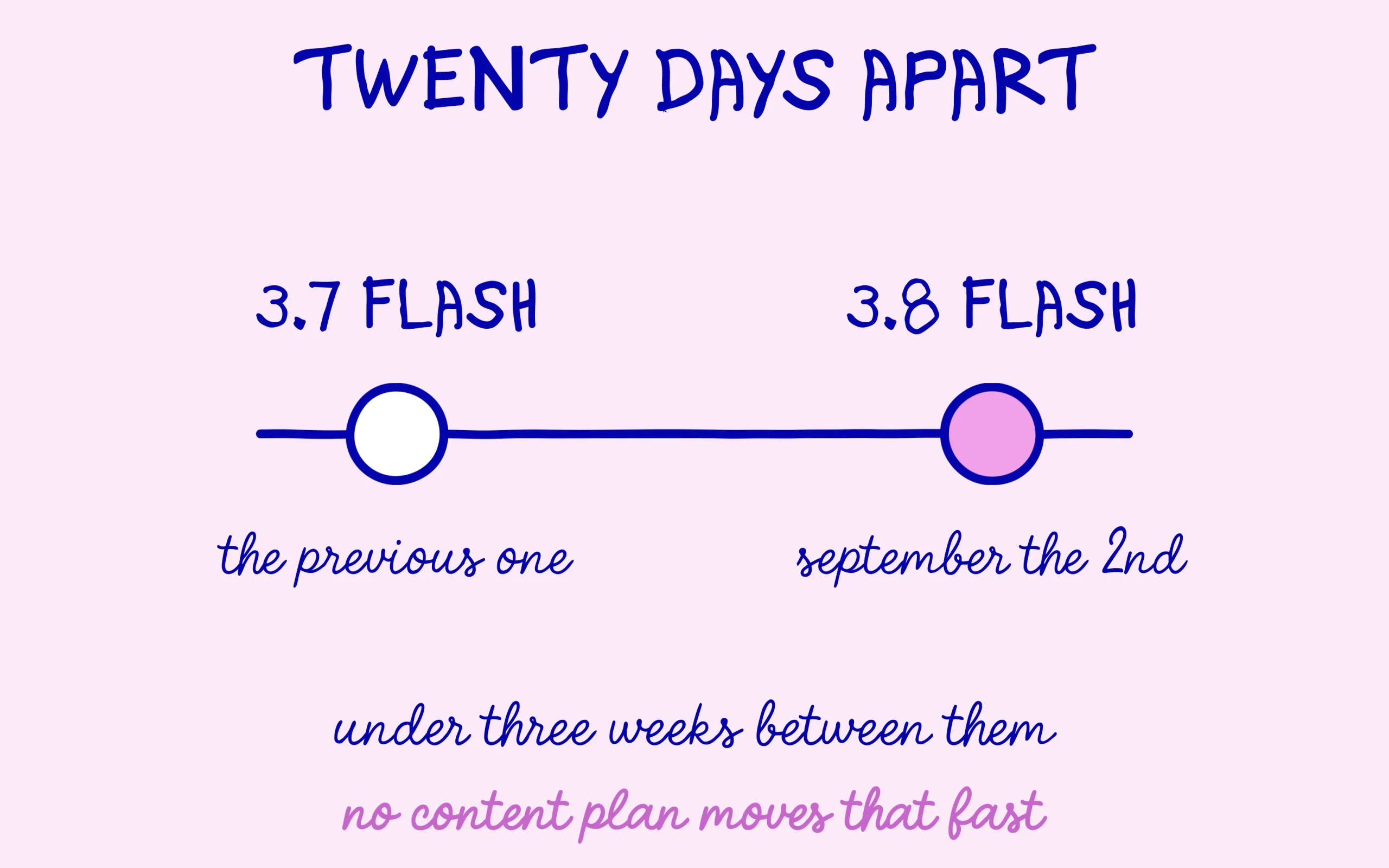
Three weeks separate it from 3.7, which had only just replaced the version before it.
Google’s own documentation states that no special optimisation is needed to show up in its AI features.
Summarize This Article with AI
ChatGPTGemini 3.8 joins the AI Mode model dropdown
The announcement came from Robby Stein, VP of Product at Google Search, in a six-word post on X: Gemini 3.8 Flash has landed in Search. His post from that morning spells out how to reach it. The model shows up in the AI Mode dropdown, the conversational layer Google bolted onto its results page, and you select it by hand after opening the model list from the plus icon.
Availability is worldwide and paid. Google AI Pro and Ultra subscribers get the option, everyone else stays on the default. Stein calls Gemini 3.8 the most intelligent workhorse model Google has shipped, with real gains over 3.7 on software engineering, agentic tasks and multi-step reasoning. Read that as a publisher and it means the engine composing the block above the blue links now holds a chain of reasoning together better than it did a month ago.
Free AI Mode users sit this one out for now, and that detail is easy to miss in the coverage. Whatever behaviour you observe today on a paid account will not match what the majority of searchers are served, so any test you run needs its account type written down next to it. Search Engine Land expects the model to reach free plans within weeks or months, which is the usual pattern, though Google has committed to no date.
What matters here is the gap between the model that writes and the machinery that fetches sources. A sharper model does not automatically cite different websites. It phrases things better, holds a long instruction, wanders off less. Which pages end up credited underneath is decided somewhere else in the pipeline, the part we looked at when covering how AI Mode surfaces Google’s own listings ahead of everyone else. Those two pieces move on separate clocks.
Twenty days between releases, and what that pace tells you
Nick Fox, who heads up Google Search, framed the timing himself in a post built entirely around the gap between the two launches: less than three weeks after 3.7, here comes 3.8. Industry watchers read that as a competitive signal. For someone running a blog or a small shop, it is closer to a lesson in method, and it deserves stating plainly.
Worth remembering that 3.7 arrived with the same kind of framing a few weeks earlier, described as a generational jump in almost identical language. Anyone who spent August reshaping their pages around the quirks they had observed in 3.7 watched that work expire before it shipped. No content plan survives a release calendar this tight, which is precisely why search fundamentals remain the only stable ground and why serious agencies refuse to sell a method pinned to one model version.
There is a side effect that does reach you, though. Each release makes the generated answers longer and more detailed, and every extra line pushes the organic results further down the page. That drift, the one that actually touches your traffic, has been documented for months in our guide to AI Overviews and what they change for a site. Version numbers come and go, the direction of travel holds.
Nothing on your site needs changing for this
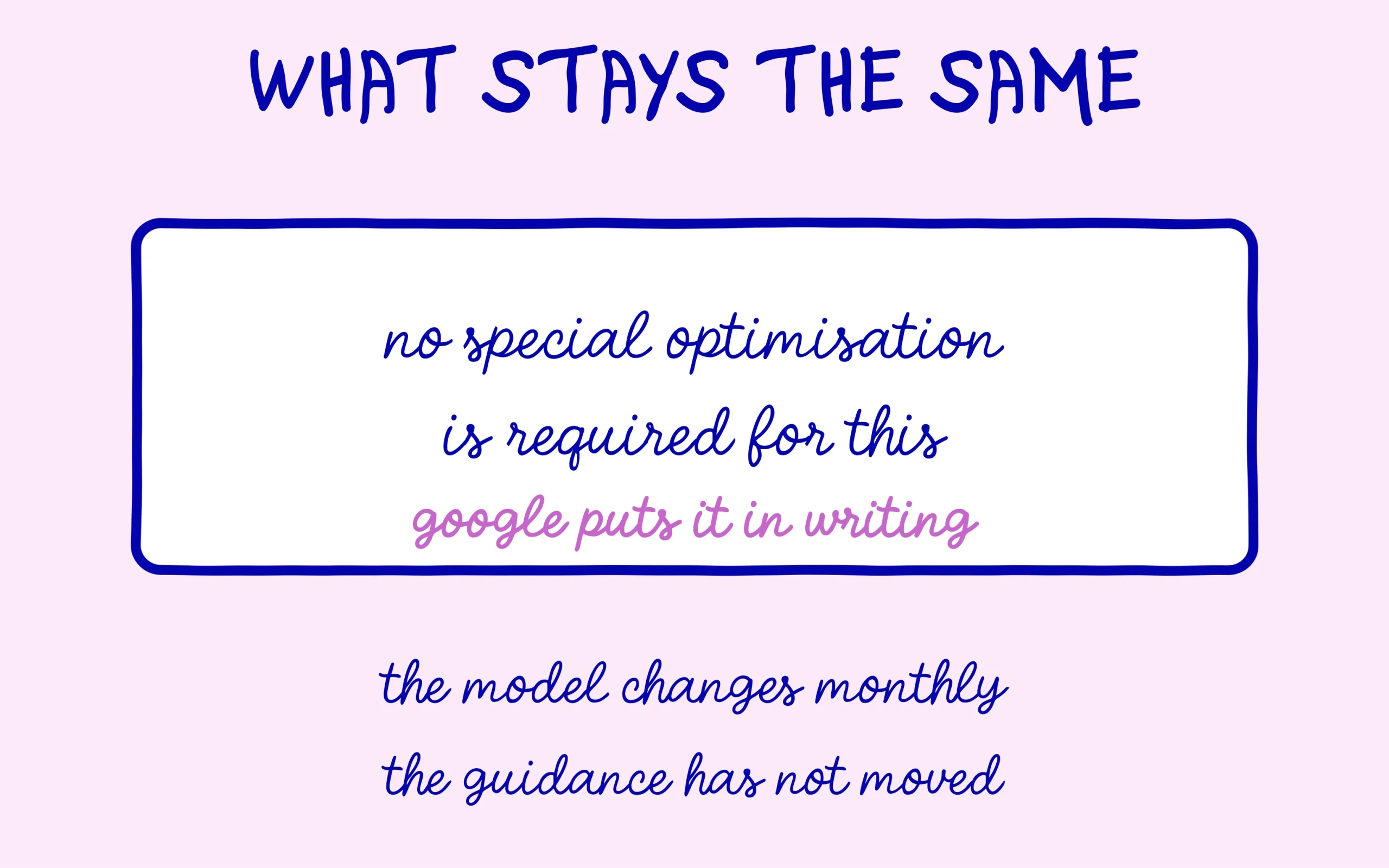
Google settled this question in its own documentation, and the sentence is worth memorising for the next time somebody offers you a special optimisation package. The page covering AI features states that no additional requirement and no particular optimisation is needed to appear in them, and recommends the same fundamentals that apply to ordinary search. You can read the wording straight from Google Search documentation. No Gemini release has shifted that stance.
The one concrete move this release justifies takes about ten minutes. Open AI Mode, ask the three or four questions your customers ask before buying from you, and write down who gets cited in the answer. Do the same thing in a month. You will know whether the model swap moved anything on your topics specifically, which is something no general announcement can tell you.
Keep that log somewhere boring and permanent, a spreadsheet with a date column and the questions you asked. Six months of those rows will tell you more about your own visibility than any industry study, because the questions are yours and the market is yours. Most site owners skip this step entirely, then find themselves unable to say whether anything actually changed on the day the traffic dips and the panic starts.
On measurement, one limit trips up almost every beginner reading their reports. Queries coming from AI Mode are not separated from the rest in Search Console, which makes attribution impossible today, as we set out when looking at how Search Console blends AI Mode queries into your regular ones. A manual check stays your only trustworthy data point, and that is exactly why it is worth dating it.
Keep learning on SEO Noobies.