Google just refreshed its official canonicalization troubleshooting documentation with a clarification that will resonate with anyone who has ever struggled with a “Duplicate, Google chose a different canonical” status in Search Console. The key point sits in one sentence: when a page has been placed in a duplicate cluster and you fix the content to lift it out, Google’s re-evaluation can take up to two weeks before it shows in search results. Most creators fix a page, refresh Search Console after 48 hours, and panic when nothing has moved. This official window resets expectations.
TL;DR
Google updated its official canonical troubleshooting guide to state that re-evaluation can take up to two weeks.
The situation targeted: pages stuck with the “Duplicate, Google chose a different canonical” status in Search Console. It fits a pattern of Google softening its own signals, downplaying most Search Console errors.
Pages may exit the cluster sooner if content differences with the other grouped URLs become clearly distinct.
To check where your page stands: URL Inspection Tool, sparingly complemented by Request Indexing on truly critical URLs.
Summarize This Article with AI
ChatGPTWhat the refreshed Google guide actually says
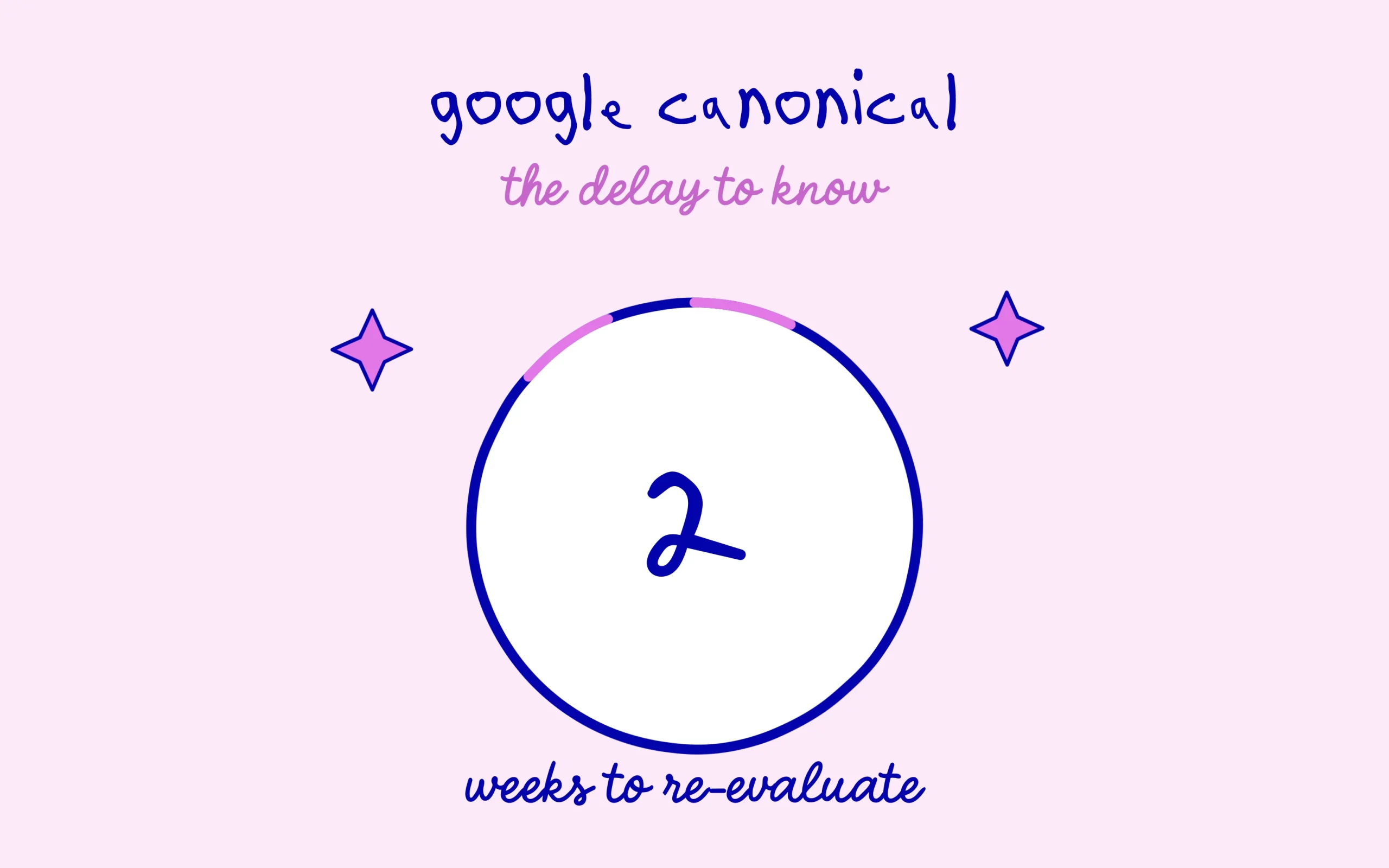
The update lands on the official canonicalization troubleshooting documentation hosted on developers.google.com. Google adds a short but weighty line: pages “can take up to two weeks” to exit a duplicate cluster after content is fixed. The exact wording is measured. Google does not say “takes two weeks”, it says “can take up to two weeks”. The nuance matters because it caps the maximum wait without promising any fixed timing.
The technical context targeted is narrow: pages that show in Search Console with the “Duplicate, Google chose a different canonical” status. In practice, Google has grouped several URLs it considers to carry the same main content and picked one of them as the canonical version. The other URLs in the cluster are not fully indexed on their own. When you modify a page’s content to differentiate it from the rest, Google must recrawl the page, compare its content again against the others, and possibly move it out of the cluster to treat it as a standalone page. That re-evaluation phase is what can take up to two weeks.
That said, Google also notes that a page can exit the cluster earlier when content differences become sufficiently marked. A cosmetic three-word tweak will not trigger a fast re-evaluation, whereas a substantial rewrite of the article body can speed things up. the stronger the content differentiation, the faster the re-evaluation. This point is often missed by beginners who assume a small title change is enough to pull a page out of a duplicate cluster.
Why two weeks feels so long from a beginner’s angle
Two weeks on a site in launch mode is a very long stretch. A creator who has just fixed ten pages stuck with “Duplicate, Google chose a different canonical” was probably expecting Search Console to move within two or three days. Seeing the official documentation confirm the wait can run for fourteen days immediately raises the question of the right checking rhythm and the right action cadence, especially since Search Console keeps broadening the signals it surfaces to site owners and is becoming a denser dashboard to interpret.
Honestly, this delay has a coherent technical rationale. Google recrawls pages at a frequency that depends on their authority, their history and their weight in the index. A new or low-authority page may only be recrawled every seven to fourteen days. Add the time needed to compare content signatures again and to propagate the cluster update across Google’s serving infrastructure, and two weeks becomes a realistic window. The problem is not Google, it is our creator impatience wanting an immediate signal.

This window also reframes another poorly understood point: even once Google has removed the page from the cluster, the new indexing still has to be reflected in search results, which adds a few extra days of latency. Between fixing the content and seeing the page return in results under its true URL, two to three full weeks is a reasonable expectation. The same patience applies on the generative side, where AI engines take time to refresh their view of a page.
What to put in place when you hit this status
The first step is to check the real status of the page inside Search Console via the URL Inspection Tool. This tool displays both the canonical you declared (in the link rel canonical tag of your HTML) and the canonical Google actually picked. When the two differ, you have official confirmation that Google made a different call. This is the mandatory starting point of any serious canonical diagnostic, and URL Inspection remains the canonical tool to reach for first on this specific check.
Then comes the content differentiation work. A page stuck in a duplicate cluster often shares with its neighbours a generic title, a nearly identical intro, a mirrored outline, or a body that repeats the same phrasings. The fix must land on the main content, not just on meta tags. Google compares the substance of the page, not merely its HTML title. In practice, aiming for a main body that diverges by roughly sixty to seventy percent from the other pages of the cluster is a reasonable target to maximise the odds of a fast exit.
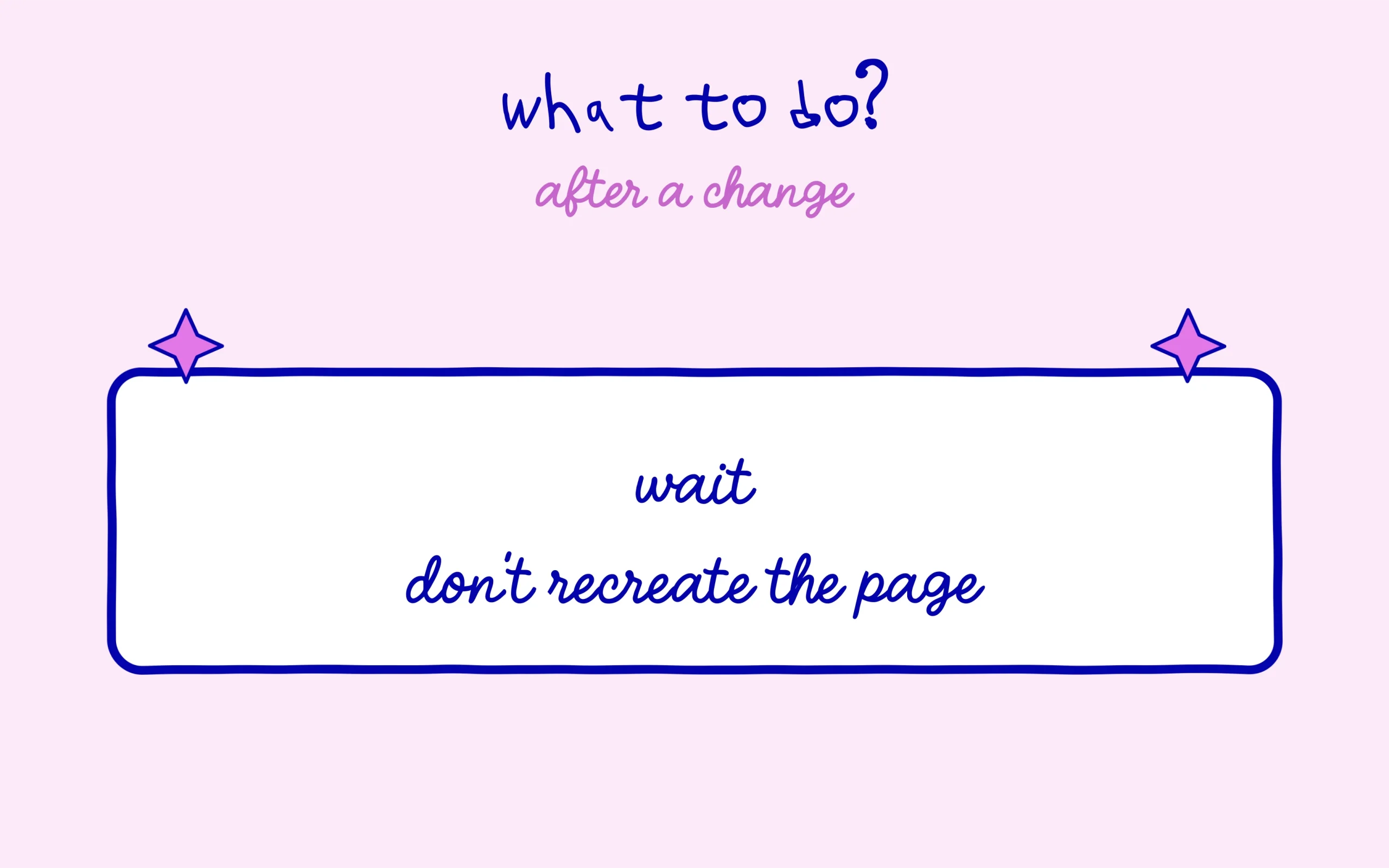
The Request Indexing feature in Search Console can help signal to Google that the page has changed, but Google insists on sparing use: reserve it for truly critical URLs, never in batch on fifty pages. Firing it on every page of a cluster corrupts the signal sent to Google and does not accelerate re-evaluation. Once the request is fired, the only useful action is to wait. Check Search Console every two or three days at most, never several times a day. Google’s update cadence will not shift because you refresh the tab.
One last practical point: this official delay has to be baked into the editorial planning of a growing site. Fixing ten canonical pages on a Monday and hoping to see a ranking impact by Friday is unrealistic. Better to plan the fix on a full three-week window before drawing any conclusion about the effectiveness of the rewrite. This patience is especially useful for beginners who, unaware that Google can take up to two weeks, conclude too fast that their fix changed nothing and rush back to modify a page that was already under re-evaluation.
Keep learning on SEO Noobies.




[…] for directing legitimate visitors, useless as a lock. The same strict-standards logic governs how long Google takes to re-evaluate canonicals: precise rules, real delays, zero room for […]