Google’s AI Overviews are moving fast, and the past few weeks of updates are worth a beginner’s attention. The generated answer block at the top of the results now hosts a live news carousel, has started to make its own images, and is rethinking how it shows its sources. Taken together, these changes push some of the value toward the result itself, sometimes at the expense of the sites that feed those answers. Nothing dramatic in the short term, but it helps to understand what is shifting before drawing conclusions. Here is what Google rolled out and how to read it without giving in to panic.
TL;DR
AI Overviews now include a Top Stories carousel that surfaces real-time news sources on mobile in the United States.
Since July 14, Google generates its own images inside AI Overviews, with no attribution and no link to a site.
The citation display is moving to a carousel format you swipe through after tapping the source bubbles.
For a beginner, the goal is to stay a cited source and track your traffic rather than bet everything on the classic ranking spot.
Summarize This Article with AI
ChatGPTA Top Stories Carousel Moves Into Generated Answers
The first change is about news. Google has made a Top Stories carousel fully live inside AI Overviews for mobile users in the United States, after a first appearance in May on developing topics. The carousel highlights the user’s preferred sources when relevant and pulls in real-time reporting from major outlets.
The effect leans in favor of news content. Where a generated answer used to summarize the story without always pointing to a site, the carousel opens a more visible path to the original articles, right inside the AI block. This dated-window logic echoes what we described about AI Overviews arriving in France on September 23, a date that will make these mechanics real for the French-speaking audience.
The role of preferred sources deserves a pause. When a reader has named their favorite outlets, Google can push them up first in this carousel, which rewards sites that built a regular reading habit with their audience. For a beginner, the lesson runs both ways: publishing fast on the news matters, but earning readers who add you to their sources matters just as much. Being a cited news source becomes a clear goal again, and brand awareness turns into a concrete lever even at a small scale.
Google Draws Its Own Images and Reshuffles Citations
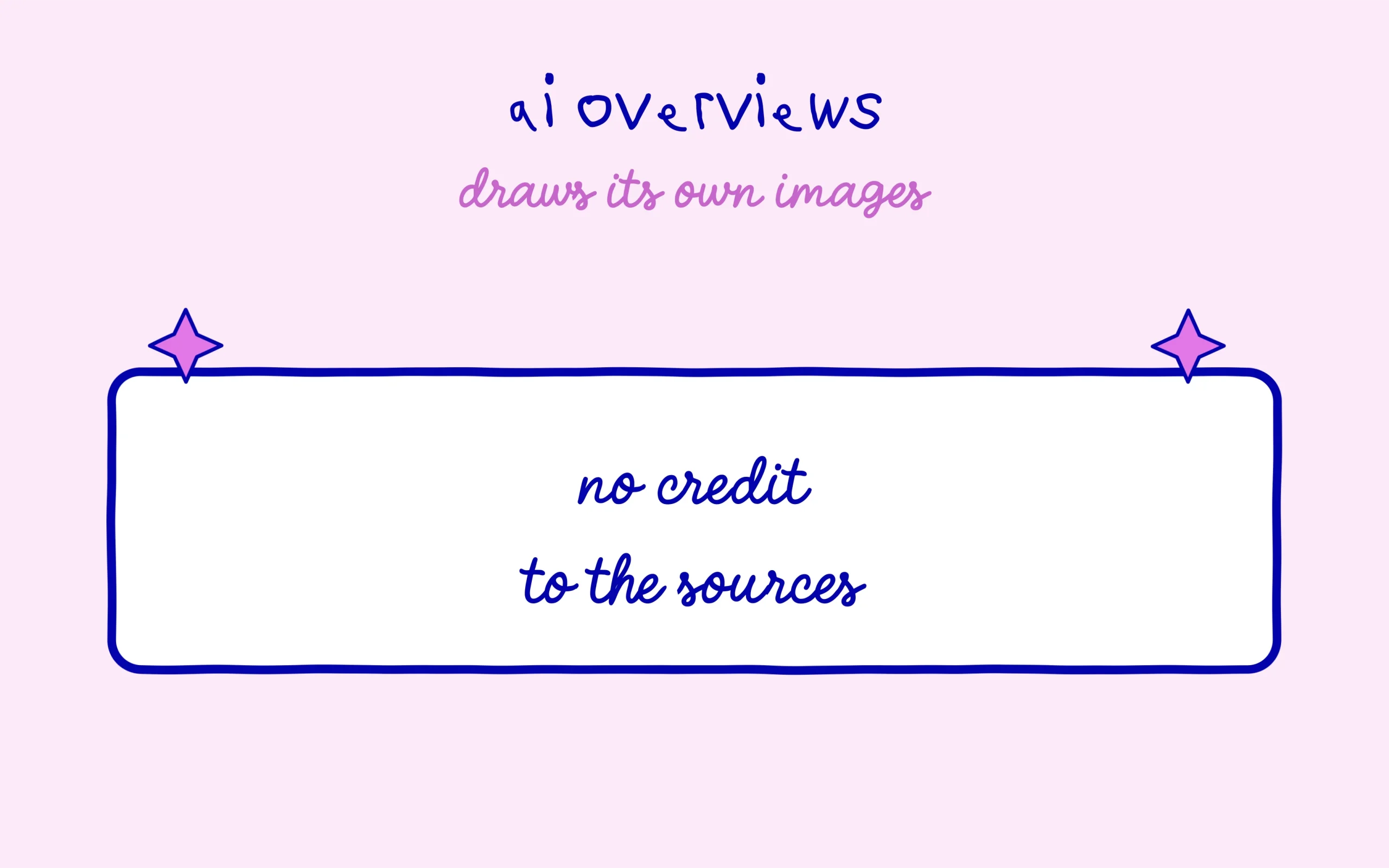
The second change is trickier for creators. On July 14, the twenty-fifth anniversary of Google Images, the company announced that image generation was coming straight into AI Overviews, powered by its latest model, called Nano Banana. In practice, Search no longer just links to a publisher’s photo, it draws its own picture, with no attribution, no outbound click, and no stated controls for brands.
Alongside it, Google is testing a new citation display. On mobile, in AI Overviews and AI Mode alike, links to sites appear in a carousel you swipe through after tapping source bubbles, replacing the classic vertical lists. The stated goal is to make sources more accessible, yet it also changes how visible each link is. The same tension showed up with Google AI Mode putting its own listings first, where the interface decides what surfaces before anything else.
The line about no stated brand controls is the part worth watching. For now, a brand cannot tell Google to keep its visual identity out of a generated image, and there is no opt-out on the table. That gap matters most for businesses whose product shots or diagrams carry real commercial weight, since a machine-made version can misrepresent them without any recourse. It is early, and Google may add controls later, but the current default leaves creators with little say.
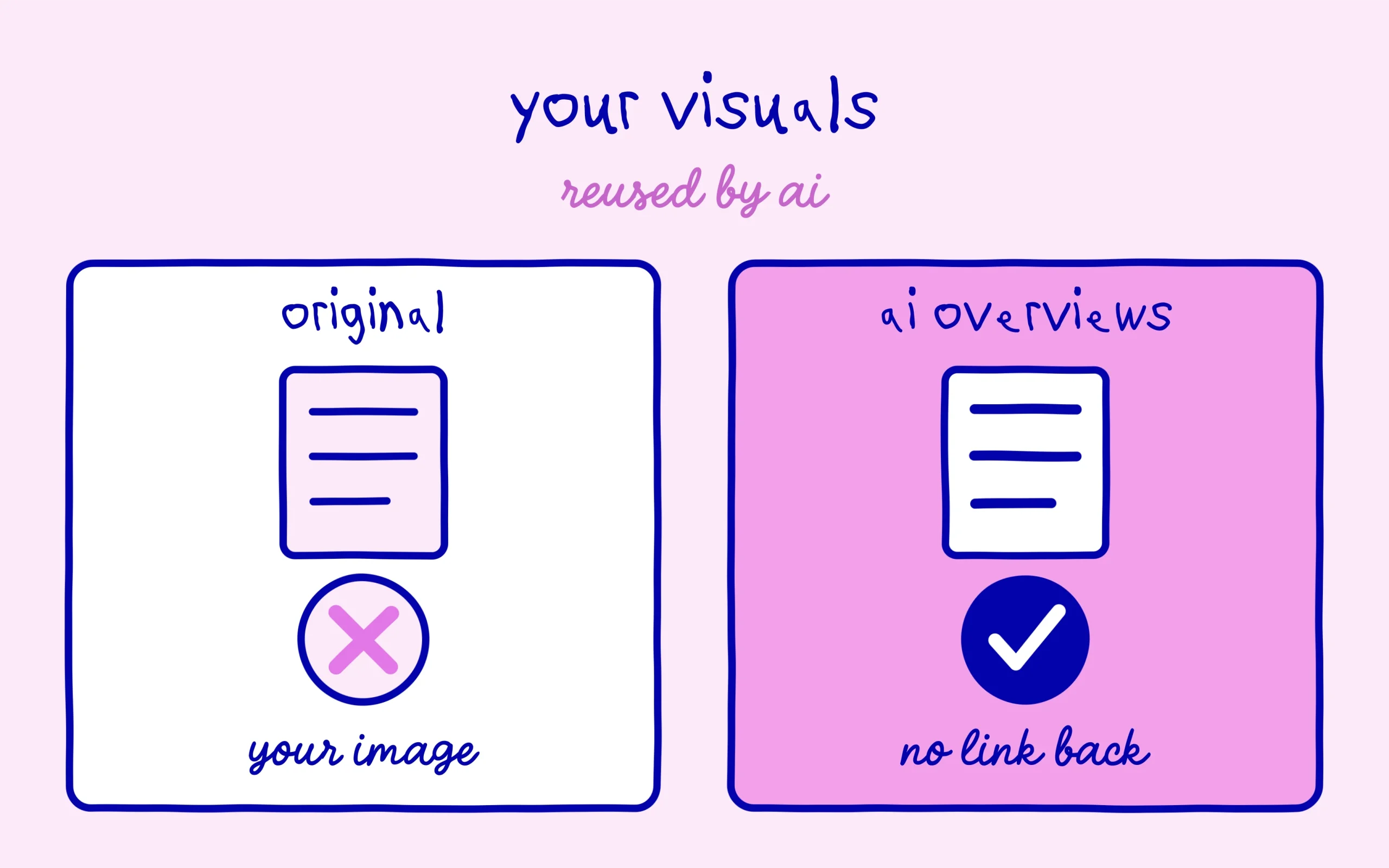
A generated image sends no click back to your site. When Google builds the visual itself, the image traffic that used to reach your pages drops out of the equation. This shift extends the trend already measured in our analysis of zero-click Google searches, where the user gets the answer without ever leaving the results page.
How a Beginner Can Adjust to These Changes
The first useful move is to check whether your pages already show up as sources in AI Overviews on your main queries. Clear, structured, up-to-date content stands a better chance of being reused, because that is the kind of page generated answers cite most willingly. Working on clarity and freshness still pays off, even inside this new frame.
On the image side, the answer has less to do with classic image SEO than with the unique value of your visuals. An original diagram, a piece of in-house data, or a screenshot Google cannot recreate from memory keep a value that a generated image does not match. Put simply, the more your visual carries information that is hard to invent, the less it is exposed to automatic replacement.
These announcements also need to be kept in scale. The Top Stories carousel and the carousel-style citations concern mobile in the United States, and image generation is still early. A French-speaking beginner does not have to reorganize everything today, but there is value in watching these signals, because they almost always reach other markets in the end. Anticipating without overreacting is the stance that costs the least over time.
Tracking your real traffic beats any hot reaction. These rollouts target mobile in the United States first, and their effect will vary from one site to the next. The best attitude is to watch your own Search Console data over the coming weeks and adjust afterward, calmly.
Keep learning on SEO Noobies.

[…] you control. What generative engines do with visuals remains an open question, as our coverage of AI Overviews drawing its own images without crediting sources […]