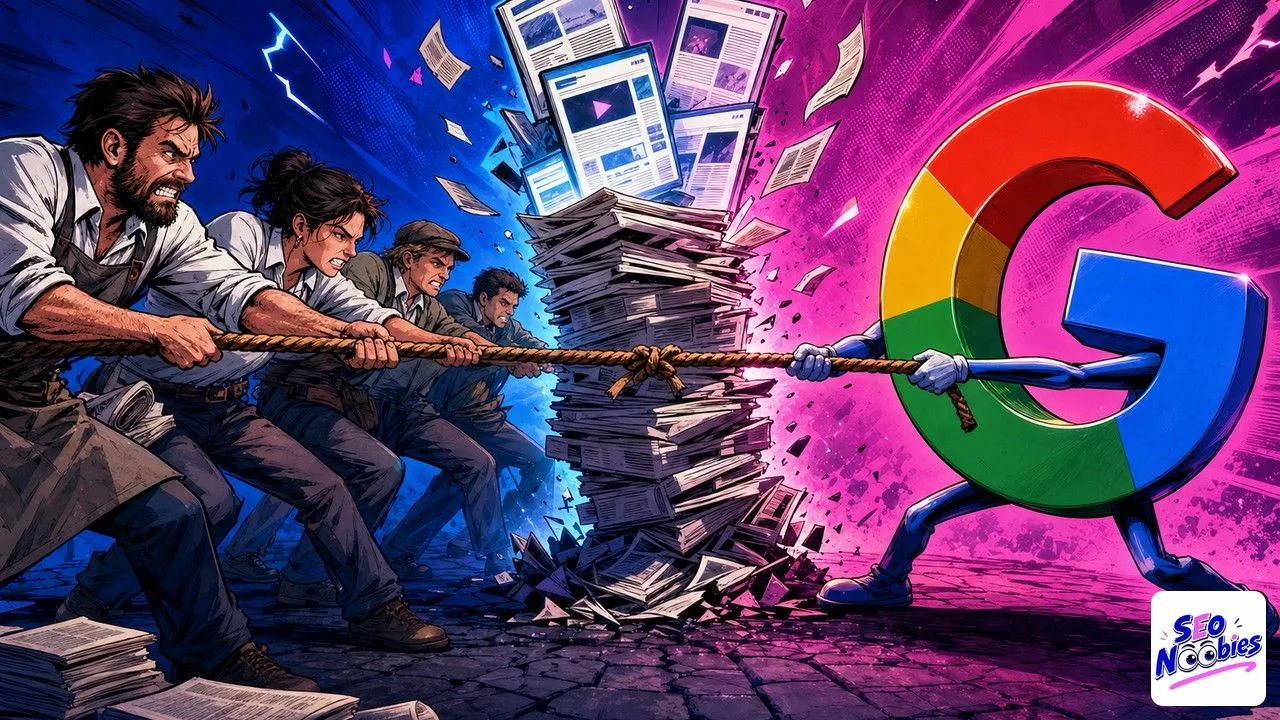
Several major news outlets are seriously weighing whether to start blocking Google, an idea that would have sounded unthinkable just two years ago. Names like USA Today, Politico, Reuters, The Economist and People Inc. are now studying, to varying degrees, whether to cut off Google’s access to their content. The reason comes down to two words: AI Overviews. Since Google began showing AI-generated summaries at the top of its results, these publishers have watched their search traffic slide in ways they find hard to absorb. Most coverage frames this as a clash between giants, but there is a practical lesson to pull out when you are just starting and running a small site. Here is what is really at stake and why it matters to you.
TL;DR
Several major publishers (USA Today, Politico, Reuters, The Economist, People Inc., Reddit) are weighing whether to block Google in response to AI Overviews.
They point to a sharp traffic drop, with major news sites losing close to half of their Google traffic in a year, as AI summaries keep users on Google.
The standoff blends economics, licensing talks and antitrust litigation over Google’s dominance.
For a beginner, the smart move is to track your own traffic and work on your presence inside AI answers, without panicking.
Summarize This Article with AI
ChatGPTWhy Several Major Publishers Are Weighing Blocking Google
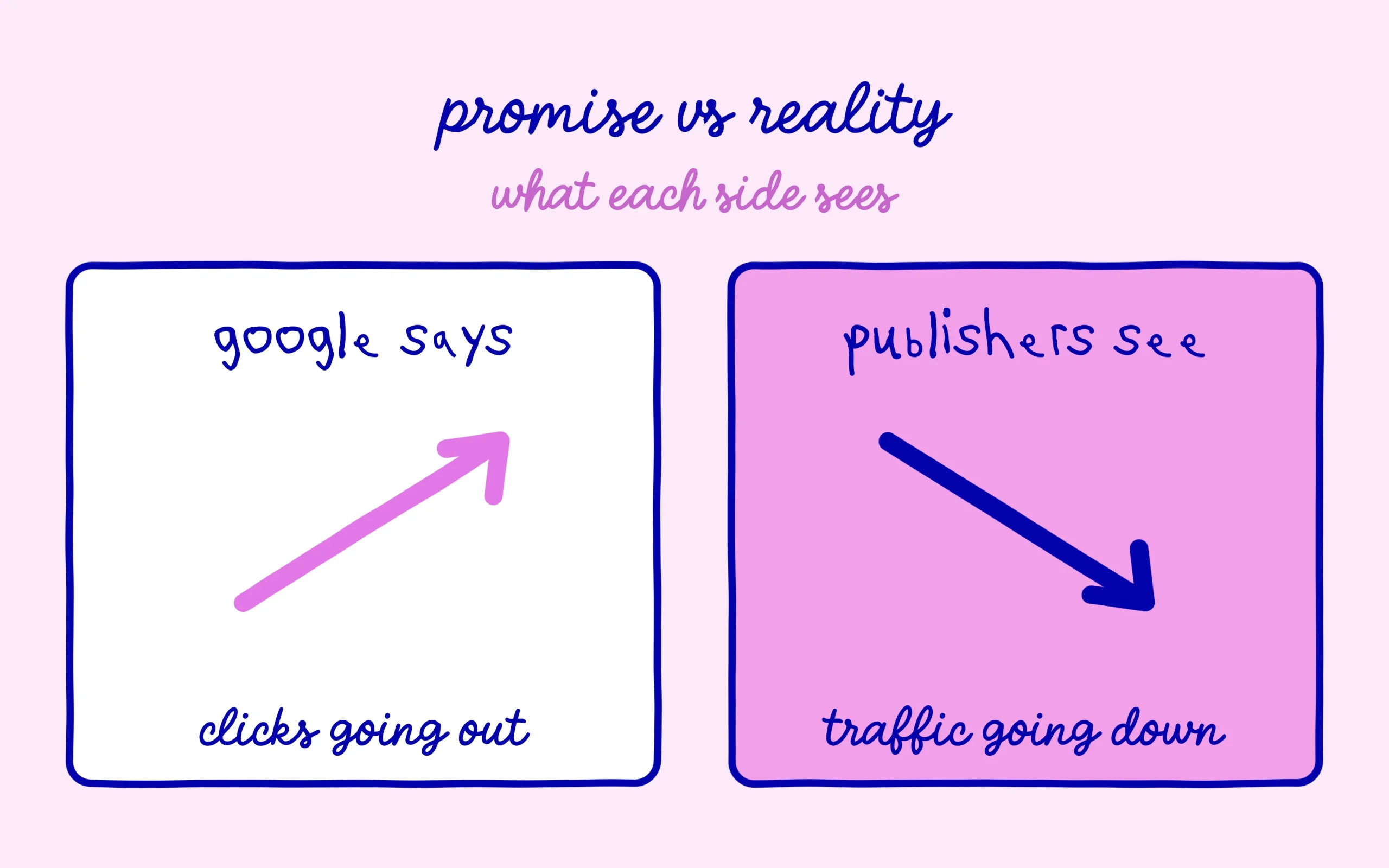
Blocking Google means telling its crawler to stay away from your pages, which amounts to walking out of the very engine that still sends most of your traffic. For a publisher, that is a radical, almost self-defeating choice. And yet it is now on the table for groups that carry real weight. The debate ties directly into Google’s promise that AI Search sends billions of clicks to sites, a promise these outlets say their own numbers contradict.
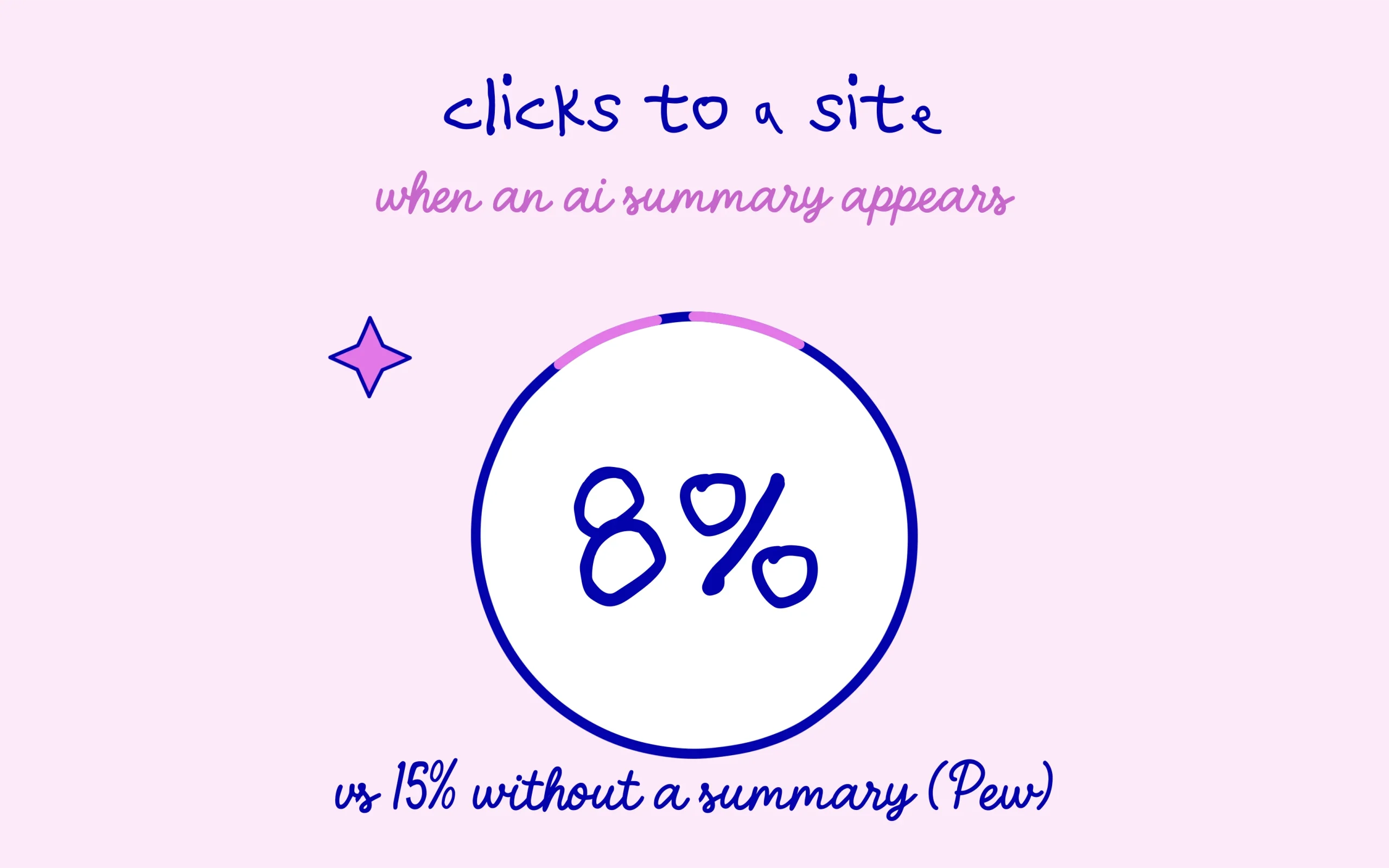
The figures set the tone. Semrush data points to steep year-over-year declines, with major news sites losing close to half of their Google traffic. A Pew Research Center study on clicks when an AI summary appears puts numbers on the mechanism: when an AI summary shows up, users click a traditional result in just 8% of visits, against 15% without a summary, and they click a link inside the summary in only 1% of cases. Clicks to sites roughly halve once AI answers in their place.
Not every publisher sits at the same point, either. Some say they are ready to act if the trend holds, while others stay cautious and note that Google still weighs too heavily in their audience to walk away in one move. That gap captures the dilemma neatly: leaving means giving up vital traffic; staying means watching your share melt in favor of AI summaries.
The balance of power goes beyond traffic. Reddit is watching an annual deal reported at $60 million expire and is negotiating its renewal. On the legal side, USA Today is pursuing an antitrust action, and Penske Media, publisher of Variety and Rolling Stone, has filed a complaint. Blocking Google becomes both a bargaining chip and a threat aired in public, which says a lot about how tense the moment has become.
What AI Overviews Actually Do to a Site’s Traffic
The mechanism is easy to grasp. When someone asks a question, the AI Overview serves a summary right at the top of the page, often enough to answer on its own. The user leaves satisfied without clicking through to any source. And the simpler the question, the more the summary stands on its own, which hits explainer content, definitions and short answers first. That is the well-documented rise of zero-click searches that now make up a heavy share of the total.
Google, for its part, argues the opposite and insists its AI features keep sending quality clicks to sites. The company has also rolled out a dedicated generative AI performance report inside Search Console, to track impressions and clicks coming from those surfaces. In the UK, it committed to letting publishers opt out of AI features without losing their presence in the classic results.
To grasp the stakes, you need to understand how these summaries are built and what it takes for a site to be cited in them. That is exactly what the guide to AI Overviews and what they change for your site covers. Being cited in the summary matters as much as ranking below it, and that shift redefines what we call visibility.
What a Beginner Should Take Away From This Standoff
Set your mind at ease on one point first. This standoff pits press groups with billions of page views against Google, not a blog that is just getting started. For a small site, blocking Google makes no sense: you need every single visit. The real lesson sits elsewhere, in how you measure and adapt.
In practice, track your own traffic in Search Console rather than trusting the headlines. Watch how your clicks and impressions move month over month, and spot the queries where an AI Overview appears. That tells you whether the phenomenon touches you at all, and exactly where. The official documentation on Google’s AI features and the control a publisher keeps over them is worth the read to understand your options. Watch too for pages that lose clicks without losing impressions: that usually signals an AI summary is catching the answer in your place, and marks the exact spot to rework your content. A single page answered well can win back a summary slot over time, so treat those pages as priorities rather than losses.
The reflex that pays off in 2026 is to aim for the citation, not just the click. Clear, structured, trustworthy content stands a real chance of being picked up in an AI summary, which plants your brand even when clicks grow scarce. Visibility inside AI answers becomes a goal in its own right, alongside classic search. It is fresh ground, still open, where a methodical beginner can carve out a place.
Keep learning on SEO Noobies.