
Microsoft Clarity added a metric on August 13 that answers a question plenty of site owners ask without being able to put a number on it: do AI bots take more than they give back? The new card is called the AI scrape-to-referral ratio, it lives inside the bot analytics part of the tool, and it puts an AI operator’s crawl volume next to the visitors that same operator sends you afterwards. The example Microsoft chose for its own write-up sets the tone. Here is what the measurement covers, what it leaves out, and what it is worth when you are starting out.
TL;DR
Microsoft Clarity shipped a card on August 13 that ties an AI operator’s scraping volume to the referral traffic it sends back.
The example Microsoft published shows 41 referral visits against a ratio of six thousand scrapes per visit.
The card ranks AI operators by the traffic they actually return, which separates the ones giving something back from the rest.
Clarity stays free with no traffic cap, making it the first way to put a number on that gap without a subscription.
Summarize This Article with AI
ChatGPTWhat Microsoft Clarity is counting exactly
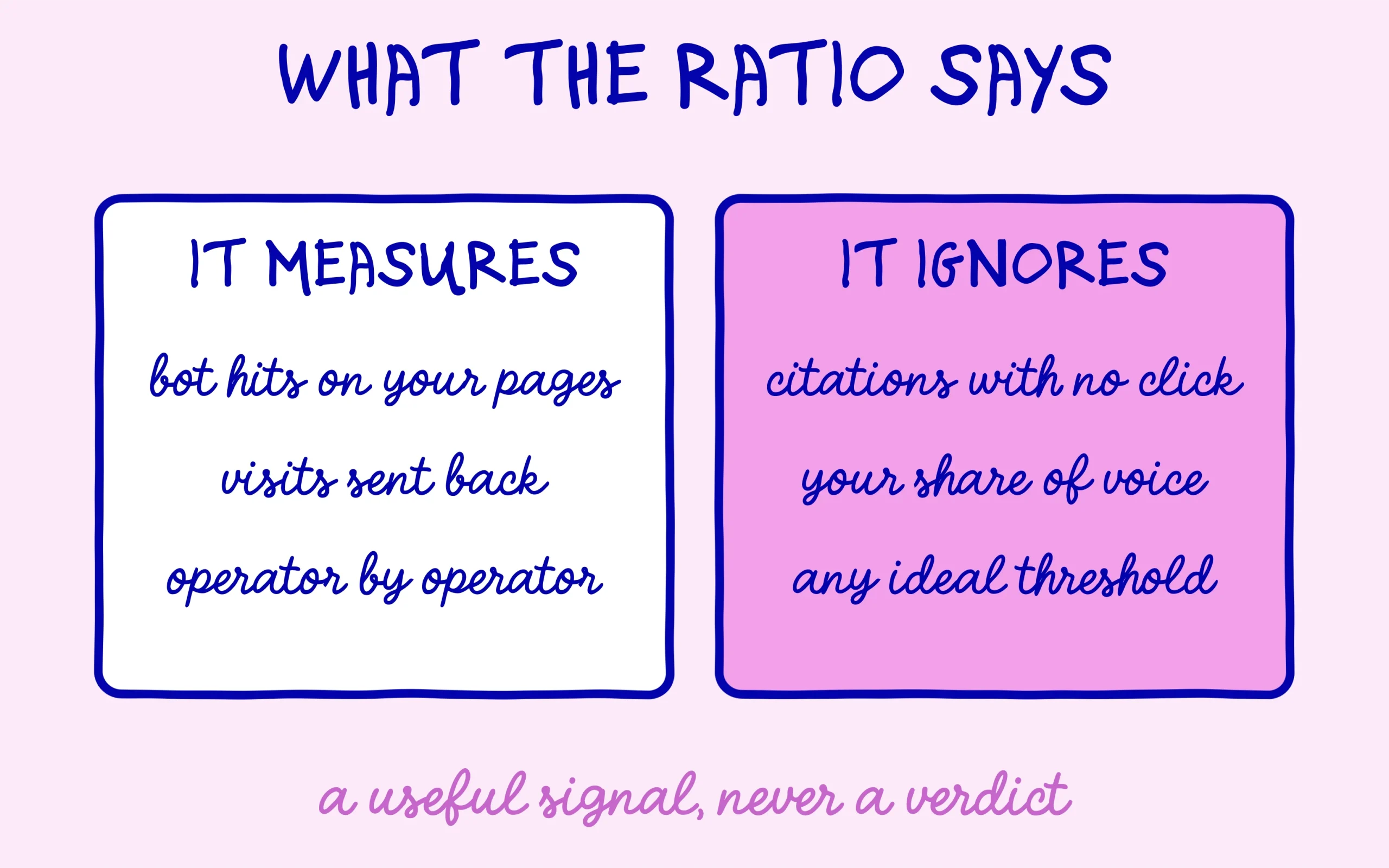
The principle comes down to one division. On one side, the number of hits an identified AI operator makes on your pages. On the other, the number of sessions that land on your site coming from that same operator. The ratio puts both into a single value shown in a card inside the bot section. The underlying data already existed in pieces across other tools, it simply never sat side by side. To lay the groundwork first, our method for checking your AI citations without paying for a tool is still the place to begin.
Microsoft layers two things on top of that number. First a ranked list of operators, ordering AI sources by the traffic they genuinely return. Second a direct jump into session recordings, filtered on the AI source you picked. So you read the ratio, then watch what the few visitors from that source actually do once they arrive. The documentation Microsoft published also flags cases where bot data and traffic data cover different domains, which skews the calculation on its own.
One detail matters for this site’s readers: Clarity is advertised as free, with no traffic limit. This is the first way to put a number on that gap without a card payment, at a point where most AI visibility trackers start at several tens of euros a month. The technical detail of the measurement sits in the announcement published by the Microsoft Clarity team on its blog.
Six thousand bot hits for a single visit
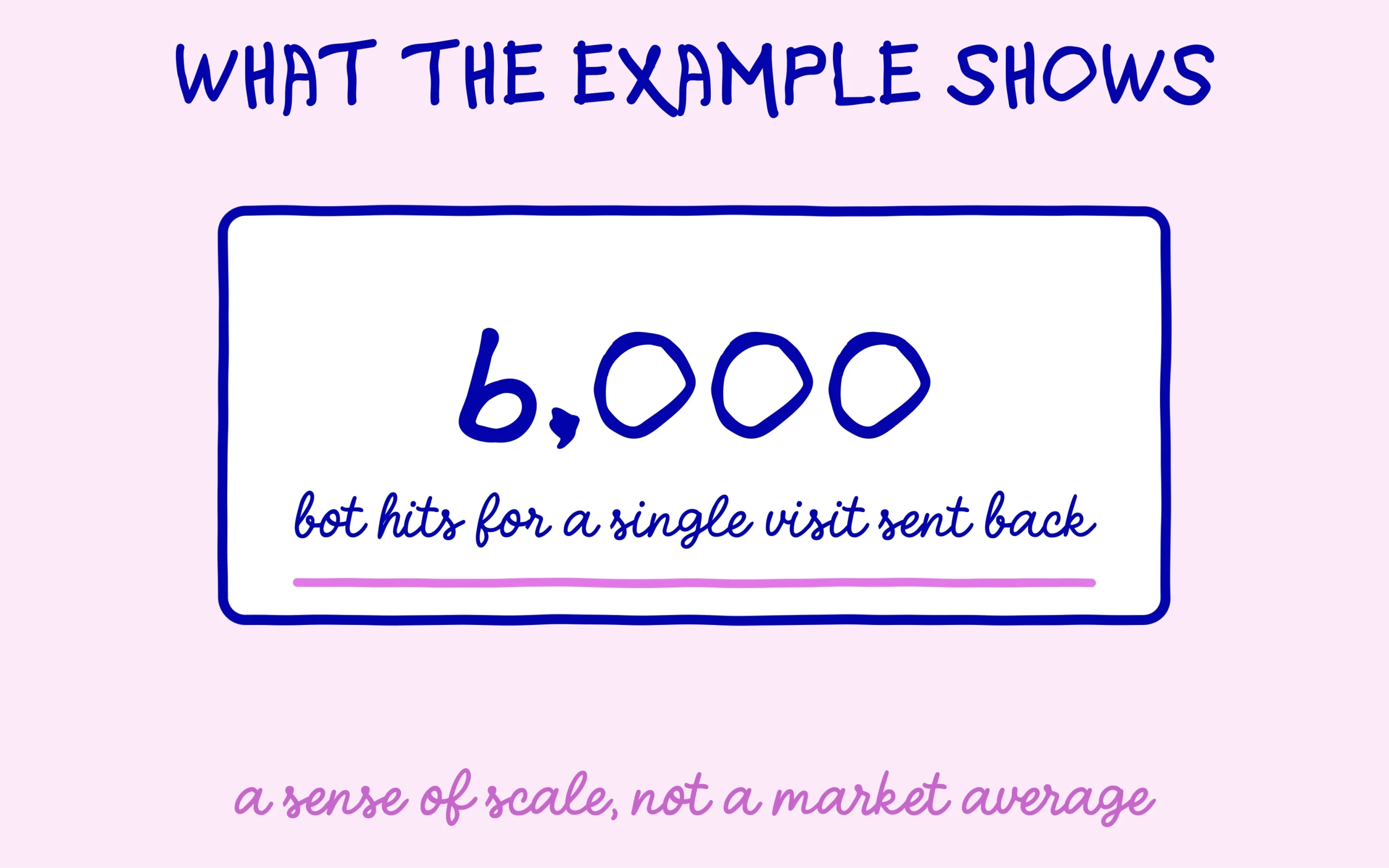
The example Microsoft picked for its write-up shows 41 referral visits paired with a ratio of six thousand hits per visit. That figure is not a market average and it only describes the site being shown. It does give a sense of scale few people carried in their heads, though: in that case, an AI operator went through the site’s content thousands of times to send back a single reader. The vague feeling many publishers have described for a year suddenly has a shape.
Careful about turning that ratio into a verdict, though. A high number can mean an operator crawls a lot and cites little, and it can equally mean it cites your content without the reader ever clicking, which is still exposure. No ideal threshold exists, and it would vary anyway between a publisher, a shop and a services site. The AI traffic figures recorded across merchants, covered in our piece on the jump in AI referrals seen by Shopify merchants, show the same channel producing wildly different outcomes by sector.
The operator ranking Microsoft Clarity builds is in fact the part you can act on. Knowing that AI as a whole takes a lot from you leads to no decision at all. Knowing which one takes a lot and returns nothing, while another sends visitors who stay, opens real trade-offs about what you let get read and by whom.
What this ratio changes for a beginner site
The immediate temptation is to block whichever bot shows the worst ratio. That is where the reasoning usually goes off the rails, for two reasons. First, not every bot from the same company does the same job, and the one feeding an index is not the one fetching a page live during a conversation. That mechanism is spelled out in our piece on the ChatGPT bot reading pages your robots.txt blocks. Second, a badly set block usually costs positions in ordinary search.
The sensible use of this data is smaller and more useful. Install the measurement, let it run for a few weeks, and use the ranking to learn where your content travels. A young site has nowhere near the volume to conclude anything from seven days anyway. The ratio gets interesting once you can compare two periods, or watch what shifts after publishing a run of articles on one subject.
It is worth naming what Microsoft Clarity does not cover. It watches what touches your server, so bot hits and the visits that follow. It says nothing about your presence in an AI answer when nobody clicks. A brand can be quoted daily inside generative answers and still post a dreadful ratio, simply because the citation answered the question without sending anyone back to the source.
That leaves the good news, and it counts when you are starting out. Free data you actually read beats a paid dashboard you never open. AI visibility tracking has turned into a market where subscriptions multiply faster than the evidence they work. An imperfect but free measurement, sitting on your own site and checked monthly, teaches more than a bought report you skim once.
Keep learning on SEO Noobies.