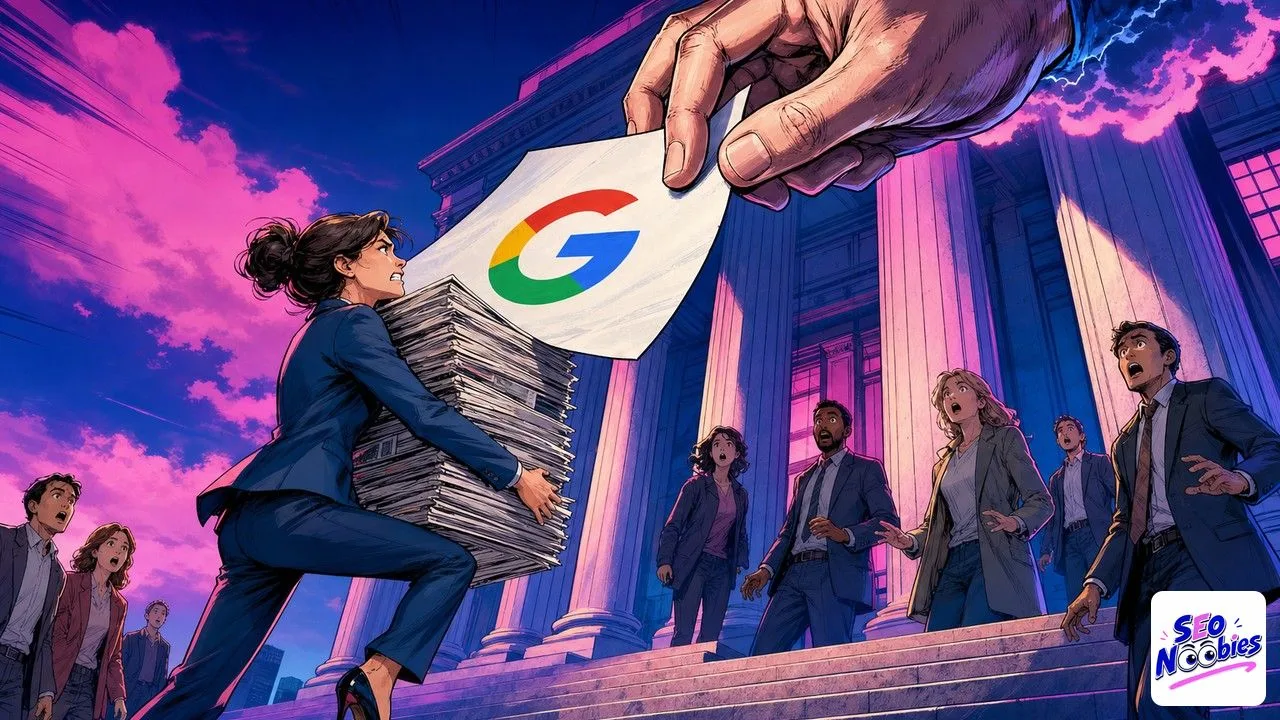
French publishers have taken Google’s AI Overviews to the country’s competition regulator, and the case is worth following even if you have never run a newspaper. The Alliance de la presse d’information générale, which speaks for close to 300 daily titles, filed its complaint on 11 August 2026. The grievance is that generative summaries went live in France with no negotiated authorisation and no dedicated payment. Underneath the dispute sits a question every site owner shares: what happens to your content when the engine summarises it instead of sending someone to read it. Here is what the filing contains and what a small publisher can take from it.
TL;DR
The Alliance de la presse d’information générale, representing close to 300 French daily titles, filed a complaint with the competition regulator on 11 August 2026 over AI Overviews and AI Mode.
Publishers argue Google rolled out those services in France without negotiated authorisation or specific compensation.
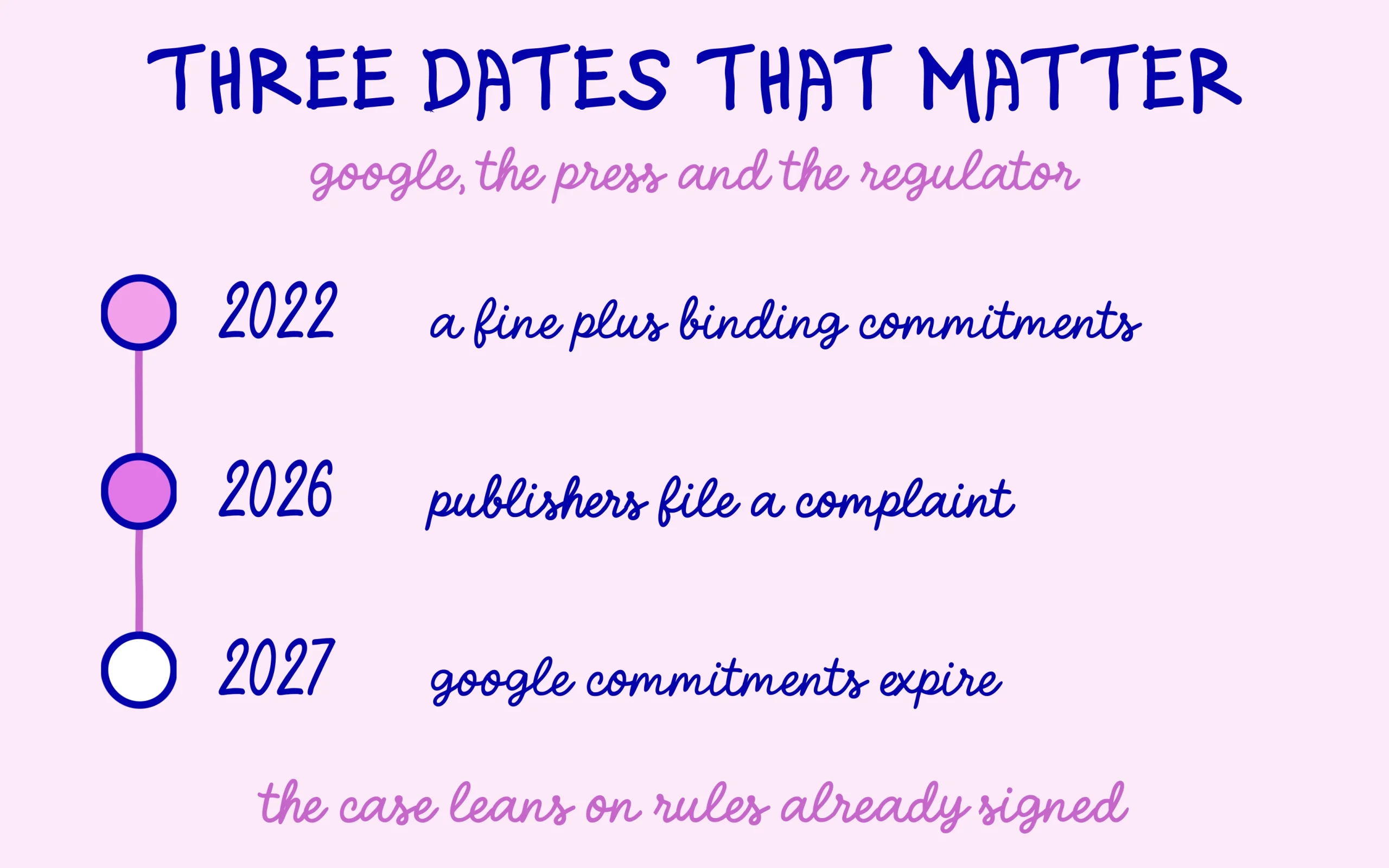
The filing leans on commitments Google made in 2022, made binding by the regulator and running through 2027.
French media regulator Arcom documented traffic losses of 33% to 38% attributable to generative summaries in European markets where they had already shipped.
Summarize This Article with AI
ChatGPTWhat French publishers are actually accusing Google of
The complaint boils down to one sentence: generative summaries settled into French results without publishers ever getting to discuss the terms. Newspaper content feeds those answers, with no negotiated authorisation covering that specific use and no payment distinct from what was agreed for classic link display.
A second grievance concerns the choice publishers were left with. Accept an updated licence contract, or technically pull your content out of those surfaces and risk losing visibility inside the engine. Very few titles can afford the second option, which drains a fair amount of meaning out of the word negotiation. The French rollout schedule had been public since the announced launch date for AI Overviews in France, which makes the absence of prior dialogue sting harder.
What they are asking for stays measured. Publishers are not demanding that generative services be switched off, but that authorisation be negotiated and compensation set in proportion to the value their content brings to those answers. The fight is about splitting the value, not banning the technology, and that distinction matters for reading what comes next.
The full wording sits in the statement published by the Alliance de la presse d’information générale. It notes that filing does not rule out continued talks, the stated goal being to restore balanced conditions for negotiating.
Why the French regulator has room to act here
This is not the regulator’s first look at the relationship between Google and publishers. In June 2022 it issued a 500 million euro fine, paired with commitments the search engine agreed to honour through 2027: negotiate in good faith, stay transparent about the data involved, and avoid discriminating against publishers based on whether they accept the terms.
French publishers are therefore standing on an existing binding framework rather than a fresh case built from nothing. That is what could make it move quickly, since the authority does not need to establish a novel abuse, only to check whether commitments already on the books were honoured. French neighbouring rights law, which requires compensation when press content gets reused, fills out the toolkit.
On the harm itself, French publishers lean on public measurement. Arcom, the media regulator, documented traffic losses between 33% and 38% attributable to generative summaries in European markets where those services had already shipped. Losing a third of your referral traffic rewrites the economics of a newsroom, and that argument is hard to wave away.
Tension has been building internationally for months. Some groups were already weighing whether to cut off access to their archives, as covered in the debate around publishers considering a block on Google over AI. Going the regulatory route avoids exactly that gamble.
What the case changes for a site that is not a news outlet
Worth stating plainly: this filing does not protect your blog. Neighbouring rights cover recognised press publications, and a personal site, a shop or a services page sits outside that perimeter. No payment is coming from this direction.
The outcome could still move things that touch you. If the regulator forces more transparency on which content gets reused inside generated answers, whatever data that produces would help everyone. Knowing which of your pages feed a summary remains the single biggest blind spot on these surfaces.
There is a precedent effect too. A ruling in favour of French publishers would hand the rest of Europe a reusable template, and would raise the question of extending it to other kinds of content. Nothing is settled, the process can run for months, but the subject is not going to quietly close.
Timing helps explain why French publishers moved now rather than a year ago. Generative summaries only reached French results this summer, so the traffic damage is recent enough to be measured cleanly against a normal baseline. Waiting another two quarters would have blurred that comparison and weakened the whole argument.
In the meantime the useful habit for a small site stays what it always was: measure instead of guessing. The shift toward answers that resolve a query without sending a visit has been documented for a while now, notably through the rising share of Google searches that end without a click. Watching your own numbers beats tracking a market average.
The real value of this case is what it signals. The argument over how value gets shared when engines summarise content is leaving the opinion pages and arriving at the bodies that can actually rule on it. Whatever answer comes back will say a lot about the balance between search engines and publishers over the next few years.

Keep learning on SEO Noobies.