
Zero-click marketing means getting your message in front of people where they already spend time, on a social feed, in a video or inside an AI answer, without asking them to click through to your site. Rand Fishkin, co-founder of the audience research tool SparkToro, published on November 2 the twenty questions he hears most often on the topic since the release of the book he wrote with Amanda Natividad. Many of his answers are aimed at large brands, yet a good share applies to a small site watching its clicks shrink since AI summaries took over the top of search results. The post covers measurement, social reach, whether blogging still pays off, and where to put your effort when resources are tight. Here’s what a beginner can take from it.
TL;DR
Rand Fishkin answered the twenty most common questions about zero-click marketing on November 2.
His core advice is to spread your message where your audience already is, without demanding a click, while keeping your brand visible.
Your website and blog still matter, especially when articles get repurposed into short posts for social platforms.
For a small site, the method comes down to two or three chosen channels, small tests, and measuring reach before sales.
Get an AI summary of this article
Zero-Click Marketing in Rand Fishkin’s Own Answers
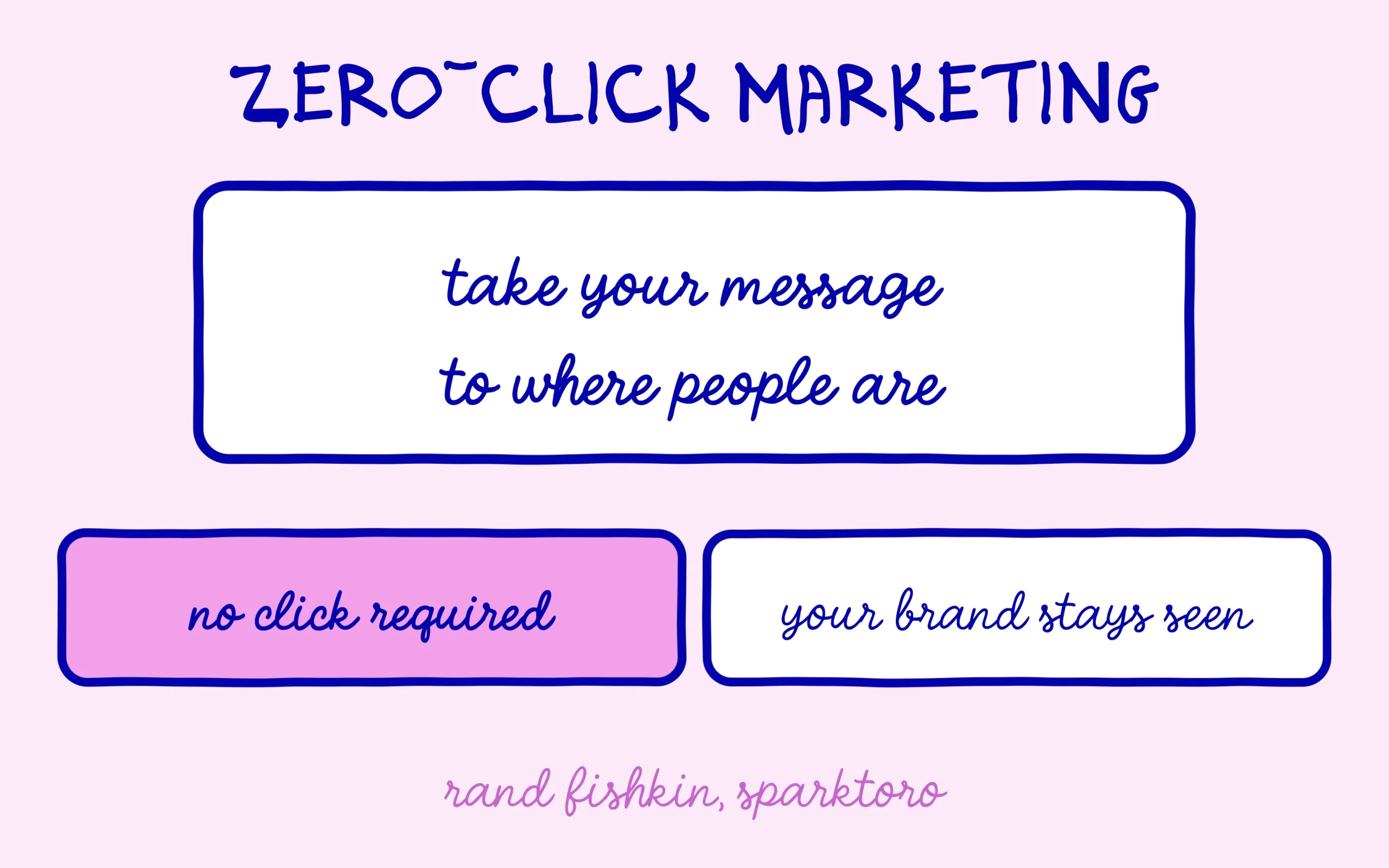
SparkToro’s post sorts the questions into four tiers, from the most frequent to the most personal. The idea underneath is straightforward: spread your message in the places people already visit, without demanding a click, and keep at least a subtle reference to your brand. People walk away with the name, the idea or the tip, and some of them come back later through a direct search.
That approach fits what search data has shown for months. A large share of Google searches already ends without any click, as the figures on zero-click Google searches in early 2026 made clear. Zero-click marketing starts from that reality and accepts that a site visit is no longer the only moment you reach a customer.
Measurement tops the list of questions. When clicks fall, which numbers should you watch? Fishkin’s answer is to pick KPIs that match each channel. Landing page views matter close to the purchase, and sales remain the number that counts most. He also concedes that attribution, linking a sale to the channel that triggered it, has always involved a fair amount of guesswork.
His advice changes with company size. Small brands should run tests they can actually prove, while large brands can afford to show up wherever their audience is and accept some waste. A small business needs simple tests it can verify. For startups, he recommends focusing on two or three channels and resisting the urge to spread thin.
Discover the SEO Noobies agency
The Answers That Matter for a Small Site
Does your website still matter in a zero-click marketing world? Fishkin says yes, and adds that it matters beyond conversions. He also thinks blogging is still worth it if you repurpose posts into short-form content for social platforms. One in-depth article can become a series of posts, a carousel or a short video carrying the same message without requiring a visit. In zero-click marketing, that repurposing is where a blog earns its keep.
On social media, he pushes back on the claim that organic reach on LinkedIn or Instagram is dead. Reach has dropped because competition got fiercer. He points out that in 2016 a post could reach 20% to 30% or more of an account’s followers, while today the biggest accounts may reach around 10% and a reach of 1% to 2% is common. Paid ads, in his view, usually pay off only once organic posts already perform well.
He stays cautious about where search traffic is heading. Nobody knows when the decline will level off, since it depends on how much Google keeps investing in AI answers. The shift is already sharp on searches made before a purchase, where AI Overviews now appear on most pre-purchase queries. A site that depends on a single source of visits stays fragile.
One last tip is aimed squarely at impatient managers. Agree in advance on what a test should show, starting with reach metrics such as views and impressions before expecting any effect on sales. If leadership wants sales within a week, Fishkin warns, no zero-click marketing channel will deliver.
Putting the Method to Work on a New Site
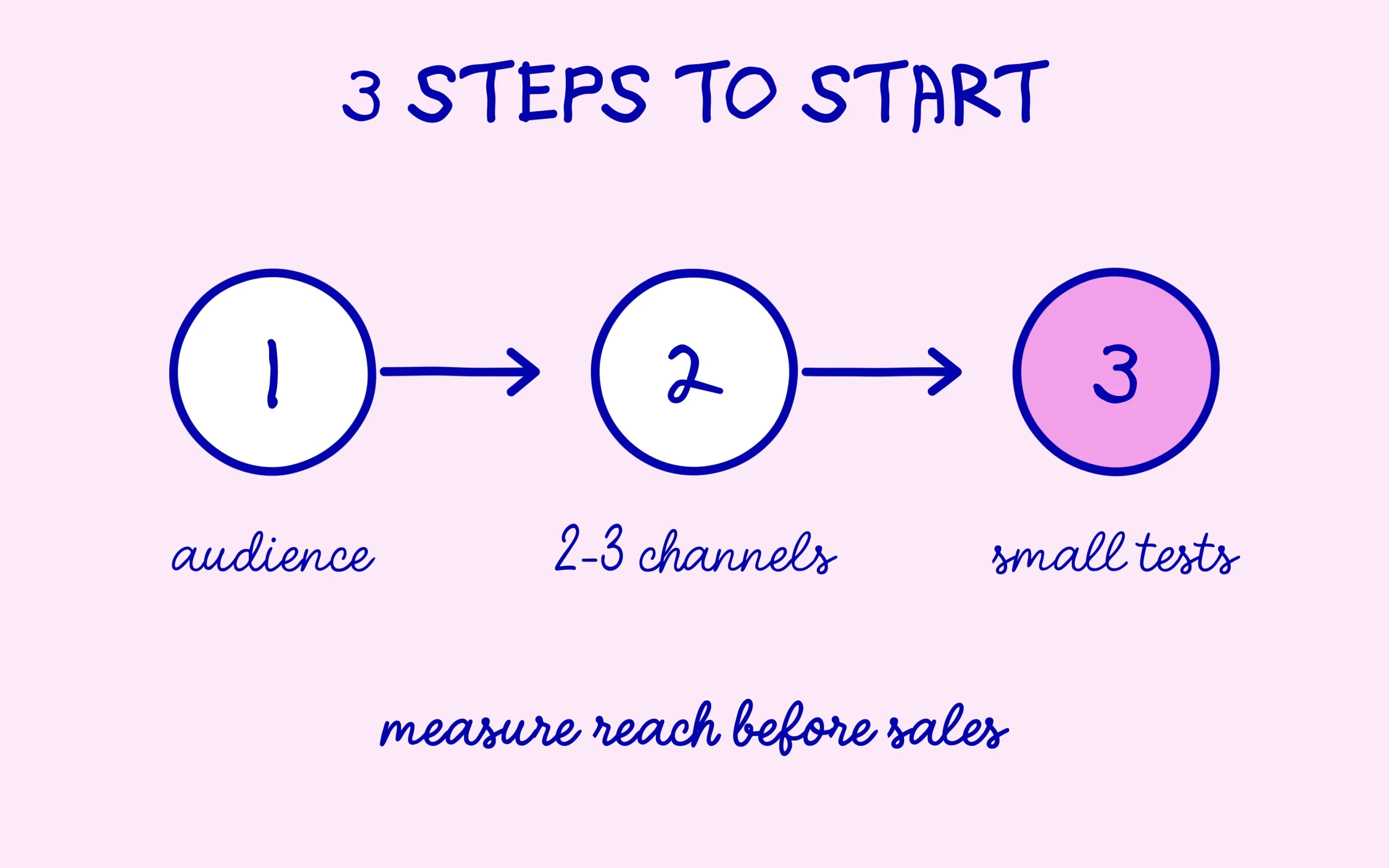
To apply zero-click marketing, start with one question: where does your audience spend its time? Talk to a few customers, find out which platforms they discovered you on, and look for the places where you can add something of your own. Fishkin puts this audience research ahead of everything else, because it tells you which channels deserve your limited time.
Then pick two or three channels at most and post there regularly with content that stands on its own. A complete tip in a LinkedIn post, a clear answer in a short video, a helpful reply on a specialist forum: each time, the person leaves with something useful and your name stays attached to the answer. Invest a little at a time, double down on what works, and drop what doesn’t. When a skill is missing in-house, such as short-form video or SEO for AI search, his advice is to bring in outside help for it.
For measurement, keep a simple sheet that tracks the reach of your posts, searches for your brand name and contact requests on the same calendar. Fishkin suggests looking at correlations over several weeks, and he shares that SparkToro has had weeks at 400% and others at 10% of its usual sales volume. Weekly swings often even out over a quarter, which is why reacting on the spot rarely helps. Bigger companies are going the same way, as HubSpot now tracks revenue per visit after an 80% traffic drop.
Finally, keep your website at the heart of the setup, since it welcomes the people who end up searching for you and has to show them quickly who you are and what you offer. Zero-click marketing makes your name known, and search optimization makes sure people find you when they type it.
Keep learning on SEO Noobies.