
A shared training opt-out is on its way to robots.txt, the small text file at the root of a website that tells crawlers what they may and may not do. With one line, a site will be able to say it doesn’t want its pages used to train generative AI models, across every provider that agrees to respect the signal. Google announced its support on October 30, and OpenAI published its own post on the topic the same day. Until now, refusing AI training meant writing a separate rule for each company’s crawler, which most small site owners never got around to. Nothing changes on your site this week, which makes it a good moment to understand what the line will do, what it will leave alone, and how to decide when the time comes.
TL;DR
Google said on October 30 that it will support a shared training opt-out in robots.txt, alongside other AI providers.
The opt-out relies on a reserved name, __usage_ai-training, defined in an IETF draft written by Kevin Kelley of Anthropic.
Google aims to support it in 2027 and will read it as a Google-Extended block when that crawler isn’t set separately.
There’s no rush: your current rules keep working, and the decision deserves some thought before 2027.
Get an AI summary of this article
How the Shared Training Opt-Out Works
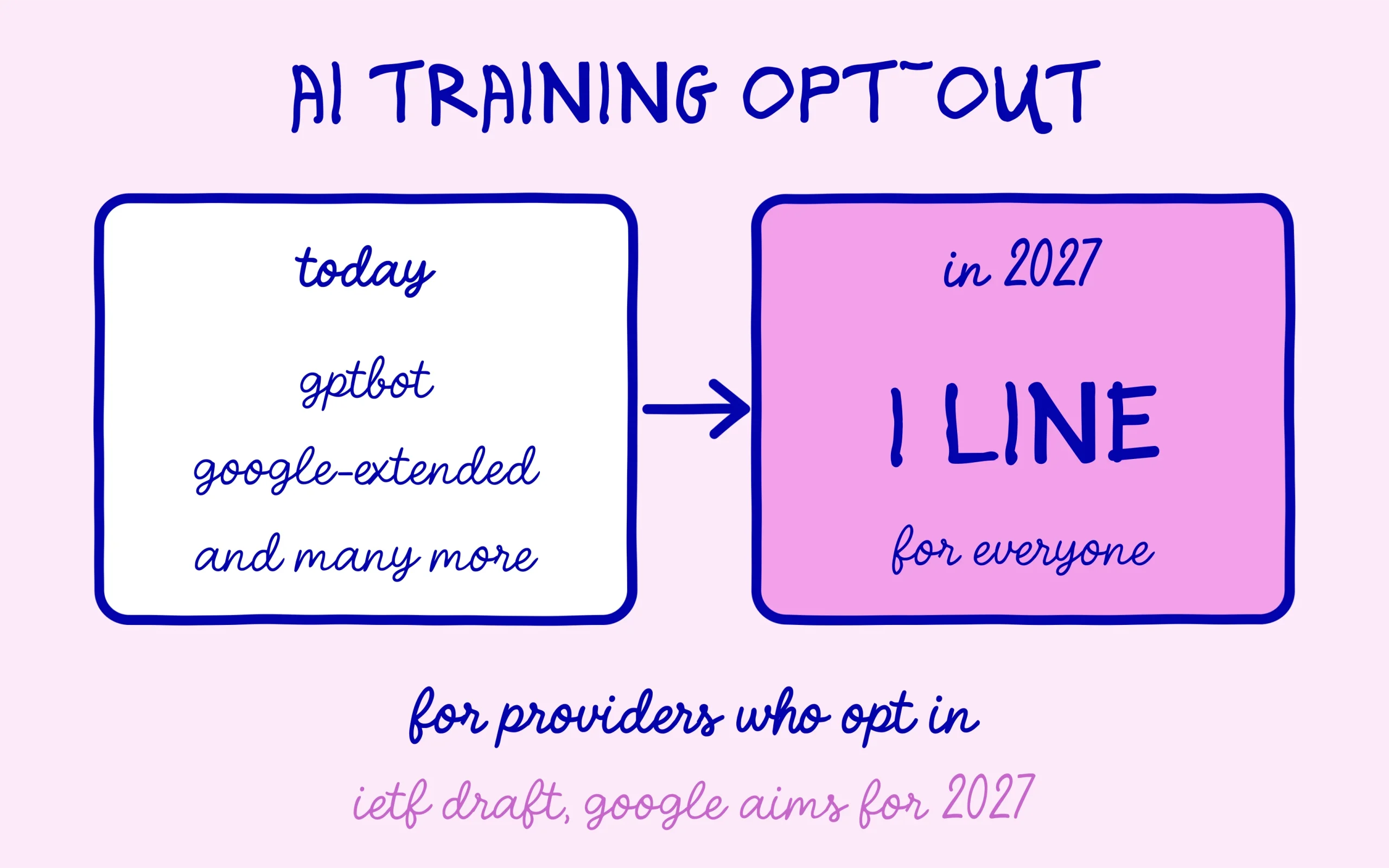
Google laid out its plans in John Mueller’s post on the Google Search Central blog. The company wants to support a shared control that lets a site set one broad preference for all participating AI providers, so publishers stop writing a separate rule for every developer. Google said it aims to support it in 2027 together with other providers and will share updates as the work moves forward.
The technical side lives in Kevin Kelley’s draft on the IETF datatracker, the IETF being the body behind many of the internet’s technical standards. The draft reserves a name, __usage_ai-training, that you write in robots.txt like any other crawler name. A User-Agent: __usage_ai-training line followed by Disallow: / expresses a training opt-out for the whole site.
The format leaves room for nuance. The draft shows that an Allow: line can reopen a specific folder, such as a press kit you’d like AI models to pick up, while the training opt-out still covers the rest of the site. It also defines training narrowly, as changing the learned parameters of a generative AI model, so models built only for non-generative tasks fall outside its scope.
Before this, a training opt-out meant knowing each company’s crawler by name, GPTBot for OpenAI, Google-Extended for Google and several others, with the risk of missing one whenever a new player appeared. A single shared name removes that guesswork for every provider that chooses to honor it.
Keep the document’s status in mind, though. It is an individual draft that the IETF hasn’t adopted, and it carries no formal standing as a standard yet. A training opt-out in robots.txt is a preference that only willing providers will follow. OpenAI set out its position in its October 30 post on website training preferences, and Google points out that the proposal fits the EU Code of Practice for general-purpose AI model providers under the AI Act, which treats robots.txt as the primary way for publishers to state these preferences.
Discover the SEO Noobies agency
What Changes for Google-Extended and Your Visibility
Google-Extended is the crawler name Google uses for how its AI models may use your content. Mueller’s post explains how the new signal will interact with it. If your robots.txt sets the shared opt-out and says nothing specific about Google-Extended, Google plans to treat it as if you had disallowed Google-Extended.
That detail has a practical side effect. Google notes that sites which specifically allow Google-Extended stay eligible to appear in Gemini app responses and receive clicks from them. A broad opt-out written in a hurry could therefore pull you out of those answers when you only meant to refuse training. Company-specific rules keep working next to the shared signal, so you can refuse training in general and still set Google-Extended on its own line.
Classic search runs on separate rules. The draft states that the reserved name is not a crawling directive, so the crawlers that index your pages for search keep their own lines in robots.txt. The same logic drove the guide to blocking GPTBot while staying in ChatGPT search, where OpenAI’s training crawler and its search crawler are handled one by one.
For a beginner, the change boils down to this. The shared training opt-out will make the refusal easier to state, and you’ll still need to sort the crawlers that bring you visibility from the ones that only collect data. The decision stays yours, and you make it crawler by crawler. If your site runs through Cloudflare, a similar setting already exists, covered in the piece on Cloudflare’s AI training opt-out.
What to Do on Your Site Before 2027
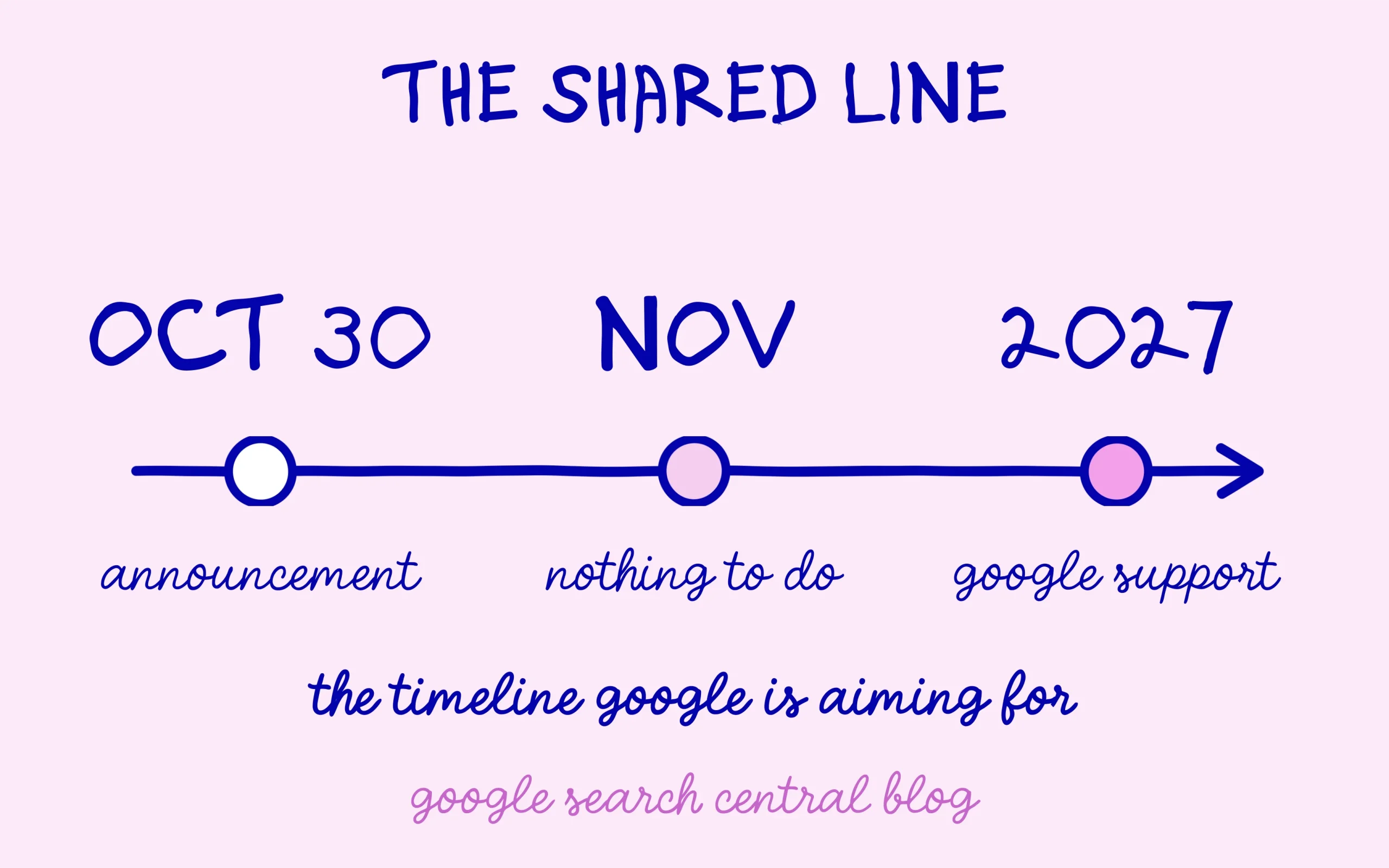
Right now, you don’t need to change anything. Google is aiming for 2027, the draft may still evolve, and adding the line today guarantees nothing until providers actually apply it. Any rules you may already have for GPTBot or Google-Extended keep doing their job.
The useful move is to reread the file you have. Type your site’s address followed by /robots.txt in a browser and check that no line blocks Googlebot, the crawler that indexes your pages for search. An overly broad rule added by a security plugin or a former contractor can wipe a site from the results, and that risk matters far more than the training question. Remember too that robots.txt is a request, and some crawlers don’t always follow it, as shown by the case of ChatGPT-User reading pages that robots.txt blocks.
Then think about where you stand. A site that lives off its content, such as a media outlet or a specialist blog, may want to keep its writing out of model training. A local tradesperson or a small shop mostly wants to be named when a customer asks an assistant for a recommendation, and a sweeping opt-out would work against that goal. Write down your position before the training opt-out goes live.
When support arrives, you’ll already know which line to add and whether Google-Extended needs its own rule. A training opt-out planned ahead of time saves you from reacting in a rush each time a new crawler is announced.
Keep learning on SEO Noobies.