
ChatGPT visibility may soon come with an official dashboard, built by OpenAI itself. In early November, analyst Juozas Kaziukėnas spotted a tool in the works that would count how often a business shows up in ChatGPT answers, and how many clicks those answers send to its website. OpenAI has announced nothing, and the product is still being built. If you run a small site and have spent months wondering whether AI assistants mention you at all, the news is still worth a few minutes. Here is what is known about the tool, what its numbers would and would not tell you, and what you can already measure today with what you have.
TL;DR
According to analyst Juozas Kaziukėnas, OpenAI is building a tool that would count a business’s appearances in ChatGPT answers and the clicks sent to its site.
The tool would sit inside a wider business area, open only to companies that have verified they own their site, for example by connecting a Shopify store.
The prompts people type and any benchmark against competitors would stay out of those numbers.
Right now, the utm_source=chatgpt.com parameter that OpenAI adds to its links already lets you spot part of this traffic in Google Analytics.
Get an AI summary of this article
What Juozas Kaziukėnas found in ChatGPT
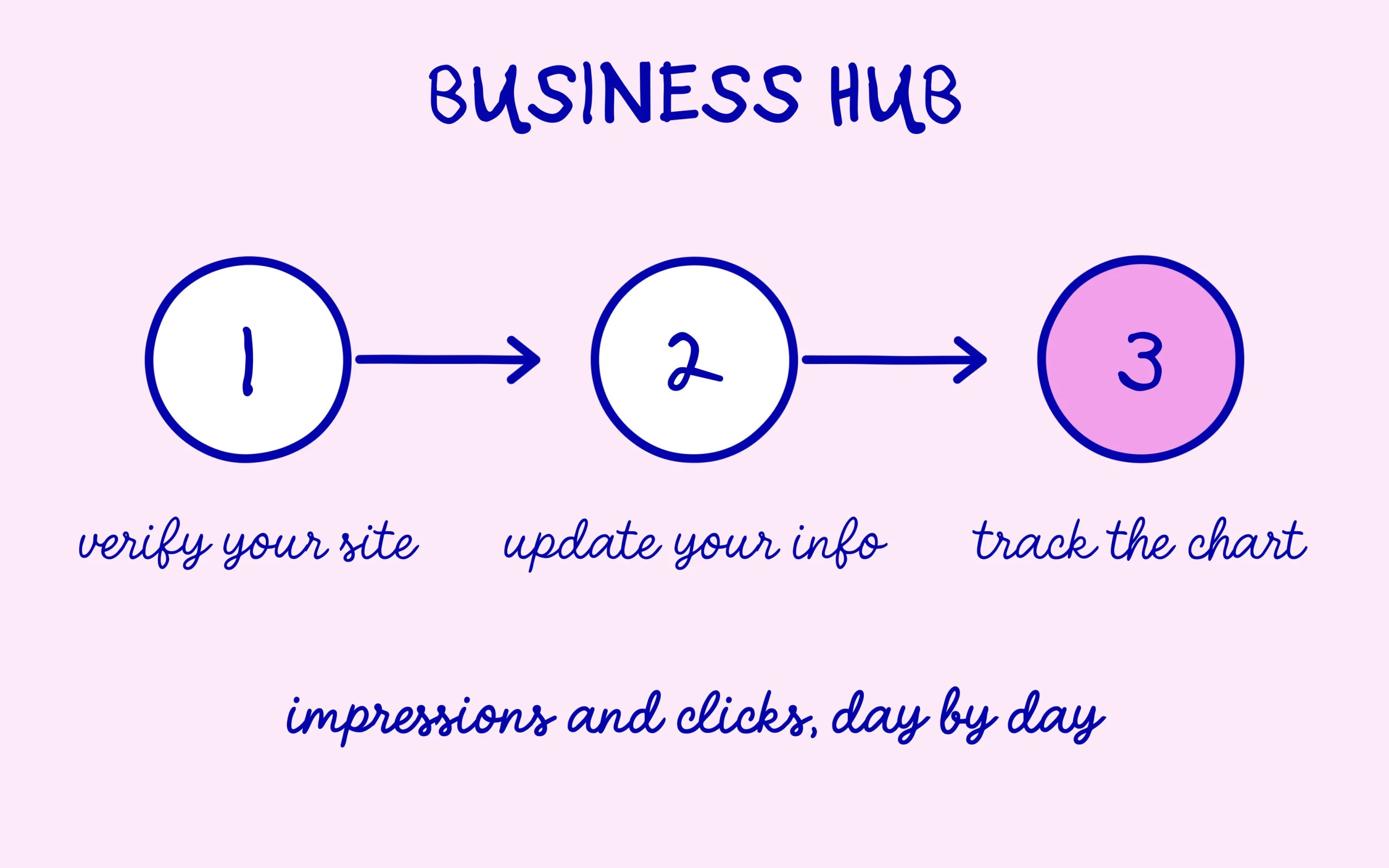
The story starts with a LinkedIn post by analyst Juozas Kaziukėnas, published around November 6. With a screenshot of a banner to back it up, he described a tool OpenAI is building to track how often a business gets mentioned in ChatGPT conversations. He added that the first traces of the project showed up in August, and that the banner suggests a launch is getting close.
Barry Schwartz, who founded the trade site Search Engine Roundtable, picked it up the same day in a write-up on these upcoming business tools. He quoted the line printed on the banner, “Claim your business in ChatGPT.” Anyone who has set up a Google Business Profile will recognize the idea: you prove the business is yours, and then you get some say over what appears about it.
Both sources place the tracking inside a larger area called Business Hub, which Barry Schwartz thinks will likely live at chatgpt.com/business-hub. A company could add its products there, keep its details current, and let its own agent answer customer questions using information it controls. The area would focus on ChatGPT’s regular answers and stay apart from OpenAI’s advertising product.
OpenAI has made no official announcement about this tool so far. Everything above comes from a screenshot and from people watching the product from the outside. The final version could look different by the time it ships, or it could stay on the shelf, so read the details below as a description of work in progress.
Two ChatGPT visibility numbers and what they leave out
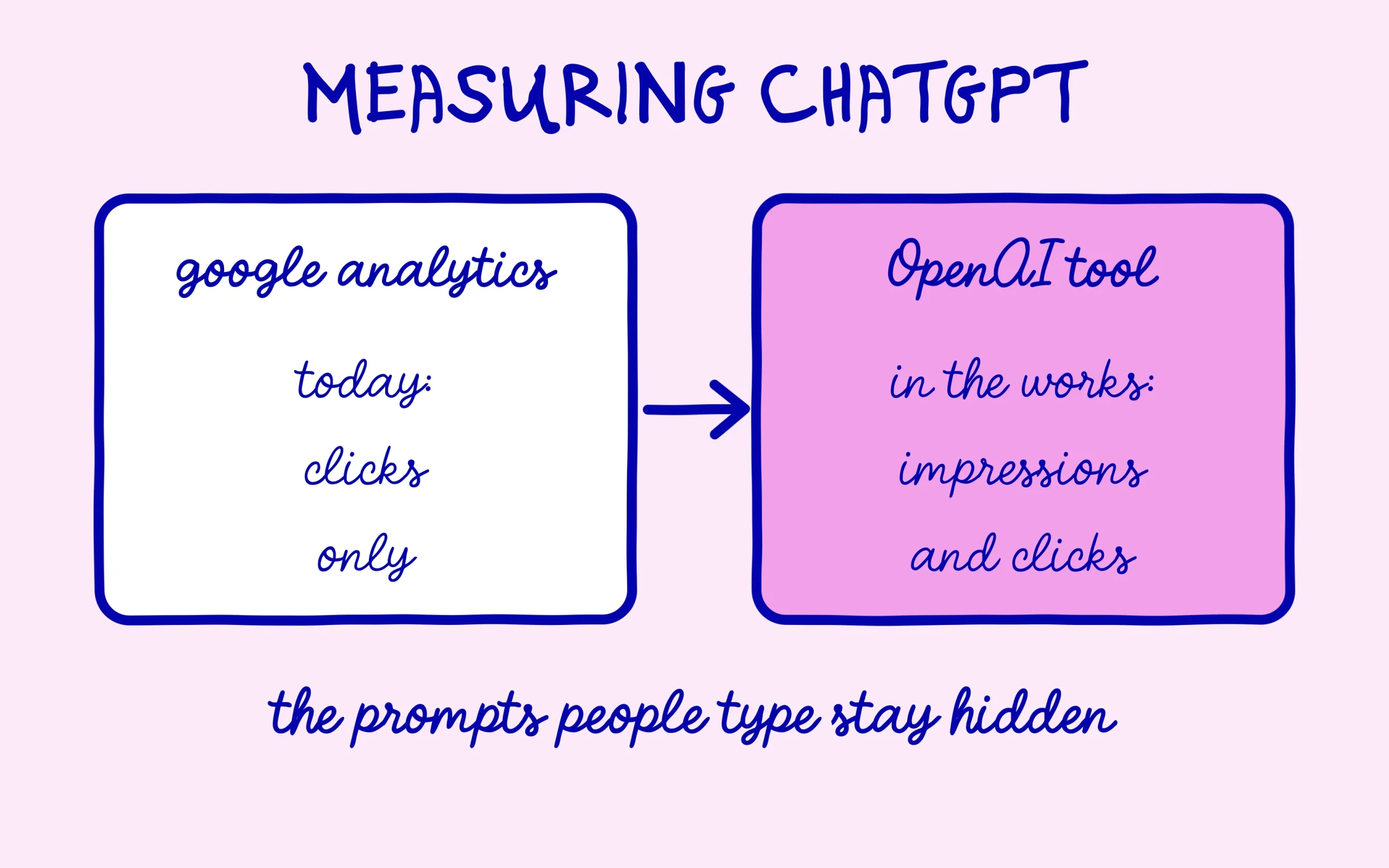
Juozas Kaziukėnas describes two metrics. Impressions count how many times a business appears in a ChatGPT answer, and clicks count the visits those answers send to its website. Both would be tracked day by day and shown as a chart, which is why Barry Schwartz framed it as something close to Google’s Search Console for regular search.
For a beginner, those two numbers would finally answer a plain question: does ChatGPT talk about my business, and does that bring me visitors? Today the only ways to find out are asking the assistant yourself, or paying for a third-party tracker that runs a fixed list of prompts. For the visits side, Google Analytics already gives part of the answer, as covered in our article on AI traffic in Google Analytics. ChatGPT visibility data coming from OpenAI would come straight from the source.
The gaps are just as clear. Kaziukėnas says the tool would stick to those two totals. The prompts people actually typed, any data about the users, and rankings against competitors would all stay out of view. A line that goes up or down would tell you that something moved, and you would have to look elsewhere to learn why.
His suggestion is to pair those totals with third-party prompt trackers. On a small site, the manual routine in our guide to checking AI citations without a paid tool does the same job for free: you write down, prompt by prompt, whether the assistant names your brand and whether it links to one of your pages.
Then comes the question of access. The tool would be reserved for businesses that have verified ownership, and connecting a Shopify store is the only example mentioned so far. Other verification routes are unknown, so a brochure site running on WordPress cannot yet tell whether it will be able to follow its ChatGPT visibility this way.
Discover the SEO Noobies agency
What a small site can track in ChatGPT today
While the tool is being built, OpenAI already offers a way to measure the part of ChatGPT visibility that turns into visits. Its FAQ for publishers and developers explains that ChatGPT automatically adds the utm_source=chatgpt.com parameter to the links it shows in its search answers. That small tag at the end of the address is what lets an analytics tool recognize the visit.
In practice, Google Analytics files those sessions under the chatgpt.com source, and the acquisition report is where they show up. That number only counts people who actually clicked a link. An answer that names your brand without anyone clicking leaves no trace in Google Analytics, which is exactly the blind spot OpenAI’s tool would fill.
The same FAQ points to one prerequisite. To appear in ChatGPT’s search answers, a site has to let OAI-SearchBot, the crawler OpenAI uses for search, through its robots.txt file, the small file at the root of a site that tells crawlers what they may read. GPTBot, the company’s other crawler, collects data for model training, and each one is set separately.
Before editing that file, it helps to know which crawler you are dealing with. A rule written too broadly can shut out search when all you wanted was to refuse training, and the walkthrough on blocking GPTBot while staying in ChatGPT search shows how to keep them apart.
The last step costs nothing and helps your ChatGPT visibility whatever OpenAI ships. If Business Hub ever lets a company update its details inside ChatGPT, someone will still need to know what those details should say. Name, activity, address, opening hours, offers: checking them on your own site and on your public listings takes about an hour, and that hour pays off on any timeline.
Keep learning on SEO Noobies.